Six Ministers Retained... Key Party Officials Also Reappointed
Increased Appointment of Female Ministers... Record High
As a result of the cabinet reshuffle announced by Japanese Prime Minister Fumio Kishida, it is known that there were no changes in ministers holding key positions, drawing attention to the background. On the surface, while maintaining the core of the administration, it is evaluated that the reshuffle aimed to alter the intra-party dynamics by checking rivals who could become the 'post-Kishida' ahead of the expected re-election within the year.
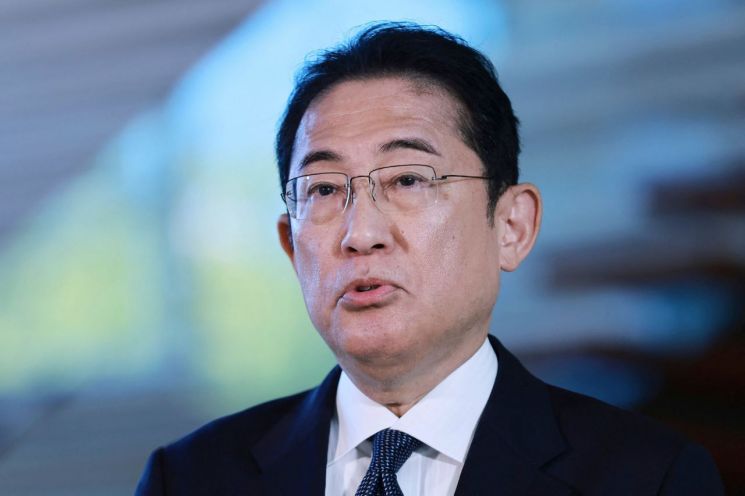
Checking Rivals for Re-election... Intra-party Dynamics Shift
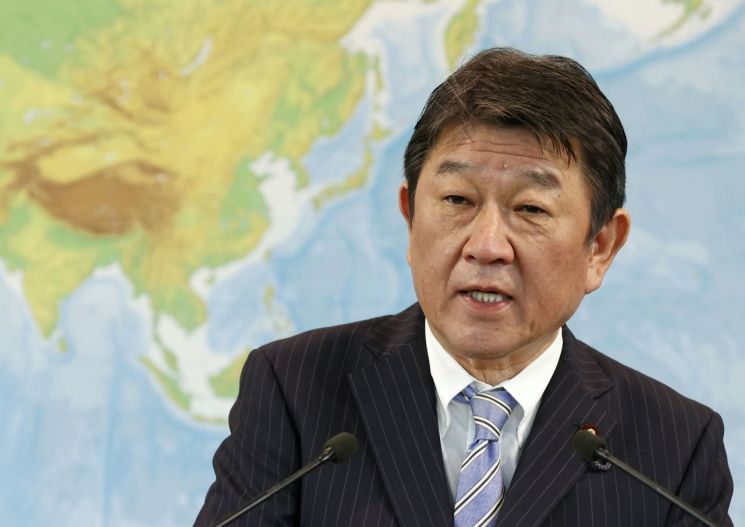
On the 13th, Asahi Shimbun reported that all faction leaders of the Liberal Democratic Party (LDP) are expected to remain in their posts in this reshuffle. First, in terms of party personnel, Taro Aso, the deputy president and leader of the LDP's second-largest faction, the 'Aso faction,' will retain his position. Toshimitsu Motegi, secretary-general of the third-largest faction, the 'Motegi faction,' is also expected to be retained.
Asahi analyzed that this retention appears to be influenced by Prime Minister Kishida's consideration of his own re-election. Until now, Kishida, Deputy President Aso, and Secretary-General Motegi have met about once a week to discuss government operations. In Japanese politics, this has even been referred to as a 'de facto triumvirate.'
Since these figures discuss the direction of the prime minister and the ruling party, they are also considered potential candidates for the next prime minister. Especially in the case of Secretary-General Motegi, he has been mentioned as the 'post-Kishida' figure whenever Kishida's cabinet approval ratings dropped or election-related issues arose. Motegi himself has not hidden his ambition to become the next prime minister, so Kishida likely judged that if he did not retain Motegi and excluded him from key posts, Motegi might turn into an 'anti-Kishida' faction. Asahi also mentioned Motegi's dilemma, stating, "Prime Minister Kishida repeatedly reconsidered the treatment of Secretary-General Motegi, with whom he had a strategic reciprocal relationship."
The solution Kishida considered was to appoint Yuko Obuchi, former Minister of Economy, Trade and Industry, as a check. Obuchi was appointed as the LDP's election campaign committee chairperson; she is the daughter of former Prime Minister Obuchi, famous for the 'Kim Dae-jung?Obuchi Joint Declaration.' The election campaign committee chairperson is one of the 'four key party roles' in the LDP, along with the secretary-general, the chairman of the General Council, and the chairman of the Policy Research Council.
Former Minister Obuchi also belongs to the Motegi faction. However, since the Motegi faction's base within the party is not strong, there have been rumors surrounding Secretary-General Motegi, such as "No matter how much of a secretary-general he is, can someone who cannot properly manage his own faction become prime minister?" However, in the case of former Minister Obuchi, her father's tenure as prime minister and the possibility of becoming the first female prime minister have significantly raised her profile upon appointment. With Kishida's 'generous' retention and appointment, and the emergence of a check-and-balance dynamic within the faction, it has become difficult for the Motegi faction to openly oppose Kishida.
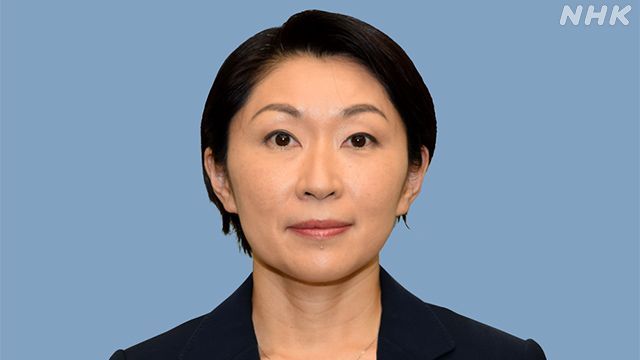 Former Minister of Economy, Trade and Industry Yuko Obuchi appointed as the LDP election campaign committee chair. (Photo by NHK)
Additionally, Prime Minister Kishida decided to retain Koichi Hagiuda, chairman of the Policy Research Council and a member of the Abe faction. Asahi analyzed this as an attempt to win over the Abe faction for re-election.
Replacement of Foreign and Defense Ministers... Increase in Female Ministers
Regarding ministers, 11 new members are expected to join the cabinet, while 6 ministers will retain their posts. Chief Cabinet Secretary Hirokazu Matsuno, Minister of Economy, Trade and Industry Yasutoshi Nishimura, who has been responsible for persuading fishermen regarding Fukushima contaminated water discharge and economic policies, and Digital Minister Taro Kono have all been retained.
However, Foreign Minister Yoshimasa Hayashi, Defense Minister Masakazu Hamada, and Agriculture, Forestry and Fisheries Minister Tetsuro Nomura, who caused controversy by referring to the Japanese government's official term 'treated water' as 'contaminated water,' are expected to be replaced.
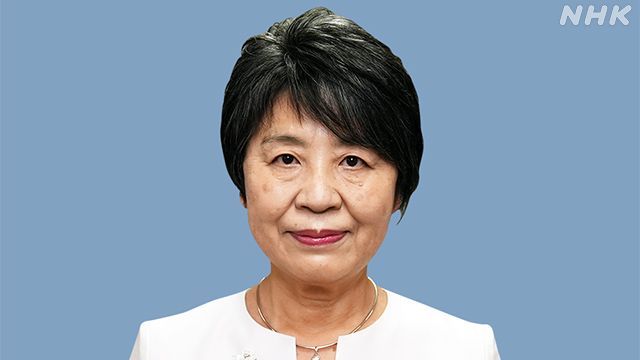
Japanese media are particularly focusing on Yoko Kamikawa, former Minister of Justice, who is expected to be appointed as the new Foreign Minister. Kamikawa, classified as a member of the Kishida faction, is one of the female ministers appointed this time and is known for ordering the executions of 13 death row inmates, including the leader of the Aum Shinrikyo cult, during her tenure as Minister of Justice.
The number of female cabinet members has also increased. Ayuko Kato will be appointed as Minister in charge of Newborn Policy, Hanako Jimi as Minister for Regional Revitalization, and Shinako Tsuchiya as Minister for Reconstruction. As a result, the number of female ministers in the Kishida cabinet has increased from 2 to 5, marking the highest record since the first Koizumi cabinet in 2000 and the second Abe cabinet in 2013.
Aiming for a Calm Election... Public Support Uncertain
Japanese media analyze that this cabinet reshuffle reflects Kishida's intention to make the next election a 'calm election' without factional conflicts. Overall, it is a minor reshuffle maintaining the current cabinet's framework, with more attention paid to balancing factions within the LDP.
However, there are also criticisms that the lack of external personnel infusion reduces the degree of reform. Asahi reported, "There are concerns that the reshuffle's inward-looking nature within the LDP may actually distance public support."
There are also potential risks associated with the newly appointed personnel. Former Minister Obuchi is suspected of falsifying political funding reports for her support group in 2014, which was also a reason for her resignation as Minister of Economy, Trade and Industry. Before the Tokyo District Public Prosecutors Office's special investigation unit conducted a house search, Obuchi's computer hard disk was destroyed with a drill, leading to her nickname 'Drill Yuko.' This could potentially become a risk for the administration in the future.
Furthermore, Chairman Hagiuda is pointed out to maintain close ties with the Family Federation for World Peace and Unification (formerly the Unification Church). The Ministry of Education, Culture, Sports, Science and Technology recently imposed a fine on the foundation, and the government plans to file for its dissolution. If the former Unification Church issue flares up again, Hagiuda's connection with the group could become problematic.
Additionally, with Cabinet Secretary Seiji Kihara, known as a close aide to Prime Minister Kishida, declining to continue, there are concerns about the prime minister's ability to maintain a central leadership role. Kihara was suspected of exerting external pressure to halt an investigation related to the death of his spouse's former husband.
© The Asia Business Daily(www.asiae.co.kr). All rights reserved.



















