Sweden Shifts from Digital to Traditional Methods
"Digital Tools Hinder Learning Ability"
Reading Scores Declined from 2016 to 2021
Swedish elementary schools are moving away from digital devices and returning to paper and pencil. This is due to the judgment that digital devices negatively affect children's literacy.
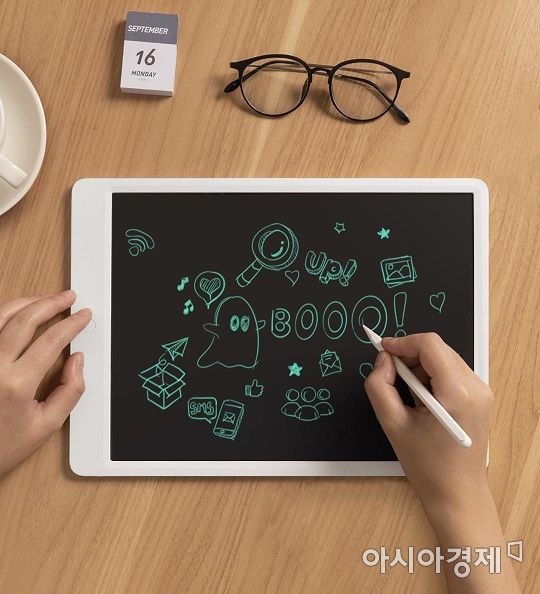
The British daily newspaper The Guardian reported on the 11th (local time) that schools across Sweden are reintroducing a 'traditional education method' using paper books and writing tools.
According to the media, Sweden was a leading country in digital education, having proactively introduced digital tools. However, it was continuously pointed out that education methods using tablets, online searches, and keyboards did not help improve students' literacy.
The center-right coalition government, which won the Swedish election last year, fully accepted this criticism. Sweden's current Minister of Education, Lotta Edholm, has repeatedly emphasized, "Swedish students need more textbooks," and "Student learning must be conducted with actual paper books."
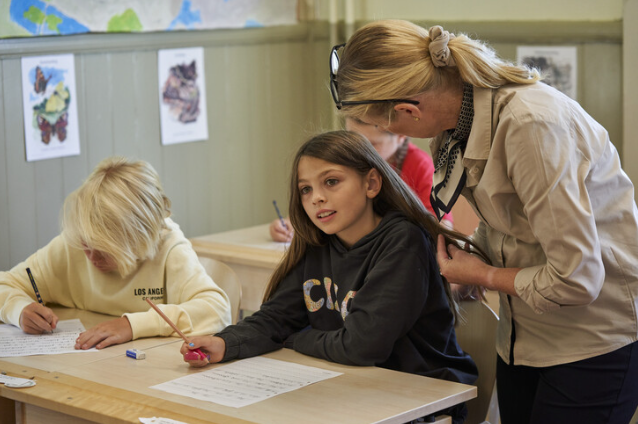 Swedish students practicing reading and writing with paper books and writing tools. [Image source=Yonhap News]
Originally, the Swedish Ministry of Education planned to expand digital learning to kindergartens. However, Minister Edholm intends to completely reverse this plan. Furthermore, digital learning for children under six years old will be entirely discontinued.
In fact, after the introduction of digital education, the international scores of Swedish students reportedly declined further. According to the 'PIRLS' data, an international assessment of reading levels, Swedish students' reading scores are still higher than most European countries, but a noticeable downward trend in scores was observed between 2016 and 2021.
In particular, the average reading score of Swedish 4th graders in 2021 was 544 points, an 11-point decrease from 555 points in 2016.
Meanwhile, other advanced education countries widened the gap with Sweden. Singapore, which ranked first globally, improved its reading score from 576 points in 2016 to 587 points in 2021, and the United Kingdom saw only a slight decrease from 559 points to 558 points during the same period.
Regarding this, the Karolinska Institute in Sweden stated in a press release, "There is clear scientific evidence that digital tools hinder students' learning abilities," and emphasized, "The focus should be on acquiring knowledge through printed textbooks and teachers' expertise, rather than obtaining knowledge from free digital sources whose accuracy is not verified."
© The Asia Business Daily(www.asiae.co.kr). All rights reserved.
![Clutching a Stolen Dior Bag, Saying "I Hate Being Poor but Real"... The Grotesque Con of a "Human Knockoff" [Slate]](https://cwcontent.asiae.co.kr/asiaresize/183/2026021902243444107_1771435474.jpg)












