As the announcement of measures to revitalize housing supply approaches, attention is turning to the so-called '1st Generation New Town Special Act,' which is currently stalled in the National Assembly. Although it cannot immediately increase housing permits or construction volumes, it can create synergy with the measures from a psychological perspective.
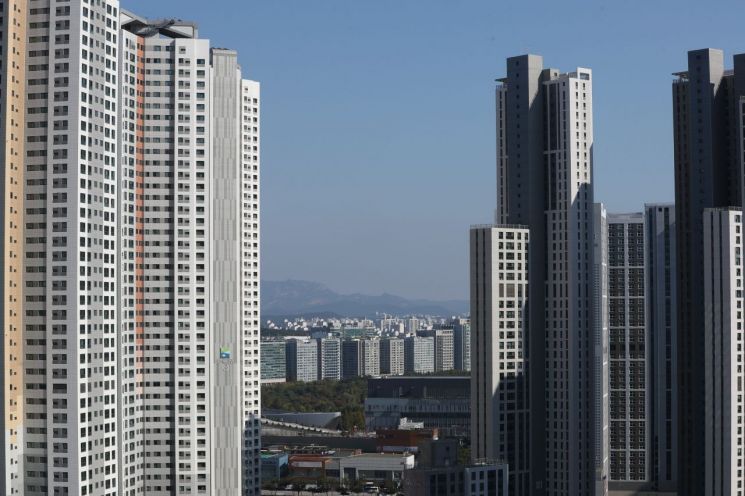
According to the National Assembly and the Ministry of Land, Infrastructure and Transport (MOLIT) on the 13th, the Land, Infrastructure and Transport Committee will hold a subcommittee meeting on land-related bills to discuss contentious legislation such as the 'Special Act on the Maintenance and Support of Aging Planned Cities.'
The bill, introduced by Song Eon-seok, a member of the People Power Party, in March, contains the basic policies for the maintenance of aging planned cities established by MOLIT. The scope of application covers areas over 1 million square meters where land development was completed more than 20 years ago under the Land Development Promotion Act, encompassing not only the 1st Generation New Towns but also old and aging planned cities nationwide. The bill aims to grant these areas exemptions or relaxations on safety inspections, land use changes, and floor area ratio benefits.
The bill has been stalled in the National Assembly for six months. Earlier, Minister Won Hee-ryong of MOLIT expressed during a meeting with residents of Pyeongchon New Town in Anyang, Gyeonggi Province, in June, that he hoped the bill would be resolved before the end of the summer vacation period, but this did not happen. It is interpreted that the timing is being reconsidered ahead of the general elections in April next year.
Experts anticipate that if the bill passes, it will help boost vitality from the supply side. Since specific development plans must be prepared for each region, it is unlikely that supply volumes can be released in the short term, but amid concerns over delays in the 3rd Generation New Town projects, it is seen as positive psychologically.
Ham Young-jin, head of the Zigbang Big Data Lab, said, "Currently, both private construction companies and the Korea Land and Housing Corporation (LH), representing the public sector, are restrained. Although it will take time to complete maintenance, if the bill accelerates its passage in the National Assembly in conjunction with the current measures, it will help improve market sentiment."
However, unlike the government's focus this time on easing 'supply' constraints, there are opinions that 'demand' could be stimulated. Kim Kyu-jung, head of the Asset Succession Research Institute at Korea Investment & Securities, said, "In terms of supply, when the private sector struggles, the public sector should complement it, and vice versa, but the situation is not favorable. While the passage of the bill is a matter of timing, I understand there are concerns that it could fuel housing price increases."
Meanwhile, the subcommittee is expected to discuss the Building Act related to illegal subcontracting and other issues. The amendment to the Housing Act, which includes the abolition of the mandatory residence requirement, was not included on the agenda.
© The Asia Business Daily(www.asiae.co.kr). All rights reserved.
![User Who Sold Erroneously Deposited Bitcoins to Repay Debt and Fund Entertainment... What Did the Supreme Court Decide in 2021? [Legal Issue Check]](https://cwcontent.asiae.co.kr/asiaresize/183/2026020910431234020_1770601391.png)