0.721% Recorded Intraday on 12th
Ueda Mentions Abolishing Negative Interest Rates
Expectations Spread for End of Easing Policy
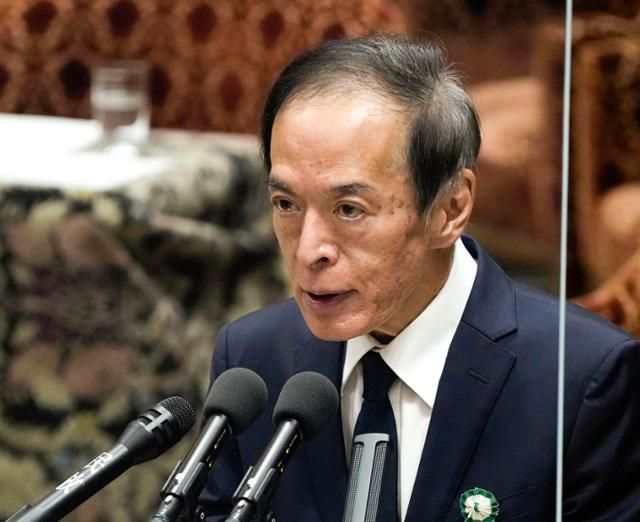
Japan's 10-year government bond yield rose to 0.721% intraday on the 12th, marking the highest level in 9 years and 8 months. It is analyzed that hawkish (monetary tightening preference) remarks by Kazuo Ueda, Governor of the Bank of Japan (BOJ), shook the Tokyo bond market.
According to Kyodo News, the yield on newly issued 10-year Japanese government bonds in the Tokyo bond market rose to 0.721% intraday, reaching the highest level since January 2014.
Japan's 10-year government bond yield had fluctuated around 0.6% after the BOJ effectively raised the upper limit of long-term interest rate fluctuations to 1% in July, before surpassing 0.7% on the 11th.
It is analyzed that Governor Ueda's interview influenced the rise in yields. In an interview with the Yomiuri Shimbun published on the 9th, Governor Ueda stated that once inflation reaches a stage where the BOJ can be confident of achieving its 2% target stably, lifting the negative (-) interest rate could be considered as one of several options. Japan has kept short-term interest rates frozen at -0.10% for over seven years since 2016.
Following Governor Ueda's remarks, the 10-year Japanese government bond yield surged to 0.705% on the 11th, up 0.55 percentage points from the closing price of 0.65% on the 8th. This trend continued on the day, touching 0.721% at 10:21 a.m., marking the highest level in 9 years and 8 months.
Experts analyzed that the market interpreted Governor Ueda's remarks as hawkish, fueling expectations that the BOJ would bring an end to its monetary easing policy. Takashi Yamawaki, head of bond research at JP Morgan Securities, explained, "It seems that investors increasingly predict that Japan will exit negative interest rates sooner than expected."
The background to Governor Ueda's remarks is attributed to the yen's weakness. Since early September, the yen-dollar exchange rate surpassed the 147 yen level, raising market calls for foreign exchange authorities to intervene by buying yen. On the 6th, Masato Kanda, Vice Minister of Finance for International Affairs at Japan's Ministry of Finance, verbally intervened, stating that if the current yen depreciation trend continues, "all options will be considered and appropriate responses will be taken." After Governor Ueda's interview was reported, the yen's value turned stronger. On the day, the dollar-yen rate traded at 146.56 yen in the Tokyo foreign exchange market.
Nihon Keizai Shimbun explained, "Following verbal intervention by the Ministry of Finance in the foreign exchange market and Governor Ueda's scenario suggesting the lifting of negative interest rates, the yen's weakness has been temporarily halted," adding, "It appears that the government and the BOJ coordinated to lead the yen's depreciation."
The market expects the monetary policy shift to occur between April and June next year. Quick, a financial information service, reported, "29% of market participants expect the BOJ to change its policy between April and June, after the spring wage negotiations."
© The Asia Business Daily(www.asiae.co.kr). All rights reserved.

















