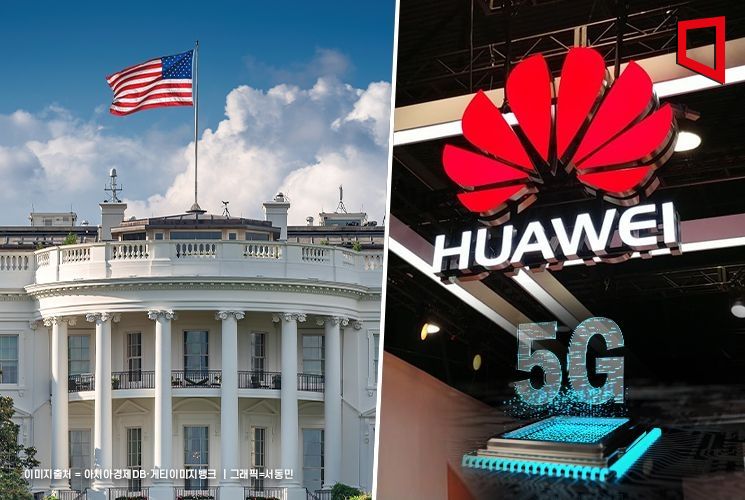
As Huawei launched a new (5G) smartphone applying the latest semiconductor technology, the United States is abuzz with debates over the ineffectiveness of semiconductor export restrictions to China. Despite efforts to prevent the latest semiconductor technologies and equipment from flowing into China, these measures have proven futile. At the same time, more people are anticipating the possibility of additional sanctions. The problem is that if further regulations are implemented, Korean semiconductor companies are likely to suffer significant damage.
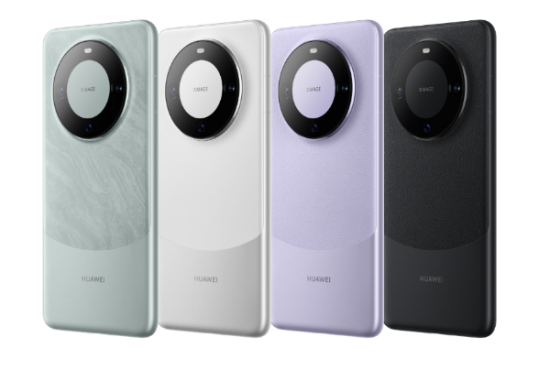
The semiconductor industry is visibly tense over the fact that Korean semiconductor companies' DRAM is included in Huawei's latest phone, the 'Mate 60 Pro.' It has already been revealed that SK Hynix's Double Data Rate (DDR) 5 DRAM is used in Huawei smartphones. Although SK Hynix did not supply products directly to Huawei, it is highly likely that the products flowed in through intermediate supply chains. Samsung Electronics and SK Hynix dominate 70% of the global DRAM market. If large quantities of DRAM are purchased, products from these two companies are inevitably involved.
The issue lies in the possibility that the U.S. may strengthen its restrictions on the export of American semiconductor equipment to Chinese companies, which were initially imposed in October 2022, due to the Huawei incident. Despite export controls on equipment related to logic semiconductors below 14nm, NAND with 128 layers or more, and DRAM semiconductors below 18nm, Chinese companies succeeded in developing the latest phone, providing grounds for the U.S. to decide on additional export restrictions.
Currently, Korean semiconductor companies in China, such as Samsung Electronics and SK Hynix, are granted a one-year grace period as exceptions to the U.S. export restrictions to China. However, there is concern that this grace period may not be extended when it expires next month. The Korea Institute for International Economic Policy (KIEP) recently stated in its report on the 'Global Semiconductor Supply Chain Restructuring' that the greatest damage in the global semiconductor supply chain restructuring process could be suffered by Korean companies with factories in China, citing Samsung Electronics and SK Hynix as representative examples. It explained that memory semiconductor factories, which require regular equipment upgrades, could be significantly affected by U.S. sanctions. Currently, SK Hynix produces about 50% of its total DRAM at its Wuxi plant in China. Samsung Electronics is also operating a NAND flash integrated production system in Xi'an, China.
Even if U.S. semiconductor regulations against China expand and disrupt the production of Chinese smartphones and PCs, Korean companies will suffer damage. If the Chinese IT market stagnates and sales to Chinese customers plummet, not only Korean semiconductor companies such as Samsung Electronics and SK Hynix but also electronic component companies like Samsung Electro-Mechanics and LG Display could be hit.
It is also negative news for Korean companies if the Chinese government’s sensitive reaction to civil servants using Apple iPhones leads to a hit on sales of Apple’s iPhone 15 series, which was unveiled on the 12th (U.S. local time). LG Innotek, which produces camera modules and counts Apple as its largest customer, along with Samsung Display and LG Display, which supply display panels, will also be affected.
The industry believes that, given the issue of job creation at factories in China, the Chinese government is unlikely to expand sanctions against Apple. However, since expectations for the iPhone 15 launch were high, they plan to closely monitor the sales situation in China going forward. Lee Kyu-ha, a researcher at NH Investment & Securities, assessed, "While we need to watch for the possibility of additional sanctions, considering that the iPhone boycott movement following the arrest of Huawei’s vice chairman in 2018 caused about a 20% drop in iPhone sales in China, we should also consider the possibility of an annual decrease of up to approximately 10 million units."
© The Asia Business Daily(www.asiae.co.kr). All rights reserved.
![Clutching a Stolen Dior Bag, Saying "I Hate Being Poor but Real"... The Grotesque Con of a "Human Knockoff" [Slate]](https://cwcontent.asiae.co.kr/asiaresize/183/2026021902243444107_1771435474.jpg)












