Annual Number of Marriages Hits Record Low
"Dual-Income Couples Face Disadvantages in Home Purchase Loans"
The number of newlyweds who plan to marry or have already married but do not register their marriage is increasing. Most analyses suggest this is related to housing issues such as loans or subscription rights.
According to Statistics Korea's 'Marriage and Divorce Statistics' on the 9th, the number of marriages last year was recorded at 192,000. This is the lowest level since the statistics began in the 1970s, marking the fourth consecutive year of record lows since 2019.

Considering that there are quite a few couples who have actually married but have only not registered their marriage, some argue that the number of newlyweds exceeds the official statistics.
It is known that this is influenced by the fact that when preparing to own a home through loans or housing subscription rights, the income criteria for unmarried and married individuals often do not differ significantly.
The proportion of delayed marriage registrations, where couples hold a wedding but postpone the registration, is also on the rise. According to Statistics Korea, the total number of marriage registrations submitted by couples who married in 2020 up to 2022 was 196,483. Among these, 8,377 couples registered their marriage in 2022, which corresponds to the third year after their wedding. This is the first time since the statistics began in 2011 that the delayed registration rate has exceeded 4%.
For couples who married in 2011 and submitted their marriage registration by 2013, there were 313,202 cases, of which 2.8% registered their marriage in 2013. The delayed marriage registration cases increased by 1.5% over nine years.
This is believed to be influenced by the judgment that although income does not change, registering the marriage may prevent them from obtaining loans at lower interest rates compared to not registering.
In fact, marriage registration can work disadvantageously in terms of income.
Many newlyweds also try to time their marriage registration to maximize the benefits provided to them. If postponing the marriage registration is advantageous in a high housing price situation, they follow that strategy.
On real estate-related online cafes where many inquiries about subscription rights are posted, there are stories of couples calculating subscription criteria and points while delaying marriage registration.
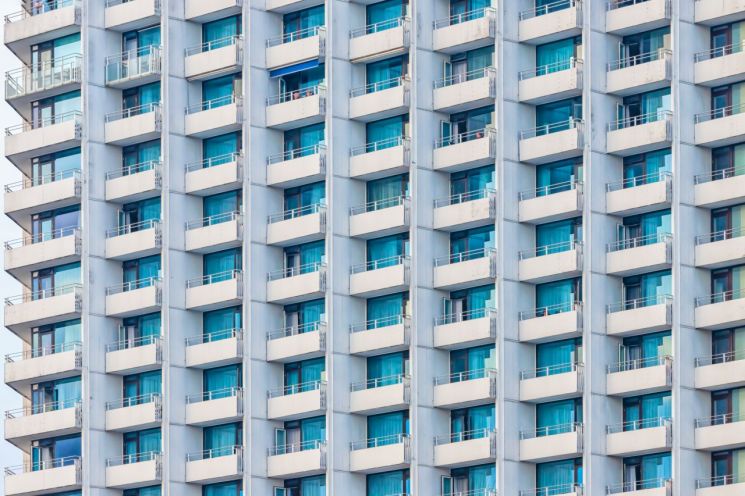
This is because special supply for newlyweds (teukgong) or Happy Housing targets newlyweds who have been married within 7 years. Newlyweds reportedly delay marriage registration until they have sufficiently prepared funds to purchase a house and can receive subscription points.
It is also said that there are not many cases among dual-income couples who meet the priority supply conditions.
For dual-income newlywed couples to qualify for priority housing subscription supply, the income of one spouse must not exceed 100% of the previous year's average monthly income of urban workers per household.
Additionally, since many loan products are released targeting unmarried individuals, the judgment that remaining unmarried is advantageous until owning a home seems to influence delayed marriage registration.
© The Asia Business Daily(www.asiae.co.kr). All rights reserved.


















