In Morocco, North Africa, a magnitude 6.8 earthquake struck late at night on the 8th (local time), resulting in around 300 casualties.
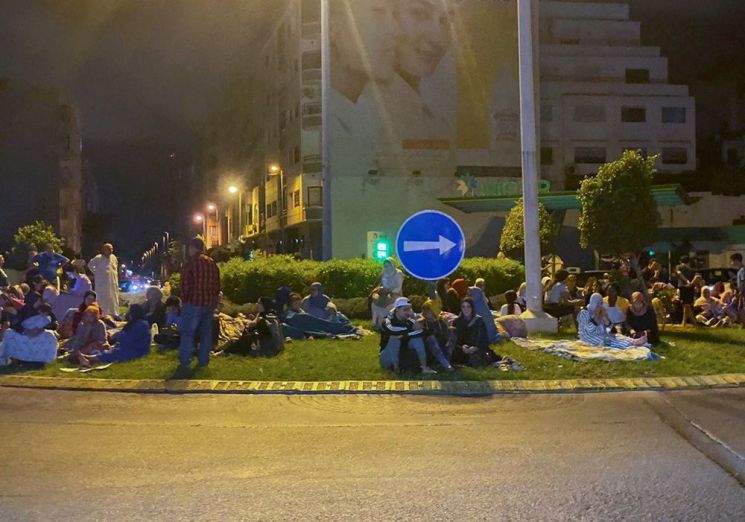
According to major foreign media on the 9th, the Moroccan Ministry of Interior announced through state broadcasting, "Preliminary reports indicate that 296 people have died in Al Haouz, Marrakech, Ouarzazate, Azilal, Chichaoua, Taroudant, and other areas." The number of injured is currently counted at 153.
As local authorities are investigating the earthquake damage and conducting rescue operations, the number of casualties may increase.
According to the United States Geological Survey (USGS), the earthquake occurred at around 11:11 p.m. the previous day, approximately 70 km southwest of Marrakech. It was in the Atlas Mountains near Ouka?meden. The focal depth was 18.5 km, making it the strongest earthquake since the one near Agadir in 1960 that claimed thousands of lives.
As a result, buildings shook or were destroyed in various places from the historic city of Marrakech to the capital Rabat, and many casualties were reported in remote mountainous areas. Many people were trapped under building debris and died, and there are reports of a family of five all perishing.
In particular, some buildings in the old city "Medina" of Marrakech, designated as a UNESCO World Cultural Heritage site, also collapsed. Marrakech has a population of about 839,000.
In northern Morocco, located between the African and Eurasian plates, earthquakes occur frequently. In 2004, at least 628 people died in an earthquake in Al Hoceima in northeastern Morocco. During a magnitude 7.3 earthquake in neighboring Algeria in 1980, about 2,500 people died.
© The Asia Business Daily(www.asiae.co.kr). All rights reserved.

















