5 Years Since the 2018 'Radon Mattress Incident'
Companies Avoid Official Radon Safety Certification
'Safety Negligence' Widespread... Urgent Need for Awareness
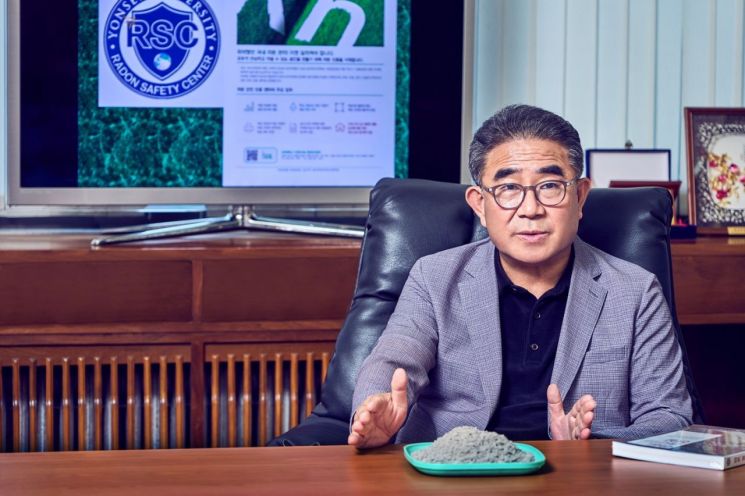 Cho Seung-yeon, head of the Radon Safety Center at Yonsei University (professor in the Department of Environmental Energy Engineering), is explaining the dangers of the radioactive substance radon.
"These days, the discharge of contaminated water from the Fukushima nuclear power plant is a hot topic, but radon is far more dangerous. The types and amounts of radiation, as well as the probability of exposure, are incomparable."
Jo Seung-yeon, Director of the Radon Safety Center at Yonsei University (Professor of Environmental Energy Engineering), said, "While Fukushima treated water and radon share the commonality of being radioactive materials that emit radiation, radon is much more hazardous." He pointed out that even five years after the 2018 'Radon Mattress Incident,' companies are still overlooking the dangers of radon.
Radon is classified as a Group 1 carcinogen by the International Agency for Research on Cancer under the World Health Organization and is the leading cause of lung cancer among non-smokers and women in South Korea. Having studied radon for nearly 30 years, Director Jo is a leading figure in domestic radon research, actively involved with the Ministry of Environment, the National Forensic Service, and the International Atomic Energy Agency, with 25 patent applications and over 150 research papers and reports published.
"Radon More Dangerous Than Fukushima Contaminated Water... Measurement Units Differ by Over 100,000 Times"
Director Jo explained that although Fukushima treated water and radon are both radioactive materials, there are significant differences in exposure risk, types of radiation, and amounts. He said, "For Fukushima seafood, the unit used to measure radioactivity concentration is millibecquerels (mBq) per gram (g), but for radon, the indoor recommended limit itself is 148 becquerels (Bq), meaning the measurement units differ by more than 100,000 times. Radon emits more types of radiation and people are exposed to it more frequently, so we should pay more attention to its dangers, but strangely, we remain indifferent." According to a policy report by the Korea Environment Institute, deaths from lung cancer caused by radon are about seven times higher than deaths caused by drunk driving.
While treated water, an artificial radioactive material created by humans, can have its radiation levels and exposure controlled, naturally occurring radon cannot be completely prevented from exposure. For this reason, the academic community recommends maintaining radon levels below a certain threshold.
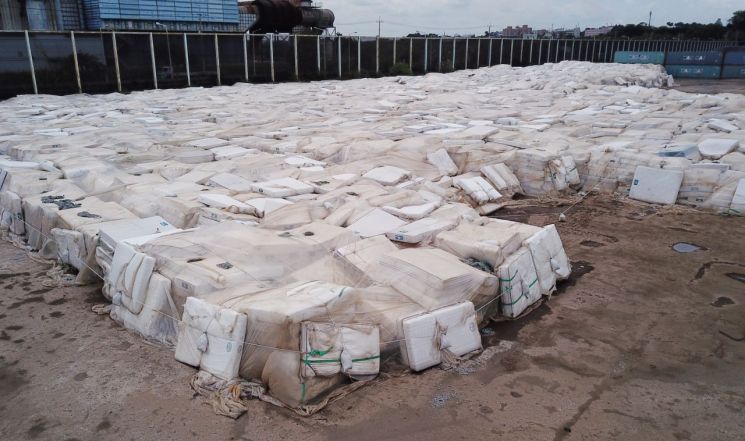 Radon mattresses piled up at the Dangjin Port yard in Chungnam during the 2018 'Radon Incident'. [Image source=Yonhap News]
"Ignoring Consumer Safety Under the Pretext of Economic Downturn"
Director Jo expressed concern that although companies began managing radon after the radon incident, a 'safety complacency' has recently become widespread. He criticized that, using the economic downturn as an excuse, companies manage radon only through self-inspections with low verification reliability or private firms without obtaining nationally certified radon accreditation. This threatens consumer safety.
According to the website of the Korea Standards Association (KSA), the official radon certification body in South Korea, Simmons Beds is the only company renewing radon safety product certification annually for all products on the market. Since 2021, Simmons has also been renewing safety product certification annually for thoron, another carcinogen. Ace Bed stopped renewing radon certification after 2021. Sealy Beds, which have a history of radon detection, have certification for only two models (Harmony and Moderato). Many other companies substitute official certification with test reports. Director Jo said, "Certification is conducted not only to prevent accidents but also as an expression of the will not to repeat mistakes. Companies must produce safe products that meet the heightened expectations of consumers to prevent a recurrence of the radon incident."
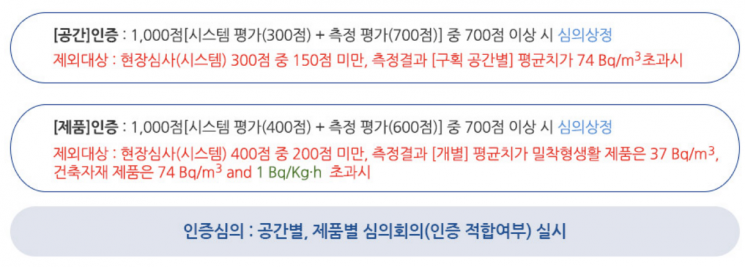 Radon Safety Certification Standards and Procedures of the Korea Standards Association (KSA). (Photo by KSA website)
"Consumers Need Wise Consumption... Government Must Also Improve Laws and Systems"
Director Jo emphasized that consumers themselves need to be vigilant about radon. He advised, "Since exposure to naturally occurring radon is inevitable in daily life, it is important to habitually reduce the possibility of radon exposure. Because radon accumulates in the body through the respiratory system, when choosing furniture like beds where one spends long periods, more careful attention should be paid to radon safety."
Director Jo also stressed the need for proper laws and systems regarding the management of radioactive substances such as radon and thoron. He said, "Advanced countries have many certification systems to the extent that they can be called 'countries of certification,' and companies have established a culture of viewing certification as a promise to consumers. In the United States, radon concentration is even listed as an item in real estate transactions."
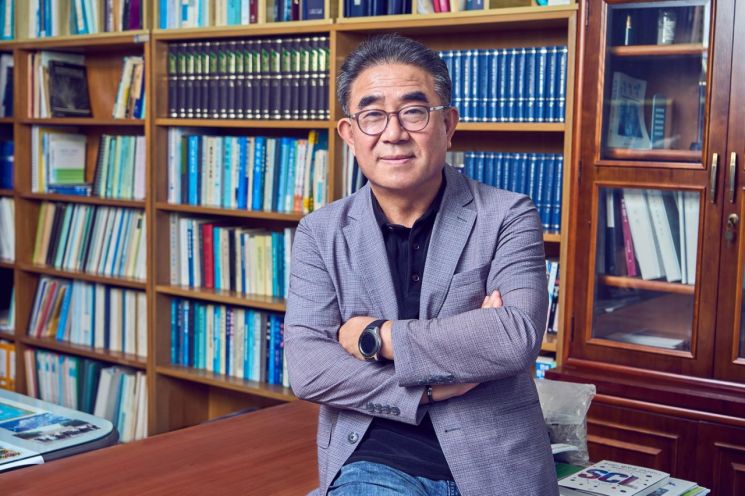 Cho Seung-yeon, Director of the Radon Safety Center at Yonsei University (Professor, Department of Environmental Energy Engineering).
© The Asia Business Daily(www.asiae.co.kr). All rights reserved.



















