LNG·LPG Winter Duty-Free Review
Benefits for Agricultural, Livestock, and Fisheries Products and Industrial Raw Materials
Concerns Over Weakened Price Competitiveness in Some Industries
The government has launched a demand survey to select the items for next year's tariff quota. It is expected that the number of items to which the tariff quota will be applied next year will be significantly expanded to reduce the burden of inflation and strengthen support for key industries such as semiconductors and secondary batteries.
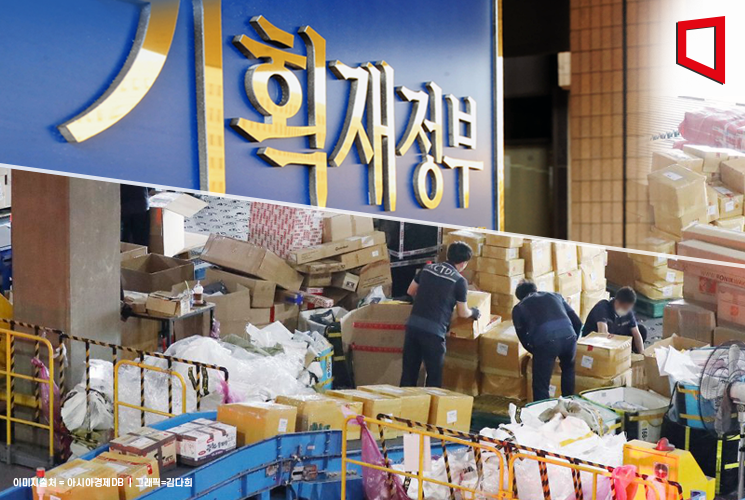
According to the government on the 11th, the Ministry of Economy and Finance recently requested each ministry to conduct a demand survey for items under their jurisdiction to establish the '2024 Flexible Tariff Operation Plan.' A tariff quota is a system that applies a low tariff rate to a certain quantity of specific imported goods for a set period, and a higher tariff rate to quantities exceeding that limit. The government can temporarily adjust tariffs on some imported items based on supply and demand to stabilize prices. Every year in the second half, the Ministry of Economy and Finance surveys the demand for tariff quotas to be applied for the following year from each ministry and announces the results around October.
The number of items subject to tariff quotas next year is expected to increase compared to this year. This is due to the combined effect of rising energy prices caused by the recent surge in international oil prices and price instability in agricultural, livestock, and fishery products caused by heavy rains and heatwaves. Earlier, the government finalized 101 items for this year's tariff quota, the largest number ever, and expected the tariff amount to reach 1.075 trillion won.
Next year's tariff quota items are likely to include liquefied petroleum gas (LPG) and liquefied natural gas (LNG) for heating to reduce the burden of winter heating costs. According to the Ministry of Trade, Industry and Energy, a basic 3% tariff is imposed on LNG imports, and a 2% tariff quota is usually applied during the winter season from October to March of the following year. The ministry is reportedly considering a plan to apply a zero tariff (0%) for a certain period next year due to the recent surge in international oil prices. A government official said, "Considering the increased burden on low-income households due to soaring heating costs, we are currently conducting a demand survey on the application of tariff quotas for LPG and LNG with related industries and organizations."
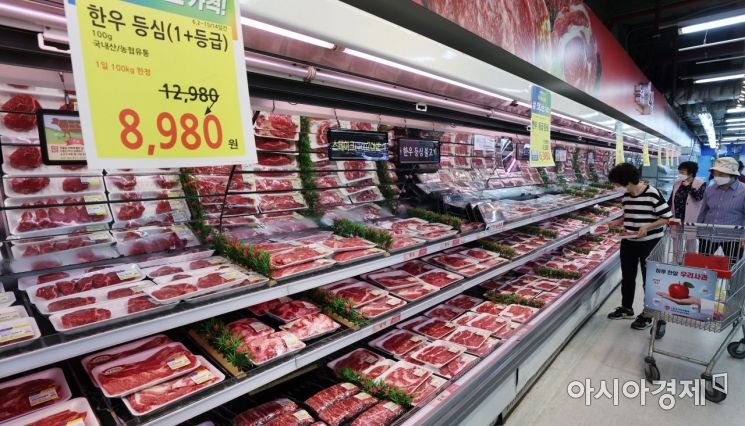 On the 5th, citizens were shopping at a large supermarket in Seoul. Amid the recent severe inflation situation, with last month's consumer price inflation rate exceeding 5%, the sharp rise in international grain prices due to the Ukraine crisis and export restrictions by major grain-producing countries is being transmitted domestically. Additionally, with recent drought damage, the cost of living is showing unstable trends, especially for some agricultural and livestock products. Photo by Kim Hyun-min kimhyun81@
The number of items related to materials, parts, and equipment with high import dependence is also expected to be greatly expanded. A representative example is the full zero tariff application on polycarbonate imports used for manufacturing plastic lenses for mobile phones. In addition, tariff quota requests are being reviewed mainly for items used in national key industries such as manganese metal, ferro-titanium, essential raw materials for secondary batteries, and semiconductor equipment.
The extension of tariff quota application for agricultural, livestock, and fishery products directly linked to table prices is also under consideration. Soybean oil, sunflower seed oil, coffee beans (green beans), potatoes, and modified starch are mainly subject to tariff quotas every year. There are plans to set items for which the reduction period will be temporarily extended by 2 to 6 months. The recent introduction of an additional 30,000 tons (0%) tariff quota for chicken earlier this month is a representative example. Imports of food products such as onions, mackerel, pork, and processed egg products mainly adjust quantities flexibly within a set period.
There are concerns about the weakening of the price competitiveness of domestic products depending on whether the tariff quota items are expanded. Applying tariff quotas lowers tariff burdens, which reduces the prices of imported goods, but it may weaken the price competitiveness of domestic products in some industries such as livestock farming. A government official said, "After completing the demand survey from each ministry by the end of this month, we plan to finalize the items next month," adding, "We will carefully consider price fluctuations and demand to ensure that some industries do not suffer disadvantages."
© The Asia Business Daily(www.asiae.co.kr). All rights reserved.


















