Encouraging a 'Technology Rise' Atmosphere at Huawei
Restricting Civil Servants' Use to Keep in Check
In China, which has introduced high-spec smartphones with its own technology despite US sanctions, there is a growing movement to curb Apple iPhones. Citing cybersecurity as a justification, this is seen as a strategy to counter US pressure on China while encouraging domestic companies to develop technology and expand sales. Although news of sales suspensions in the private distribution sector spread, companies quickly denied the claims, causing a minor controversy.
On the 7th (local time), Bloomberg reported, citing sources, that multiple Chinese public institutions have instructed employees not to bring iPhones to the workplace, and that this ban is expected to extend to state-owned enterprises and public institutions.
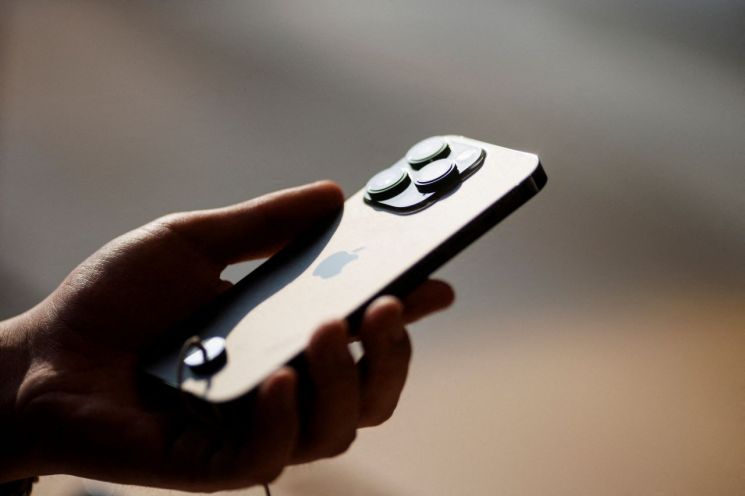
Earlier, on the previous day, The Wall Street Journal (WSJ) reported, "Chinese government officials have recently been instructed not to use iPhones and other foreign-brand smartphones for work or bring them to the office," adding that "similar instructions have been issued to some regulatory agency employees." The authorities have neither made an official announcement nor responded to media fact-checking regarding this measure.
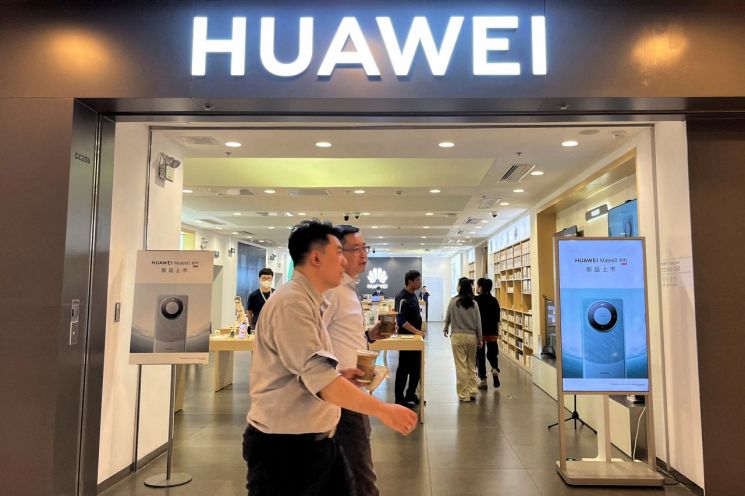
China's iPhone ban is also analyzed as an attempt to accelerate 'technological self-reliance,' inspired by Huawei's recent launch of its latest smartphone model, the 'Mate 60 Pro.' It is seen as a retaliatory measure against US technology sanctions on China while aiming to grow the domestic smartphone manufacturing industry and related technology markets.
Notably, Apple is scheduled to release its latest smartphone model, the 'iPhone 15,' at 1 a.m. on the 13th local time in China. The Greater China region is Apple's third-largest market, with sales reaching $74.2 billion (approximately 99 trillion KRW) as of the end of last year. This accounts for 19% of Apple's total revenue. Major production lines, including the Foxconn factory, are already established in China. Apple CEO Tim Cook's continuous efforts to maintain communication with China reflect the importance of this market.
Such moves by Chinese authorities to curb Apple have become more frequent this year. In May, Chinese authorities halted purchases of semiconductor products from US company Micron, citing security risks. Since last month, China has also controlled exports of 30 items, including gallium and germanium, which are key materials for next-generation semiconductors.
Crackdowns on applications have also intensified. According to major foreign media, Chinese smartphone app markets such as Huawei, Xiaomi, and Tencent recently sent official letters to app developers stating that new app postings will be prohibited if sufficient documentation is not submitted. This is due to strengthened supervision and regulation of app markets by the Ministry of Industry and Information Technology (MIIT). MIIT has decided to ban new app releases if developers do not disclose app information and China-related business details. Consequently, developers must establish a legal entity in China or cooperate with local companies.
Within China, rumors once spread that China Mobile, the country's largest mobile carrier, would stop selling iPhones. The company quickly denied this, stating, "This is not true," and publicly announced that it will continue to cooperate in selling Apple's soon-to-be-released iPhone 15.
Seemingly aware of this, Chinese e-commerce platform JD.com posted on its social media on the same day, stating, "JD ensures that A+ members can purchase Apple products first and have the right to secure new iPhone products ahead of others."
© The Asia Business Daily(www.asiae.co.kr). All rights reserved.


















