Oil Prices Surge Due to Saudi and Russia's Production Cuts
Yuan Weakens as China's Real Estate Crisis Spreads to Economy
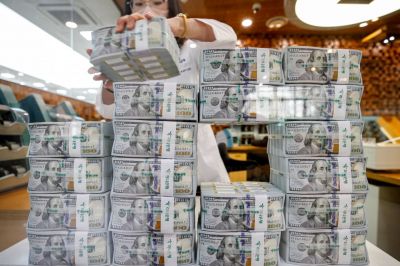
The possibility of a ‘strong dollar’ making a comeback is emerging as concerns over inflation rise due to the weakening of the Chinese yuan and the sharp surge in oil prices, increasing uncertainty over the end of U.S. monetary tightening.
According to the Seoul foreign exchange market on the 6th, the won-dollar exchange rate closed at 1,330.5 won, marking two consecutive trading days closing in the 1,330 won range.
Since the beginning of this month, the won-dollar exchange rate has continued its upward trend. On the 5th, the exchange rate rose to the 1,330 won level for the first time in nine trading days since August 23, pressured by the weakening yuan following disappointment over China’s Purchasing Managers’ Index (PMI) data, closing the session at that level. China’s August services PMI was 51.8, falling short of market expectations and marking the lowest point of the year. The PMI quantifies business conditions as perceived by companies, including inventory, employment, and sales.
As China’s economic indicators weaken and the yuan depreciates, the won, which tends to follow the yuan, is also weakening. Recently, although the Chinese government has implemented various stimulus policies such as measures to revitalize the stock market to boost the economy, the prevailing assessment is that these efforts are insufficient to produce significant effects.
The risk of China’s real estate sector crisis spreading to the broader economy remains. Country Garden, a real estate company on the brink of default, narrowly avoided bankruptcy by repaying dollar bond interest just before maturity, but repayment schedules remain, so it is too early to be reassured. According to Bloomberg, not only Country Garden but also 34 of the top 50 Chinese real estate developers are unable to meet offshore bond payments, and the remaining 16 companies face the obligation to pay $1.5 billion in principal and interest this month. If real estate instability spreads into a financial crisis and further into the Chinese economy, the yuan’s value will decline further.
Another variable is the recent sharp rise in international oil prices. Rising oil prices are a major factor in inflation rebound and could intensify U.S. tightening pressures. The world’s largest oil producers, Saudi Arabia and Russia, have announced an extension of oil production cuts until the end of the year, heightening concerns. Professor Seok Byung-hoon of Ewha Womans University’s Department of Economics said, "The U.S. is making conciliatory gestures toward Iran to induce increased production, but unless production increases dramatically, oil prices are likely to continue rising."
As international oil prices approach their highest levels since November last year, the possibility of reigniting inflationary pressures has increased. Although the U.S. August employment data released on the 1st showed signs of slowing, raising market expectations for the end of rate hikes, if oil prices continue to rise, the Federal Reserve’s dilemma over monetary policy will inevitably deepen.
Park Sang-hyun, a senior advisor at Hi Investment & Securities, expressed concern, saying, "Oil prices and China’s real estate issues have become variables that make it difficult for the won-dollar exchange rate to stabilize downward," adding, "If these variables worsen, it could lead to fundamental problems in the Korean economy and act as factors weakening the won."
© The Asia Business Daily(www.asiae.co.kr). All rights reserved.
![Clutching a Stolen Dior Bag, Saying "I Hate Being Poor but Real"... The Grotesque Con of a "Human Knockoff" [Slate]](https://cwcontent.asiae.co.kr/asiaresize/183/2026021902243444107_1771435474.jpg)










