Genetipharm announced on the 5th that its new stroke drug 'Nellonemdaz' confirmed its efficacy and safety in reducing brain damage in cardiac arrest patients during the Phase 2 clinical trial 'AWAKE'.
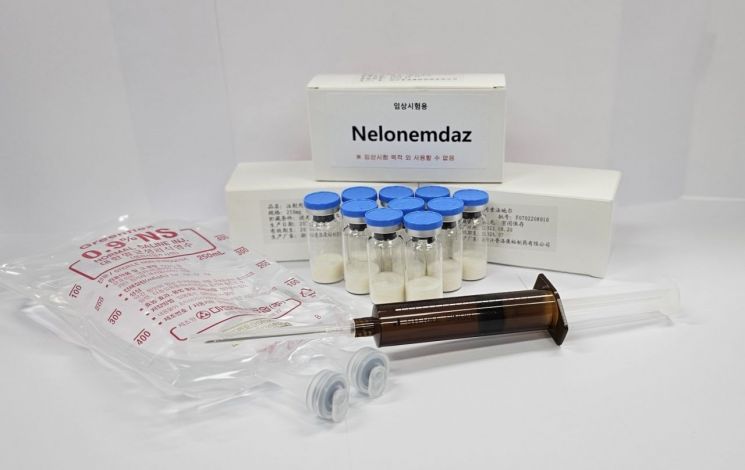
Genetipharm confirmed the improvement effect on disabilities in the Phase 2 clinical trial for cardiac arrest patients, which started in 2017 and ended last July. The efficacy indicators were set as the Cerebral Performance Category (CPC) and modified Rankin Scale (mRS) 90 days after drug administration, showing improved disability outcomes compared to the control group.
This clinical trial was conducted on 105 cardiac arrest patients who regained spontaneous circulation within 4 hours after out-of-hospital cardiopulmonary resuscitation at the emergency departments of five university hospitals, including Samsung Medical Center and Chonnam National University Hospital. Along with hypothermia therapy, placebo, low-dose group (total 3250 mg), and high-dose Nellonemdaz (total 5250 mg) were administered intravenously six times at 12-hour intervals.
The mRS consists of scores from 0 to 6, where 0 indicates no symptoms, 1 means the patient can perform all work and daily activities, 2 indicates mild disability where the patient cannot perform all daily activities but can handle usual tasks without assistance. A score of 3 means moderate disability requiring some help but able to walk without support, 4 indicates moderately severe disability where walking without help and personal hygiene are not possible, 5 means bedridden requiring continuous nursing care, and 6 indicates death. The CPC scale consists of five levels: Level 1 indicates good brain function with consciousness and clear ability to work, Level 2 is moderate brain disability with consciousness and independent behavior, Level 3 is severe brain disability with consciousness but requiring help for daily activities, Level 4 is coma or vegetative state, and Level 5 is brain death.
Clinical results showed that 90 days after administration, the proportion of patients who could independently perform activities with mRS scores of 0-2 and CPC levels 1-2 without disability was 40.7% in the placebo group, 55.5% in the low-dose group, and 63% in the high-dose group, indicating significant improvement in disabilities. Conversely, patients with severe disabilities or death, with mRS scores of 3-6 and CPC levels 3-5, were 59.3% in the placebo group, but decreased significantly to 40.7% in the low-dose group and 37% in the high-dose group.
Analysis of diffusion-weighted imaging (DWI) from magnetic resonance imaging (MRI) within 48 hours after the last drug administration showed a significant reduction in brain damage across all regions in the high-dose group compared to the placebo group. No serious adverse effects related to Nellonemdaz administration were observed.
According to the Korea Disease Control and Prevention Agency’s 'Acute Cardiac Arrest Survey Statistics,' the incidence rate of acute cardiac arrest in South Korea was 64.7 per 100,000 population in 2021, the highest level since the survey began in 2006, and continues to show an increasing trend. Patients who experience cardiac arrest and enter a state of cerebral ischemia may recover spontaneous circulation after cardiopulmonary resuscitation, but most suffer severe disabilities or death due to post-cardiac arrest brain injury (PCABI). This is because glutamate and reactive oxygen species accumulate in the brain during cardiac arrest, causing approximately 2 million brain nerve cells to die per minute. Therefore, hypothermia therapy, which maintains body temperature at 32-34 degrees Celsius, was introduced to reduce secondary brain damage occurring over several days in patients with restored spontaneous circulation, but its effects are limited and weak. Attempts to develop single-target neuroprotective drugs have also failed to prove efficacy.
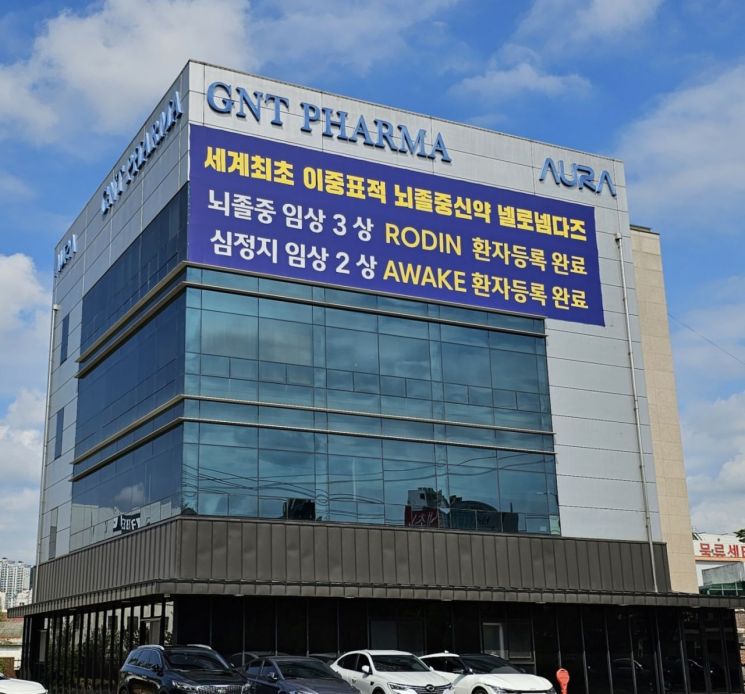
Following the Phase 1 clinical trial conducted on 165 subjects in the United States and China, Genetipharm plans to apply for conditional approval from the Ministry of Food and Drug Safety after confirming the efficacy and safety of Nellonemdaz in this Phase 2 clinical trial.
Byungjoo Kwak, CEO of Genetipharm, stated, “Cardiac arrest threatens life and causes severe disabilities, but there is currently no treatment worldwide. We plan to launch Nellonemdaz, the world’s first multi-target neuroprotective drug, as an orphan drug early in the domestic market.”
© The Asia Business Daily(www.asiae.co.kr). All rights reserved.


















