Domestic new drugs for gastroesophageal reflux disease (GERD) are accelerating their overseas expansion. They are focusing on targeting the potassium-competitive acid blocker (P-CAB) market, which offers improvements over existing treatments.
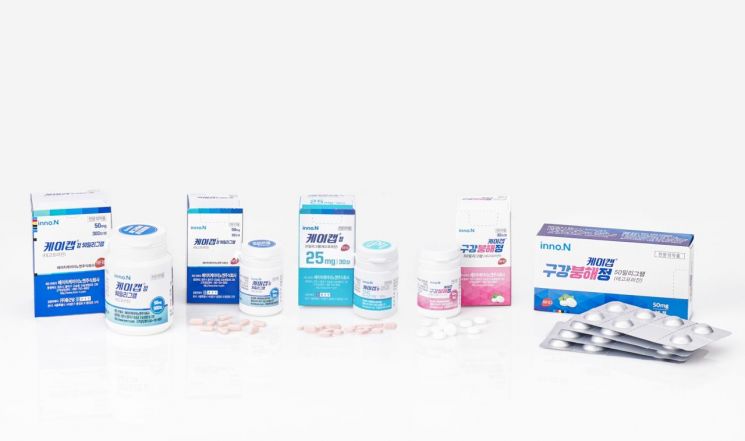
HK Innoen launched the P-CAB GERD new drug ‘K-CAB’ (active ingredient: Tegoprazan) in Singapore on the 4th. HK Innoen exports finished K-CAB products to its local partner UITC, which handles local sales and marketing. Since its launch in 2019, K-CAB has expanded to 35 countries through technology exports and finished product exports within four years. Including Singapore, the drug has been launched in six countries such as China and Mexico, and it received approval in Peru last July, preparing for launch. In other countries, it has entered overseas markets through technology exports. In the United States, the local partner Sevela is conducting Phase 3 clinical trials locally through technology export agreements.
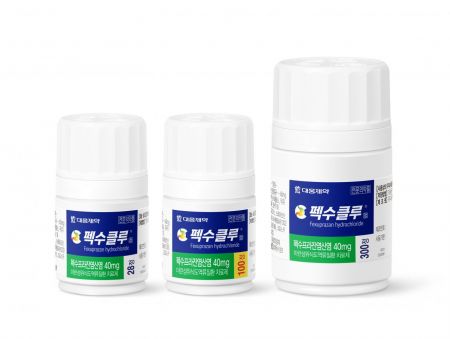
Daewoong Pharmaceutical’s ‘Pexuclu’ (active ingredient: Pexuprazan), launched last July, opened the door to overseas markets through the Philippines just one year later in July. It has obtained product approvals in Ecuador and Chile and submitted product approval applications in 12 countries including China. Additionally, it has signed technology export contracts with 18 other countries. A Daewoong Pharmaceutical official explained, "Our goal is to obtain additional approvals in some countries where product approvals are currently underway by the end of this year."
HK Innoen aims to export K-CAB to 100 countries by 2028 and achieve total sales of 1 trillion KRW. Daewoong Pharmaceutical also set a goal to expand Pexuclu to 100 countries globally by 2027 and reach sales of 1 trillion KRW by 2030.
As the global expansion of domestic P-CAB formulations gains momentum, overseas sales are expected to enter a growth trajectory. K-CAB recorded overseas sales of 2.518 billion KRW in the first half of this year. Although this is modest compared to domestic sales exceeding 50 billion KRW during the same period, it represents rapid growth considering that K-CAB’s total exports last year amounted to only 234 million KRW. An HK Innoen official predicted, "Considering that sales and technology royalties from major markets such as China will be recognized in the second half of the year, K-CAB’s overseas sales are expected to increase further in the latter half of this year."
Currently, only three P-CAB formulations are commercialized in the global market: K-CAB and Pexuclu, along with Takeda Pharmaceutical’s ‘Takecab’ (active ingredient: Vonoprazan). Given this, the share of exports by domestic pharmaceutical companies is expected to grow gradually. This is because the growth rate is significant in countries where P-CAB formulations have been commercialized. In fact, Japan, where P-CAB treatments were introduced in 2015, saw the share of P-CAB treatments exceed 30% within five years by 2020. The market share of P-CAB in Japan is projected to surpass 44% by 2030.
© The Asia Business Daily(www.asiae.co.kr). All rights reserved.


















