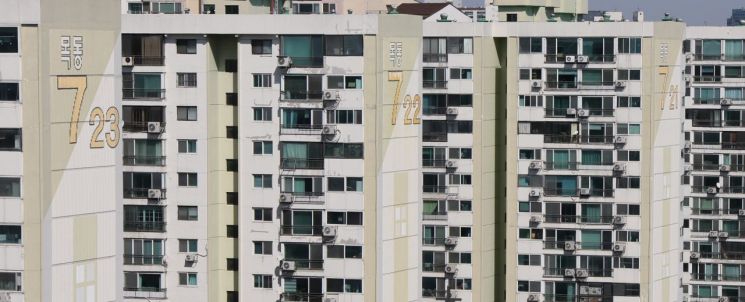
The A Redevelopment Association in Yeongdeungpo dissolved in April 2021 after moving in October 2020. However, it has not completed liquidation for over two years, and it has been revealed that one association head and one employee have been receiving monthly salaries of up to 13 million KRW. There are concerns that in associations that continue to operate without liquidation even after redevelopment and reconstruction move-ins are completed, the settlement profits that should go to the members are instead going to the association head (liquidator).
According to the 'Association Dissolution and Liquidation Status' submitted by the Seoul Metropolitan Government to Kim Young-ho, a member of the Democratic Party of Korea, as of the end of June this year, there are a total of 250 maintenance project associations across 25 districts in Seoul. Among them, 55 associations (22%) have completed liquidation, and 85 associations (34%) have not. The remaining 110 associations are either not dissolved, have lost contact with the association, or have not submitted data to the district office, making it impossible to accurately determine their liquidation status. Among the 85 associations confirmed as not liquidated, excluding 10 associations where the liquidator is unpaid, the average monthly salary of association heads and employees in 75 associations was 4.41 million KRW.
Under current law, once a maintenance project is completed and move-in is finished, the association head must convene a general meeting within one year to dissolve the association and appoint a liquidator to conclude the association's affairs. The liquidator is generally the same person as the dissolved association's head. Through the liquidation process, the association settles past expenses and distributes any additional profits to the members. Associations that have not been liquidated are those that have appointed a liquidator but have not completed liquidation, maintaining their offices and executives as is.
The problem arises in some associations where the liquidator deliberately delays the liquidation process. These individuals have been found to postpone liquidation repeatedly while receiving long-term salaries or embezzling reserved funds set aside for taxes, debt collection, and repayment.
Among the non-liquidated associations, three pay monthly salaries in the 1 million KRW range, twelve in the 2 million KRW range, with the largest number, 24, in the 3 million KRW range. There are twelve associations paying in the 4 million KRW range, eleven in the 5 million KRW range, three in the 6 million KRW range, six in the 7 million KRW range, and four paying over 8 million KRW.
For example, the B Redevelopment Association in Seongbuk-gu pays its association head 5.86 million KRW monthly, while the neighboring C Redevelopment Association head receives 5.17 million KRW. They also employ accounting staff who earn between 2.3 million and 2.64 million KRW per month.
The D Redevelopment Association in Mapo-gu, which dissolved in February last year, pays a total of 8 million KRW monthly for the association head and employees, while the E Redevelopment Association spends 8.13 million KRW.
Under the current 'Urban and Residential Environment Maintenance Act,' once an association dissolves and transitions to a liquidation corporation, the Ministry of Land, Infrastructure and Transport or local governments, which are the main authorities for redevelopment and reconstruction, lose their management and supervisory authority, and the court supervises the liquidation process according to civil law.
Since members cannot participate in the liquidation process unless through litigation, the number of association heads receiving so-called 'liquidation pensions' by not liquidating for extended periods is increasing.
Kim Young-ho stated, "Measures such as reporting to investigative agencies are necessary for some unethical liquidation associations that deliberately delay liquidation and infringe on the rights of members and residents. To achieve this, the 'Liquidation Pension Prevention Act' proposed in the National Assembly must be passed promptly."
The amendment to the 'Urban and Residential Environment Maintenance Act' proposed in May includes provisions for the Ministry of Land, Infrastructure and Transport or local governments to manage and supervise not only the dissolution but also the liquidation of associations.
© The Asia Business Daily(www.asiae.co.kr). All rights reserved.
![From Bar Hostess to Organ Seller to High Society... The Grotesque Con of a "Human Counterfeit" [Slate]](https://cwcontent.asiae.co.kr/asiaresize/183/2026021902243444107_1771435474.jpg)
















