Multiple Heinous Crimes Including Familicide and GOP Shooting Rampage
High Public Support for Death Penalty... No Executions Since 1997
South Korea has the death penalty, but it is classified as a 'de facto abolitionist country' because executions are not carried out. There are 59 inmates on death row who have not been executed, and among them are many criminals who committed heinous crimes such as parricide and mass shootings.
The longest-serving death row inmate is Won Eon-sik, who has been imprisoned for 29 years. Won Eon-sik was sentenced to death on November 23, 1993, after setting fire to a Jehovah's Witness church in Wonju, Gangwon Province, in October 1992, killing 15 people and injuring 25.
Among them is also a serial killer who terrorized citizens. Kang Ho-soon kidnapped, raped, and murdered eight women in the southwestern Gyeonggi region and other areas over two years starting in 2006. Earlier, in 2005, he set fire to his mother-in-law's house, killing his wife and mother-in-law. He was sentenced to death in 2009 and has been serving his sentence for 14 years.
Yoo Young-chul killed 21 people, including elderly and women, in Seoul from 2003 to 2004. He was sentenced to death in 2005 and is currently incarcerated at Seoul Detention Center.
The most recently sentenced death row inmate is Im Do-bin, who carried out the 'GOP Unit Mass Shooting Incident.' In June 2014, at the 22nd Army Division GOP in Goseong County, Gangwon Province, he threw grenades at fellow soldiers and then opened fire, killing five and injuring seven.
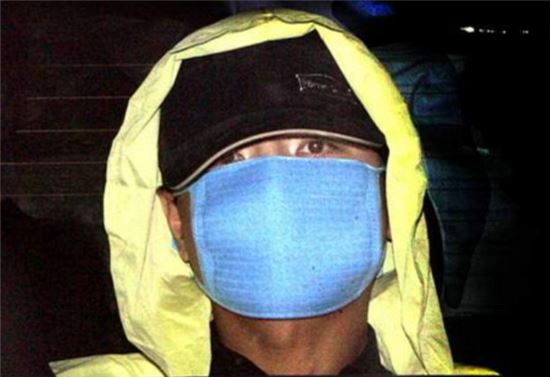 Serial killer Yoo Young-chul. [Image source=Yonhap News]
Recently, with several violent crimes such as the Shinrim-dong stabbing incident occurring, public opinion supporting the reinstatement of the death penalty has been rising. In a survey conducted by Gallup Korea in July last year targeting 1,000 adult men and women nationwide, 69% of respondents said the death penalty should be maintained. Only 23% responded that it should be abolished.
Attorney Kim Kwang-sam said, "There are 59 inmates on death row who have not been executed, which is not a small number, and since most of them are heinous criminals and serial killers, some argue that executions should be carried out." He added, "Public opinion polls also show strong support for retaining the death penalty."
Attorney Kim appeared on YTN's 'The News' on the 30th and said, "Victims' families see (retaining the death penalty) as natural. It is due to their anger and emotions over the harm done to their families." He continued, "In the case of serial killers who killed many victims, the victims' families cannot accept that executions are not carried out in prison and that these criminals are supported for life with taxpayers' money."
Meanwhile, Minister of Justice Han Dong-hoon recently ordered an inspection of the execution facilities. Although some analyses predicted the possibility of the death penalty being reinstated, the Ministry of Justice cautioned against overinterpretation, stating that "facility inspections are routine duties."
In South Korea, executions have not been carried out since December 30, 1997, and related facilities have been virtually neglected. Among correctional institutions nationwide, there are four places with execution facilities: Seoul Detention Center, Busan Detention Center, Daegu Prison, and Daejeon Prison.
© The Asia Business Daily(www.asiae.co.kr). All rights reserved.
















