The Supreme Court has ruled that a law school student being enrolled as a legal officer candidate cannot be considered as 'conscription' under the Military Service Act.
The case involved whether an active duty enlistment candidate who gave up the candidate status midway could undergo a re-examination for military service. The Supreme Court held that if four years have passed since the last active duty disposition, the individual can be subject to a re-military service examination.
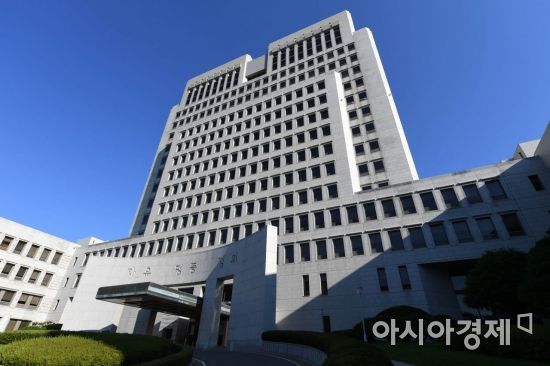
According to the legal community on the 30th, the Supreme Court's 3rd Division (Presiding Justice Ahn Cheol-sang) overturned the lower court ruling that dismissed Mr. A's (33) lawsuit against the Gyeongin Regional Military Manpower Administration seeking cancellation of his active duty enlistment order, and remanded the case to the Suwon High Court.
Born in 1990, Mr. A was classified as the first national service category in January 2008. After undergoing a conscription physical examination in October 2009, he was measured at 167 cm in height, 46 kg in weight, and a body mass index of 16.4, resulting in a physical grade 3 classification, making him eligible for active duty enlistment. He was granted a conscription deferment until November 13, 2012, due to being enrolled in university.
In March 2013, Mr. A entered a law school (Professional Graduate School of Law) and his conscription was deferred again due to his graduate school enrollment. He then applied to become a legal officer candidate and was enrolled in the legal officer candidate military register in April of the same year. When selected as a legal officer candidate while enrolled in law school, one is enrolled in the legal officer candidate military register but does not immediately enlist. Instead, after graduating from law school and obtaining a lawyer qualification, the individual is selected as a legal military officer and then enlists in the military.
However, on June 7, 2019, Mr. A submitted a withdrawal application for legal officer candidate status to the Military Manpower Administration. The Seoul Regional Military Manpower Administration removed him from the legal officer candidate military register on June 11. At that time, Mr. A applied for a re-military service examination based on Article 14-2 of the Military Service Act when submitting his withdrawal application, but the Military Manpower Administration's military examination department responded on June 26, 2019, that he was not subject to re-military service examination or changes in military disposition. The Military Manpower Administration considered Mr. A's enrollment as a legal officer candidate as 'conscription' under the Military Service Act and thus not subject to re-examination.
Article 14-2 (Re-military Service Examination) of the Military Service Act stipulates that if a person who has been classified as an active duty enlistment candidate or supplementary service has not been conscripted or summoned by December 31 of the year four years after the year following the disposition, the local Military Manpower Administration chief shall conduct a re-military service examination in the year five years after.
Earlier, on June 18, the Gyeongin Regional Military Manpower Administration notified Mr. A of active duty enlistment. This was to inform him that he had been removed from the legal officer candidate military register and reverted to active duty enlistment status, thus requiring him to enlist as an active duty soldier.
Mr. A filed a lawsuit against the Gyeongin Regional Military Manpower Administration seeking cancellation of the active duty enlistment order.
The first and second trials ruled in favor of the Military Manpower Administration.
The first trial court held that under Article 14-2 of the Military Service Act, two conditions must be met to be subject to a re-military service examination: ▲ the person must have been classified as an active duty enlistment candidate or supplementary service, and ▲ the person must not have been conscripted or summoned by December 31 of the year four years after the year following the disposition.
In Mr. A's case, since he was classified as a physical grade 3 active duty enlistment candidate on October 5, 2009, the first condition was satisfied. However, the court found that he did not meet the second condition for re-military service examination.
The court explained that according to relevant laws, Mr. A, who was a legal officer candidate, falls under 'military officer candidate' as defined in Article 2(1)4 of the Military Service Act, and Article 5(1) of the Act classifies military officer candidates as active duty.
It further stated, "Article 2(1) of the Military Service Act defines 'conscription' as the state imposing an obligation on a person subject to military service to serve in active duty," and therefore, military officer candidates are active duty personnel distinct from 'active duty enlistment candidates' or 'supplementary service' personnel."
Finally, the court concluded, "The plaintiff was classified as a physical grade 3 active duty enlistment candidate on October 5, 2009, and was conscripted as an active duty military officer candidate (legal officer candidate) before May 2013, which is before December 31 of the year four years after the year following the disposition. Therefore, the plaintiff is not subject to re-military service examination under Article 14-2(1) of the Military Service Act."
The second trial court reached the same conclusion.
However, the second trial court dismissed the cancellation request for the active duty enlistment order dated May 1, 2020, by the Gyeongin Regional Military Manpower Administration chief, stating it could not be considered an independent administrative disposition.
According to the first trial court's suspension of execution order, the Gyeongin Regional Military Manpower Administration chief postponed the enlistment date of the previous enlistment order and set a new enlistment date, notifying Mr. A. This was considered merely a notification of postponement to inform the obligation fulfillment date and not a separate disposition.
However, the Supreme Court's judgment differed.
First, the court stated, "The lower court held that a legal officer candidate corresponds to a military officer candidate under the Military Service Act, and Article 5 of the Act classifies military officer candidates as 'active duty.' Article 2(1) defines 'conscription' as the state imposing an obligation on a person subject to military service to serve in active duty. Therefore, the plaintiff's selection as a legal officer candidate on April 26, 2013, and enrollment in the military register corresponds to conscription from the military service preparatory category 'active duty enlistment candidate' to active duty military officer candidate."
However, the court added, "This judgment is not acceptable. Enrollment in the legal officer candidate military register alone cannot be considered 'active duty' under the Military Service Act, nor can it be regarded as 'conscription' under the Act."
The court explained, "Article 18(1) of the Military Service Act stipulates that active duty service begins from the day of enlistment at a military unit. Although officers are classified as active duty upon appointment or selection, they must enlist and serve just like enlisted soldiers. Particularly, when selected as a legal officer candidate while completing the prescribed course at law school, the individual is enrolled in the legal officer candidate military register. After completing the course and obtaining qualifications as a judge, prosecutor, or lawyer, the individual is selected as a legal military officer by the Minister of National Defense based on physical grade and performance, receives an active duty enlistment notice, enlists at a military unit, completes military training, and is appointed as a legal military officer the following day, being enrolled in the legal military officer military register."
Therefore, the court held, "It is difficult to consider a person merely enrolled in the legal officer candidate military register before being selected as a legal military officer and enlisting for military training as 'active duty' under Article 5 of the Military Service Act."
The court also noted, "Article 2(1) defines 'conscription' as the state imposing an obligation on a person subject to military service to serve in active duty, which requires enlistment and service. Conscription disposition involves 'enlistment,' meaning the military service person enters a military unit by conscription, summons, or voluntary enlistment. However, enrollment in the legal officer candidate military register itself does not involve enlistment into a military unit to fulfill military service obligations, so it cannot be regarded as 'conscription' under the Military Service Act."
© The Asia Business Daily(www.asiae.co.kr). All rights reserved.

















