POSCO and POSCO Steelion announced on the 30th that they have signed a Memorandum of Understanding (MOU) with the Cultural Heritage Administration to improve the design environment at cultural heritage restoration sites such as palaces and royal tombs, promote the use of eco-friendly steel,·and activate recycling.
Through this agreement, POSCO will provide steel plates for Art Fence (construction barriers enhanced with design and artistry) developed by POSCO Steelion to improve the design environment at palace and royal tomb restoration sites. They will also collaborate to provide high-strength steel to reduce steel usage during restoration, support structural design reviews, and promote recycling of scrap steel generated during restoration.
Long-term cultural heritage restoration projects at palaces and royal tombs have faced issues with the durability and visual impact of existing panel and sheet-type construction barriers. To address this, POSCO plans to support Art Fence for the first time, applying POSCO Steelion’s PosArt technology on PosMAC, a special corrosion-resistant steel. PosArt refers to premium high-resolution inkjet printed steel plates capable of vivid colors and delicate texture expression, with a resolution up to four times higher than conventional methods.
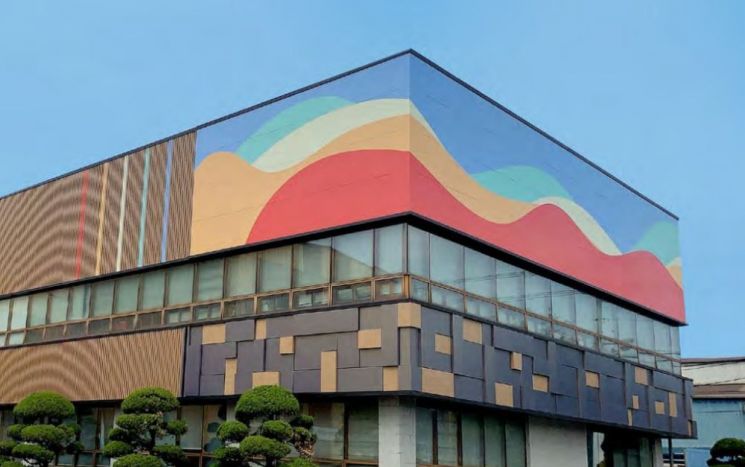 POSCO Steelion Pohang Color Plant office building applied with POSART steel sheet installation
 [Photo by POSCO]
POSCO plans to support Art Fence at the Deoksugung Seonwonjeon area restoration site, which began construction last year, and the Gyeongbokgung Yeonghundang restoration site, scheduled to start construction by the end of this year. Lee Myung-ho, a palace and royal tomb ambassador, will participate in designing the Art Fence.
POSCO will also provide high-strength, lightweight, low-carbon steel for temporary facilities used at palace and royal tomb restoration sites and support structural design of these facilities. It is expected to contribute to activating the circular economy through recycling scrap steel generated at Cultural Heritage Administration restoration sites.
Additionally, to preserve, research, and utilize traditional ironware from palaces and royal tombs, POSCO’s Steel Research Institute will conduct joint research with the Cultural Heritage Administration on the physical properties of traditional ironware recovered from Jongmyo Jeongjeon, and plans to exhibit them at the POSCO History Museum.
Oh Do-gil, Head of POSCO’s Steel Construction Marketing Office, said, "Supporting POSCO steel and technology at cultural heritage restoration sites and recycling scrap steel generated from cultural resources is a good example of a virtuous cycle structure," adding, "We will continue to collaborate in various ways to create and develop more value."
© The Asia Business Daily(www.asiae.co.kr). All rights reserved.

















