Controversy Over 'One Person, One Menu' Policy at Sundaegukbap Restaurant
"Unavoidable to Prevent Troublesome Customers" "Too Harsh"
Recently, the practice of 'one person, one meal' and 'one person, one menu' has become common in the food service industry. A story recently went viral on an online community where a 3-year-old child was asked to order 'one menu per person' at a Sundaegukbap restaurant.
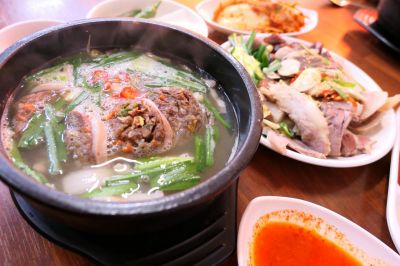
On the 27th, a post titled 'About the one menu per person rule at restaurants' was uploaded to an online community.
The author, Mr. A, went to a Sundaegukbap restaurant with his 3-year-old child and ordered one bowl of Sundaegukbap and an additional bowl of rice. However, the restaurant owner asked Mr. A to order 'one menu per person.'
Mr. A said, "Since the child is 3 years old and doesn't eat much, I ordered one bowl and planned to share a little," but the owner refused, insisting that two bowls must be ordered. Eventually, Mr. A pleaded, "Please make an exception just this once," and was barely able to have the meal.
Mr. A said, "I felt like I was being insulted and was very self-conscious," and asked netizens, "Did I do something wrong?" and "From what age should one order a full bowl?"
Most netizens expressed the opinion that insisting on 'one menu per person' even for a 3-year-old is excessive.
One netizen commented, "I understand that restaurants or cafes require one menu per person, but doing that to a 3-year-old is too much." Another said, "It's better to just leave such restaurants immediately."
It is known that restaurant or cafe owners request one menu per person to prevent so-called 'problem customers' who order little food but occupy seats for a long time in limited seating establishments.
Therefore, most consumers consider ordering food according to the number of people as proper etiquette, but as in Mr. A's case, insisting on one menu per person in special situations is often seen as an inflexible approach.
However, this falls under the restaurant owner's authority, and if customers do not comply, the order will not be completed, so it does not constitute a legal issue.
© The Asia Business Daily(www.asiae.co.kr). All rights reserved.

















