Ministry of Unification "Very Concerned About Possible Repatriation of North Korean Defectors in China"
"Their Wishes Must Be Respected... Consulting Relevant Ministries on Measures"
The government has expressed strong concerns about the possibility of forced repatriation of North Korean defectors residing in China after North Korea opened its borders. The Ministry of Unification plans to explore practical measures to prevent forced repatriation in cooperation with related ministries.
At a regular briefing held at the Government Seoul Office on the 28th, Koo Byung-sam, spokesperson for the Ministry of Unification, stated, "We hope that North Korea's border opening will lead to improvements in the difficult livelihoods and dire human rights conditions of North Korean residents," but added, "Contrary to these hopes, the government is very concerned about the possibility of forced repatriation of North Korean defectors in China after the border opening, as raised by some quarters."
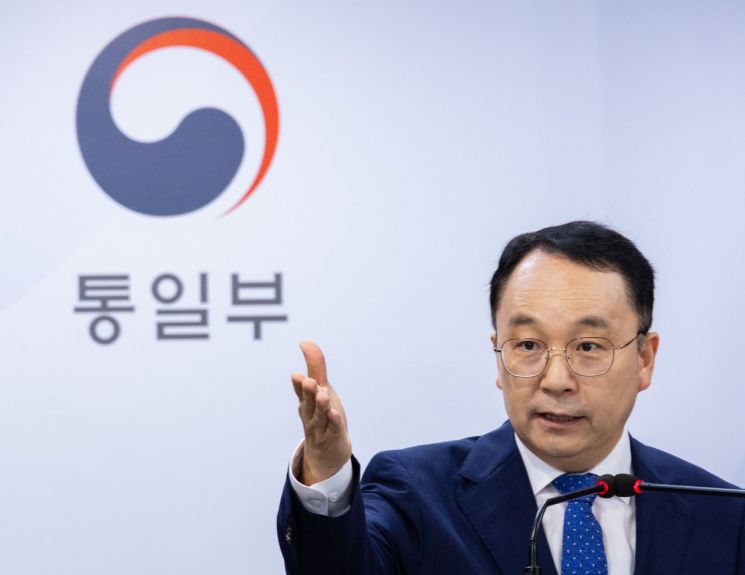
When asked what efforts the government would make to block such repatriation possibilities, he explained, "The government reiterates that North Korean defectors in China must not be forcibly repatriated against their will and that their wishes must be respected," adding, "We will closely consult with related ministries to come up with practical measures to prevent repatriation."
Concerns about the safety and repatriation of North Korean defectors residing in China have been consistently raised. This is because the Chinese government does not recognize defectors as 'refugees' but considers them illegal residents, leaving them in an undocumented and unstable living situation. Several defectors who entered South Korea from China testified that they could not go to hospitals or pharmacies when sick due to lack of identification, and especially women suffered from human trafficking and violence.
These defectors face a high risk of being taken to detention centers after repatriation. Elizabeth Salm?n, the UN Special Rapporteur on human rights in North Korea, estimated last year that around 2,000 defectors were detained in Chinese detention facilities. Despite ongoing criticism that forced repatriation policies violate international norms such as the principle of non-refoulement and the Convention Against Torture, the Chinese government has not expressed any particular stance.
Lee Young-hwan, head of the Transitional Justice Working Group, said, "It is insufficient for the government to merely express concerns and request cooperation from related countries," urging, "Minister of Unification Kim Young-ho and Minister of Foreign Affairs Park Jin should promptly meet with the Seoul offices of the UN Office of the High Commissioner for Human Rights (OHCHR), the UN High Commissioner for Refugees (UNHCR) Korea Representative Office, and the International Organization for Migration (IOM) Korea Representative Office. The South Korean government should explain what efforts it is making to pressure China, and the UN should announce how it will respond to influence both China and international public opinion."
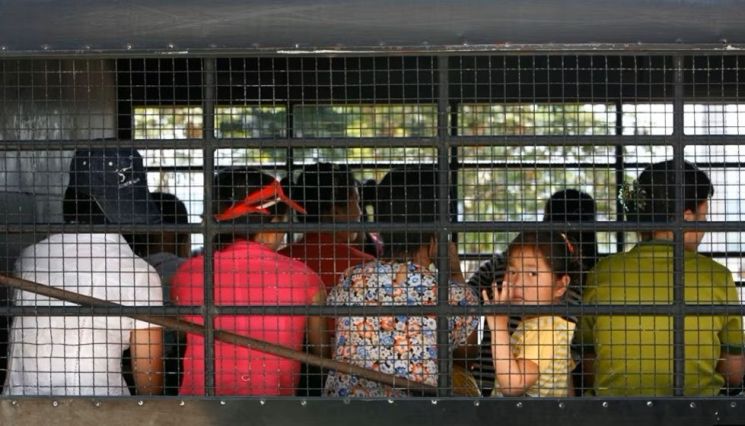 North Korean defectors waiting for third-country resettlement at Chiang Saen Police Station, Chiang Rai Province, Thailand, May 2007. [Image source=Yonhap News]
Meanwhile, the Korean Central News Agency reported on the 27th that North Korean authorities have approved the return of residents staying overseas (in China). This marks the official approval of entry for overseas residents by North Korea, which had completely closed its borders for 3 years and 7 months due to the spread of COVID-19.
The Ministry of Unification evaluated this as a 'limited opening.' Spokesperson Koo said, "North Korea has officially opened its borders after 3 years and 7 months," adding, "It appears that the decision to open the border was made considering various circumstances such as personnel exchanges, but it is necessary to observe the situation a bit more before considering a full opening."
© The Asia Business Daily(www.asiae.co.kr). All rights reserved.


















