Additional 400,000 Units Produced Annually
Water Treatment Used by 16 Million People
LG Chem is expanding its reverse osmosis (RO membrane) production base by enlarging its Cheongju plant and scaling up its business.
On the 28th, LG Chem announced that it will invest 124.6 billion KRW by July 2025 to expand the RO membrane factory within the Cheongju plant site to an annual production capacity of 400,000 units. This capacity can desalinate 1.57 billion tons of water annually (4.32 million tons per day), which is enough water for about 16 million people, roughly one-third of South Korea's population.
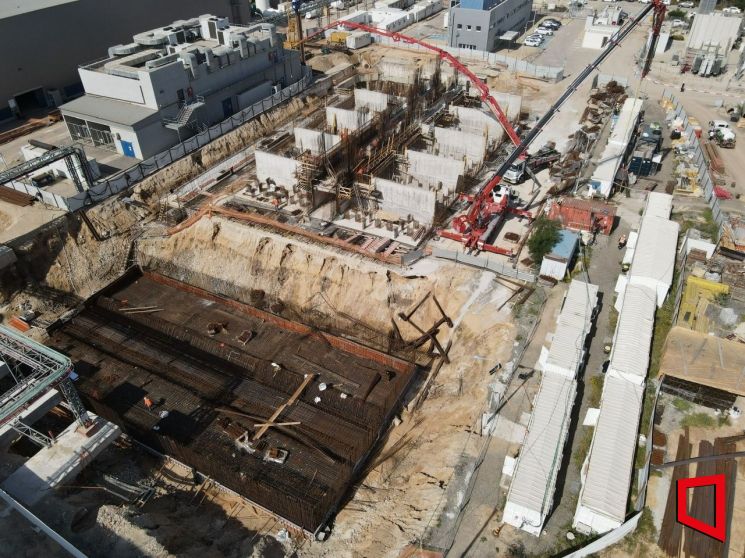 LG Chem reverse osmosis (RO) membranes to be introduced at Ashdod seawater desalination plant in Israel
RO membranes are water treatment materials used to convert seawater into freshwater through reverse osmosis, as well as for industrial water production and wastewater reuse. Since acquiring the U.S. company NanoH2O in 2014 and entering the water treatment business, LG Chem currently holds the second-largest market share in the global seawater desalination RO membrane market.
With this expansion, LG Chem aims to double its RO membrane business, currently valued at 200 billion KRW, within the next five years. In addition to the existing seawater desalination market, the company is targeting the rapidly growing industrial RO membrane markets such as industrial water production and wastewater reuse.
In particular, the expanded RO membrane factory will be built as a smart factory applying artificial intelligence (AI) and digital transformation (DX) automation processes. AI will detect abnormalities in the production line in real time and manage quality and productivity, increasing production speed by more than 25% compared to existing facilities.
On the same day, LG Chem signed an investment agreement with Chungcheongbuk-do Province and Cheongju City for regional cooperation. LG Chem plans to contribute to revitalizing the local economy by purchasing local production materials and equipment during the expansion process. Chungcheongbuk-do and Cheongju City will provide administrative support such as permits and approvals for the RO membrane factory expansion.
According to the global water treatment research institute GWI, the water treatment filter market is expected to grow from 5.3 trillion KRW in 2019 to 6.4 trillion KRW in 2024, with an average annual growth rate of 3.9%.
Shin Hak-cheol, Vice Chairman of LG Chem, stated, "By making additional investments in Cheongju, the production hub for RO membranes, we will significantly expand production capacity and actively target the industrial market following the seawater desalination market to become a global leader. We will provide top-level water treatment solutions to many global customers and grow the business in line with global mega trends by expanding into related fields such as lithium extraction and carbon dioxide separation."
© The Asia Business Daily(www.asiae.co.kr). All rights reserved.

















