Decrease of 8.3 Billion Yen in Japanese Seafood Imports in the First Half of This Year
"US Hypocritically Responded to Maintain Hegemony," Claim
China's state-run media outlet, Global Times, criticized the United States for its "double standards" regarding its approval of Japan's decision to discharge contaminated water from the Fukushima nuclear plant. The reason cited was the sharp decline in U.S. imports of Japanese seafood.
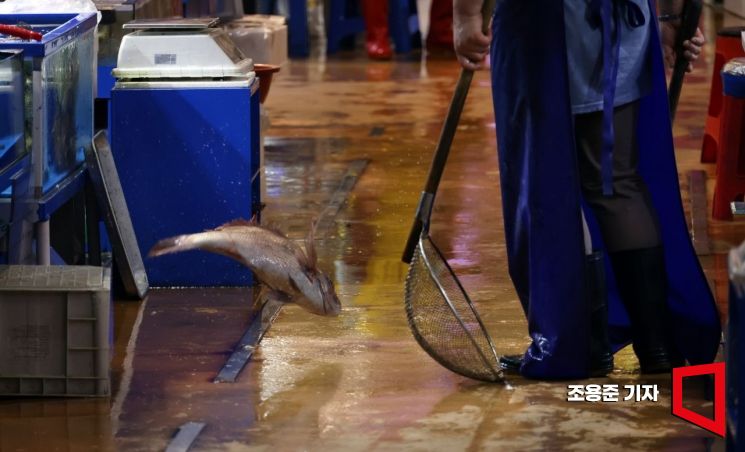
On the 27th (local time), Global Times claimed, "While the U.S. expresses satisfaction with Japan's discharge process of contaminated water, which has sparked global anger and concern, it has actually reduced imports of Japanese seafood and sake the most."
The media cited data from Japan's Ministry of Agriculture, Forestry and Fisheries, pointing out that U.S. imports of Japanese agricultural, forestry, and fishery products decreased by 8.3 billion yen (approximately 75 billion KRW) in the first half of this year (January to June). It also noted, "The main production areas of these products are all regions affected by the Fukushima nuclear plant's contaminated water discharge."
It continued, "U.S. President Joe Biden is neglecting safety and environmental protection issues that are very important to the American people," and argued, "The priority the U.S. places on maintaining geopolitical hegemony is revealed in the poor handling of the Hawaii wildfires and the hypocritical response to this contaminated water discharge."
L? Xiao, a researcher at the Liaoning Academy of Social Sciences, told the media, "Despite knowing the risks that radioactive contaminated water poses to the surrounding ocean and the global environment, the U.S. has succumbed to political interests," adding, "This contradicts its image as a leader in environmental protection movements."
Researcher L? Xiao claimed, "The U.S. is concealing Japan's selfish and irresponsible mistakes," and stated, "It has revealed hypocrisy and double standards."
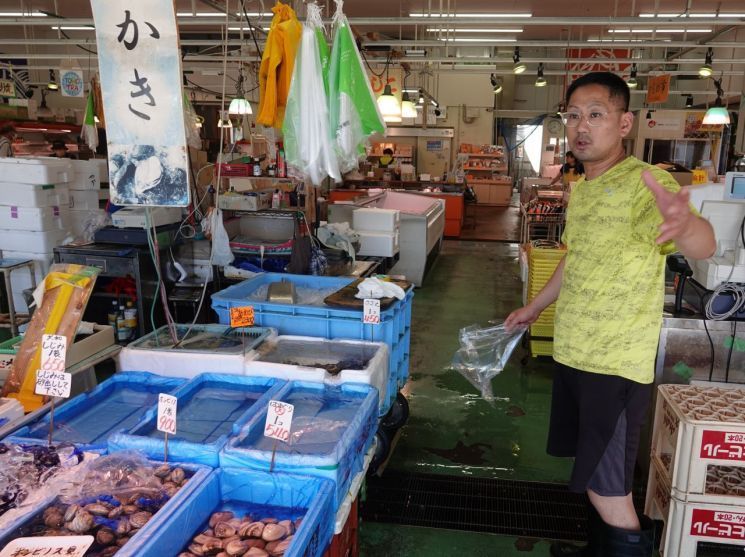
Earlier, the U.S. government issued an official statement welcoming Japan's decision to discharge treated contaminated water from the Fukushima Daiichi Nuclear Power Plant.
Matthew Miller, spokesperson for the U.S. State Department, emphasized in a statement released on the 26th, "The U.S. is satisfied with Japan's safe, transparent, and science-based procedure for discharging contaminated water," adding, "Japan has made open and transparent efforts to responsibly manage the final discharge of contaminated water."
He also stated, "The International Atomic Energy Agency (IAEA) concluded that Japan's plan to discharge contaminated water is safe and meets international standards," and added, "We welcome Japan's continued transparency and engagement with the IAEA and regional stakeholders."
Earlier, Tokyo Electric Power Company (TEPCO) began discharging contaminated water stored in tanks at the Fukushima Daiichi Nuclear Power Plant around 1 p.m. on the 24th. TEPCO plans to dilute and release 7,800 tons of contaminated water with seawater over 16 days starting from that day.
Currently, approximately 1.34 million tons of contaminated water are stored in tanks at the nuclear plant. TEPCO estimates that it will take about 30 years to discharge all the contaminated water.
© The Asia Business Daily(www.asiae.co.kr). All rights reserved.


















