Gukgeum Center: "Increased Sensitivity of Inflation and Economic Monetary Policy"
The International Financial Center analyzed that Federal Reserve (Fed) Chair Jerome Powell's speech at the Jackson Hole meeting was intentionally ambiguous and, by reaffirming the possibility of additional interest rate hikes, slightly reduced expectations for an early rate cut.
In a report titled "Evaluation and Implications of the Jackson Hole Meeting" released on the 26th, the International Financial Center stated, "Powell's speech at the Jackson Hole meeting on the 25th was not significantly different from his remarks at the July Federal Open Market Committee (FOMC) meeting. However, by reiterating the possibility of further rate hikes if necessary, the perception is spreading that the Fed will not rush to ease policy."
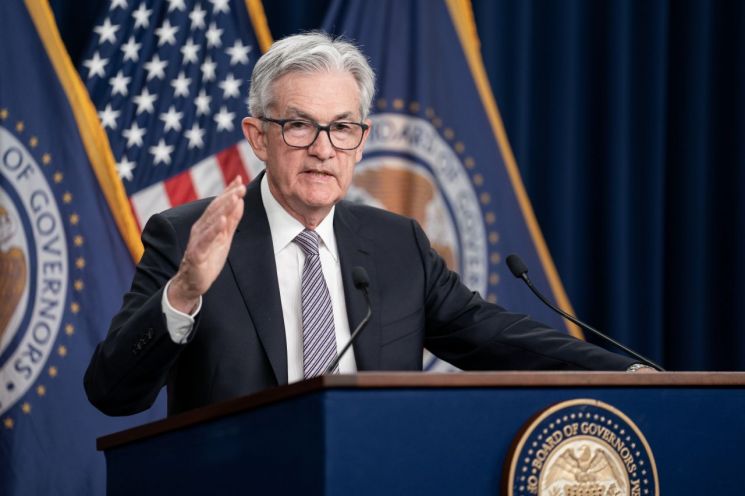
In his opening speech at the Jackson Hole Conference, Chair Powell said, "We will maintain a restrictive monetary policy stance until we are confident that inflation is consistently moving down to our target level."
In this speech, Powell hinted at the possibility of additional rate hikes based on economic indicators. Although inflation has passed its peak and is declining, it remains at a level still high compared to the inflation target. While downward pressure on prices is expected to continue, achieving the 2% inflation target requires a slowdown in growth and a reduction in labor market imbalances. If the deceleration of inflation is insufficient, further tightening will be necessary.
He also added that due to uncertainties about the neutral interest rate, delayed effects of monetary policy, and unusual supply-demand imbalances in the labor market, it is difficult to precisely determine the restrictive level. Amid the need to balance the risks of over-tightening and under-tightening, the Fed plans to make careful decisions at future FOMC meetings on whether to implement additional tightening or maintain the policy rate while observing data, based on economic forecasts and risk assessments.
Regarding Powell's remarks at Jackson Hole, foreign investment banks (IBs) judged that while the Fed emphasizes balancing the risks of over-tightening and under-tightening, it views the upside risks to inflation as higher.
The report diagnosed that even if the Fed does not raise rates further, the economy could slow down, suggesting there is room to keep the policy rate on hold until the effects of tightening become visible.
The International Financial Center emphasized, "As the U.S. Fed's monetary policy has reached a restrictive level, it is important to note that the risks of inflation resurgence due to under-tightening and economic deterioration due to over-tightening coexist, significantly increasing the sensitivity of inflation and the economy to monetary policy."
© The Asia Business Daily(www.asiae.co.kr). All rights reserved.
![Clutching a Stolen Dior Bag, Saying "I Hate Being Poor but Real"... The Grotesque Con of a "Human Knockoff" [Slate]](https://cwcontent.asiae.co.kr/asiaresize/183/2026021902243444107_1771435474.jpg)
















