American electric vehicle startups once dubbed the "second Tesla" continue to struggle with chronic losses due to production capacity limits and intensified competition.
On the 23rd (local time), Rivian announced in its earnings report that it recorded a net loss of $1.2 billion (approximately 1.6 trillion KRW) in the second quarter of this year, narrowing the loss compared to the same period last year ($1.7 billion). Revenue ($1.1 billion) also increased compared to the same period last year ($364 million). Both revenue and net loss outperformed market expectations.
The improvement in second-quarter revenue is attributed to a base effect following last year's supply chain disruptions. According to market research firm FactSet, Rivian's second-quarter deliveries reached 12,640 units, exceeding the market estimate of 11,000 units. The Wall Street Journal (WSJ) reported, "After suffering production setbacks due to ongoing supply chain issues last year, the company is gradually showing signs of recovery."
Despite the revenue improvement, Rivian remains in the negative territory for profitability indicators, with a return on equity (ROE) of -38.91% and a return on assets (ROA) of -200.97%. Since its founding in 2009, Rivian initially ventured into developing sports car coupes similar to Tesla's Roadster but failed to commercialize them. The company then shifted its strategy to developing pickup trucks and sport utility vehicles (SUVs), dedicating itself to a 10-year business plan, organizational building, and research and development. Deliveries of its current lineup of three electric vehicles, including the electric pickup truck (R1T), began in the third quarter of 2021, marking the start of revenue generation, but the company has yet to escape its streak of losses.

Earlier, on the 7th, Lucid also reported disappointing results that fell short of market expectations. Lucid announced a net loss of $764.2 million in the second quarter of this year, a significant increase compared to the same period last year ($220.4 million). Revenue for the same period was $150.9 million, up from $97.3 million the previous year, but it missed market expectations for the third consecutive quarter.
To overcome its slump, Lucid announced a goal to achieve annual production of over 10,000 units this year, which is exactly half of last year's target (20,000 units). The company expressed optimism, stating, "Orders surged on the first day after the price reduction announcement," expecting that the price cuts will lead to increased demand.
Lucid launched its first electric vehicle model, the "Lucid Air," in October 2021. The Lucid Air boasted specifications capable of exceeding 500 miles on a single charge according to the U.S. Environmental Protection Agency (EPA) rating, but deliveries were repeatedly delayed due to the COVID-19 pandemic and supply chain issues, resulting in continued losses.
Hydrogen fuel cell truck company Nikola, which recently faced a "full recall" incident, recorded a net loss of $217.83 million in the second quarter of this year. This represents a significant increase in losses compared to the same period last year ($173 million). Revenue was $15.36 million, also down from $18.13 million in the previous year. In June, Nikola decided to recall 209 commercial electric trucks sold so far and temporarily halt sales due to fire risks caused by battery component defects.
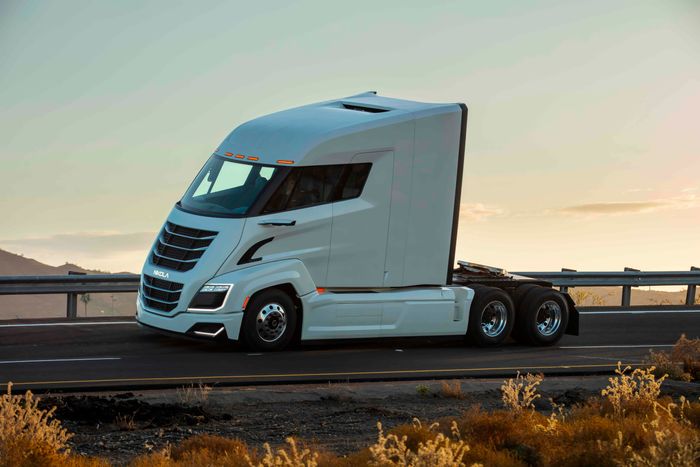
In documents submitted to the U.S. Securities and Exchange Commission (SEC), Nikola stated, "This recall incident may negatively impact our business, performance, financial condition, and cash flow." Business uncertainty has increased as allegations surfaced that Nikola's proprietary hydrogen fuel technology is fictitious, and its founder was convicted on fraud charges.
The price discount backlash triggered by Tesla in the electric vehicle industry has made it even more difficult for these emerging electric vehicle companies to turn profitable. Unlike Tesla, which holds overwhelming market share and cost structure advantages, startups face challenges escaping losses due to high development and marketing costs and the lack of economies of scale. Clear MacDonough, Rivian's Chief Financial Officer (CFO), stated, "Price cuts are making it difficult to reduce raw material costs," while Sherry House, Lucid's CFO, emphasized, "Cost improvement has become our top priority."
© The Asia Business Daily(www.asiae.co.kr). All rights reserved.


















