Spread of Critical Tone Regardless of Progressive or Conservative
Analysis of Judgments Influenced by Local Elections Awareness
Despite opposition from fishermen in the Fukushima region, the Japanese government forcibly proceeded with the ocean discharge of nuclear power plant contaminated water on the 24th, prompting Japanese media outlets that had previously shown a favorable stance toward the government to simultaneously publish articles criticizing the government's decision to proceed with the discharge. They argue that Prime Minister Fumio Kishida failed to sufficiently persuade the opposing public, including fishermen, and that the government's actions ultimately caused local distrust, raising questions of responsibility.
With local elections scheduled next month in the Tohoku region of Japan, including Fukushima, which suffered damage from the nuclear accident, there is analysis suggesting political pressure to hasten the discharge before the elections. Some also point out that since the contaminated water discharge may need to continue longer than the Japanese government anticipates, rushing the early discharge could be risky.
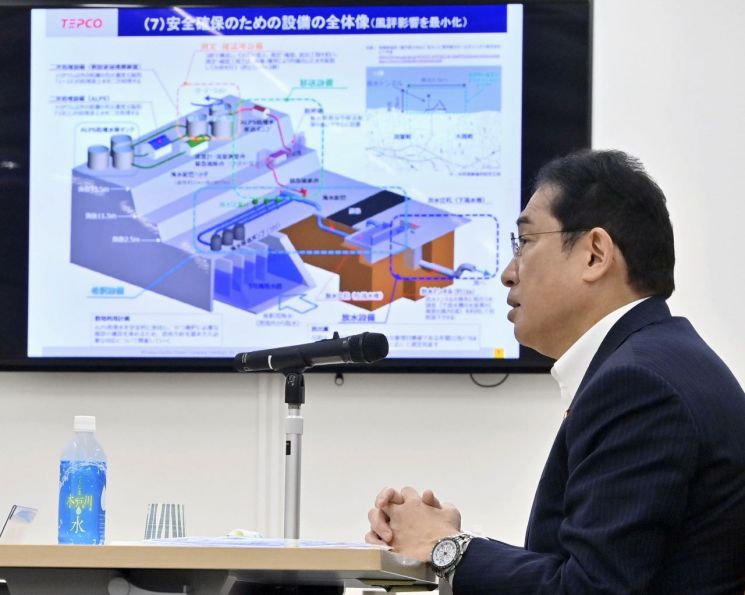
On the 24th, the conservative media outlet Mainichi Shimbun strongly criticized the Japanese government’s forced discharge of contaminated water, stating, "The government is imposing another form of '忍從 (Ninju, meaning forced obedience)' on Fukushima, which is unreasonable," and added, "Resolving this issue with what feels like wordplay can only be described as the government being insincere."
Here, the term "wordplay" refers to the Japanese government’s flip-flopping on its 2015 August pledge not to discharge contaminated water without fishermen’s consent, which it broke as easily as turning over a hand. The Fukushima Fisheries Cooperative Association and the National Federation of Fisheries Cooperative Associations clearly opposed the discharge to the government, and despite this, when the Japanese government proceeded with the discharge, they jointly announced the day before that they would file a lawsuit at the Fukushima District Court to prohibit the discharge.
The progressive-leaning Tokyo Shimbun issued even stronger criticism. Tokyo Shimbun stated, "Compared to former Prime Ministers Shinzo Abe and Yoshihide Suga, Prime Minister Kishida is the worst," and pointed out, "Kishida, who is from Hiroshima and advocated for nuclear disarmament, is drawing a line when it comes to Fukushima."
Despite such sharp criticism from the media, there is analysis that the reason the Japanese government is pushing ahead with the discharge is due to awareness of the upcoming local elections in the Tohoku region, including Fukushima Prefecture, starting in September.
Nihon Keizai Shimbun (Nikkei) analyzed, "Since the prefectural assembly elections in Iwate, Miyagi, and Fukushima?areas affected by the Great East Japan Earthquake?will be held from September to November, postponing the discharge until autumn would be disadvantageous for the elections," and added, "Furthermore, if the discharge date continues to be delayed, countries opposing the discharge, such as China, may believe their responses are effective and intensify their opposition."
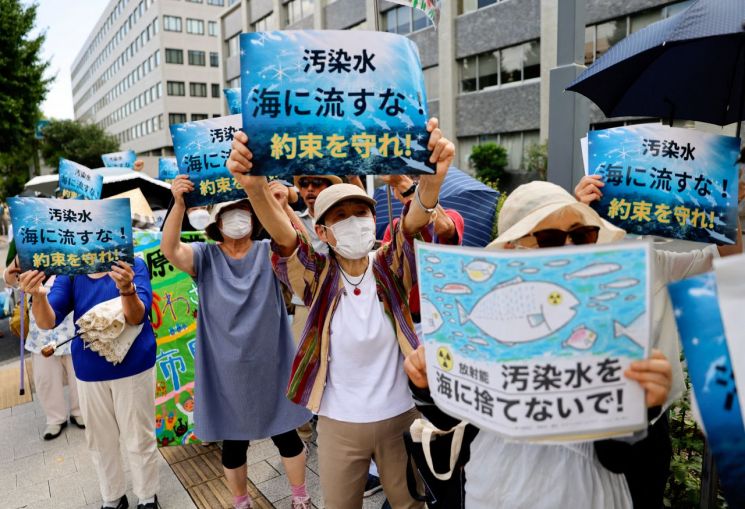
However, concerns have been raised that even if the contaminated water discharge is forcibly carried out immediately, since the discharge will continue for decades, premature action could backfire.
Asahi Shimbun pointed out, "Even if contaminated water is discharged, decommissioning and removal work remains at the nuclear power plant, and it cannot be resolved dramatically," adding, "There is no way to remove the large amount of fuel remaining in the accident-stricken plant, and if this is not removed, contaminated water will continue to increase. The government and Tokyo Electric Power Company have promised to complete decommissioning by 2051, but experts are expressing views that this is unrealistic."
© The Asia Business Daily(www.asiae.co.kr). All rights reserved.
![User Who Sold Erroneously Deposited Bitcoins to Repay Debt and Fund Entertainment... What Did the Supreme Court Decide in 2021? [Legal Issue Check]](https://cwcontent.asiae.co.kr/asiaresize/183/2026020910431234020_1770601391.png)

















