Yamaji Exchange Group CEO
Rising Import Costs of Oil and Others
Cause of Manufacturing Performance Decline
Slow Corporate Governance Improvement Also a Negative Factor
This year, the depreciation of the yen (yen devaluation), which acted as a driving force behind the positive momentum in the Japanese stock market, is expected to become a hidden obstacle that could hinder the market in the second half of the year. Despite the Nikkei 225 index maintaining the psychologically significant resistance level of 32,000 amid China's economic crisis and the US's high-interest-rate new normal, continued yen depreciation could lead to worsening corporate earnings, potentially blocking the stock market's upward trend.
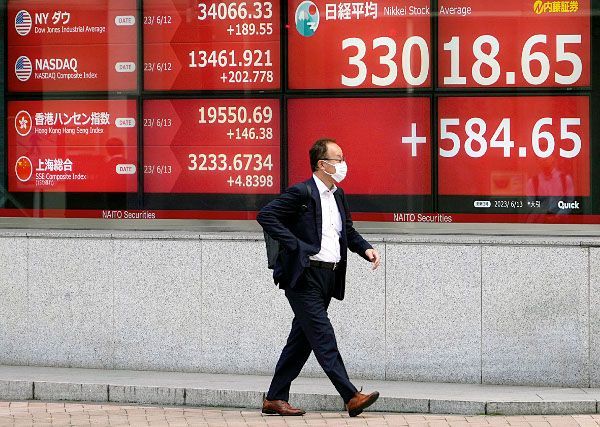 The Nikkei 225, the representative index of the Japanese stock market, surpassed the 33,000 mark at the closing price on June 13, marking the first time in 33 years.
On the 24th, Hiromi Yamaji, CEO of the Japan Exchange Group, stated in an interview with Bloomberg, "The depreciation of the yen is a natural phenomenon caused by the Bank of Japan's prolonged accommodative monetary policy and the widening interest rate gap between the US and Japan," but added, "The problem is that yen depreciation drives up the costs of imported raw materials such as oil."
He particularly pointed out that the increased import costs due to yen depreciation would severely impact the manufacturing sector, including automakers operating factories worldwide. While Japan previously benefited from export booms due to yen depreciation, it will be difficult to achieve the same profits now that production has largely been relocated overseas to reduce costs.
The yen's value against the dollar has been declining since last year as the US, which began aggressive tightening, is expected to maintain high interest rates longer than anticipated, raising concerns. On the 21st, US bond yields reached 4.35%, the highest in 16 years, further encouraging yen weakness.
CEO Yamaji also analyzed that the low market value of listed companies and the lack of progress in improving corporate governance would act as negative factors for the stock market. In March, the Tokyo Stock Exchange requested listed companies trading below their book value to submit plans to enhance corporate value. However, according to data compiled by Bloomberg, 46% of Japanese listed companies still have a price-to-book ratio (PBR) below 1. This is because companies have focused more on accumulating profits than on new investments, resulting in increased assets due to high retained earnings and thus a lower PBR.

He also noted that stingy shareholder-friendly policies could negatively affect stock prices. Mizuho Securities pointed out in July that none of the listed companies that submitted corporate governance reports specified improvement measures for issues raised by shareholders, which could reduce the attractiveness of investments for foreign investors.
The Japanese stock market showed a gradual upward trend between 25,000 and 27,000 points in January this year, then began to surge sharply from the end of April. In June, it surpassed 33,000 points for the first time in 33 years since the collapse of the 1990 bubble economy. This attracted market attention as many export companies improved their earnings due to the unprecedented yen depreciation last year, which enhanced the price competitiveness of Japanese products in overseas markets.
© The Asia Business Daily(www.asiae.co.kr). All rights reserved.


















