Last Year, Hong Kong Ranked 2nd in Japanese Seafood Imports
"Opposition to Contaminated Water Discharge...Order to Control Imports"
Hong Kong, which ranked as the second largest importer of Japanese seafood last year, will ban imports of Japanese seafood starting today.
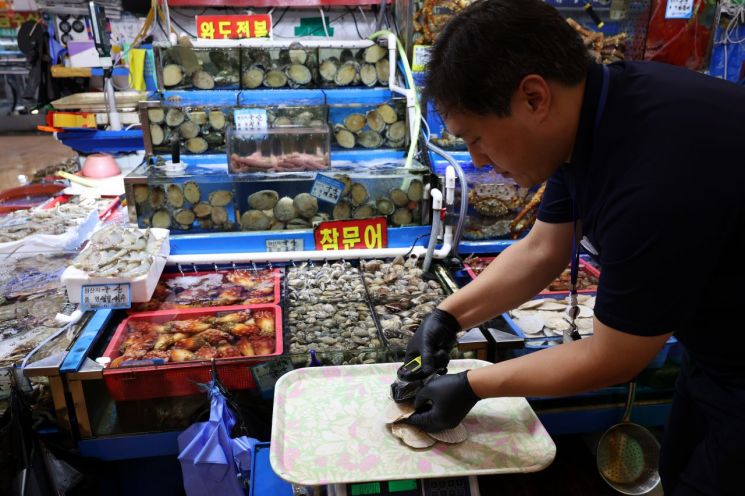 On the afternoon of the 23rd, one day before the release of contaminated water from the Fukushima Daiichi Nuclear Power Plant into the ocean, a market management department employee is conducting a radiation inspection on Japanese seafood at the Noryangjin Fisheries Wholesale Market in Dongjak-gu, Seoul.
 [Image source=Yonhap News]
On the 22nd, Tse Chin-wan, Hong Kong's Secretary for Environment, announced that a ban on imports of Japanese seafood would be implemented in response to Japan's decision to begin discharging contaminated water from the Fukushima Daiichi Nuclear Power Plant into the ocean.
The import ban covers all seafood from 10 prefectures and municipalities in Japan, including Fukushima and Tokyo. The ban applies not only to frozen, refrigerated, and dried products but also to salt and seaweed.
Secretary Tse also stated, "Souvenirs not intended for commercial sale are not subject to the import ban, but they may pose health risks," urging people not to purchase seafood as souvenirs when returning from trips to Japan.
John Lee, Hong Kong's Chief Executive, expressed strong opposition to Japan's contaminated water discharge decision via Weibo, saying, "I have instructed the Secretary for Environment and relevant departments to immediately begin import control measures to ensure food safety and public health in Hong Kong."
China and Russia have also expressed opposition to the Japanese government's discharge decision. The Chinese Ministry of Foreign Affairs called it "an irresponsible decision that shifts the risk of nuclear contamination onto the international community," adding, "We hope August 24, 2023, will not become a day of marine environmental disaster."
Last month, Russia requested that the Japanese government reconsider releasing the contaminated water into the atmosphere as steam, but Japan rejected this proposal.
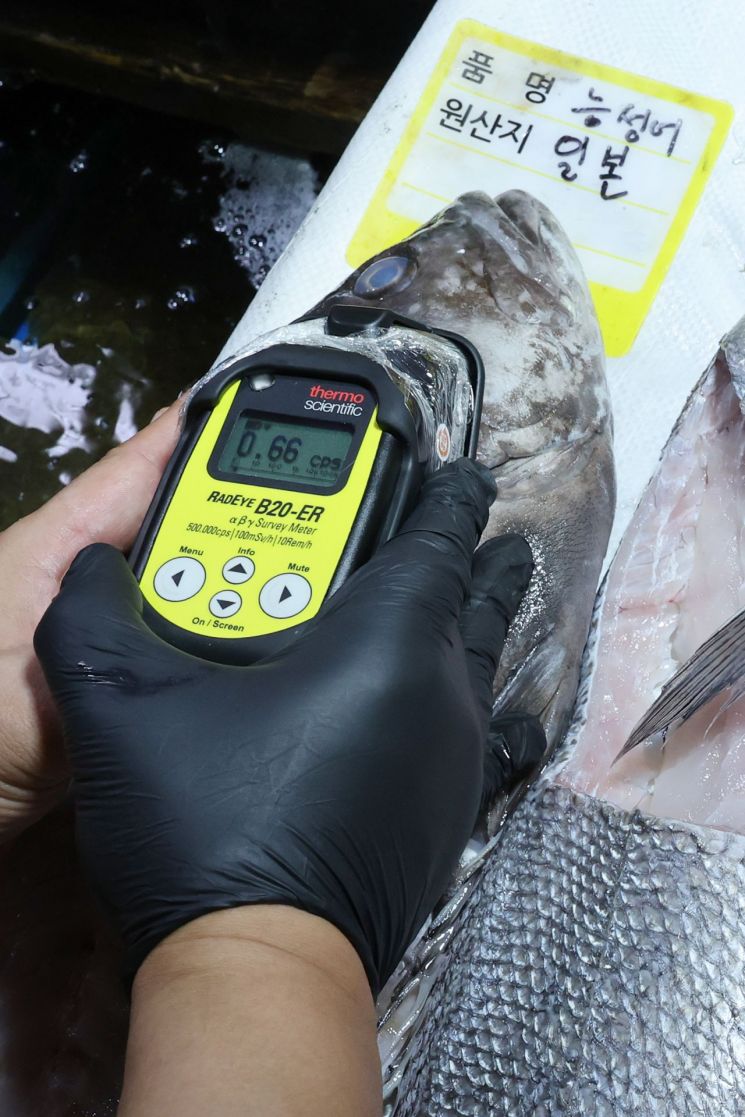 On the afternoon of the 22nd, a market management department employee is conducting a radiation inspection on Japanese seafood at Noryangjin Fisheries Wholesale Market in Dongjak-gu, Seoul. [Image source=Yonhap News]
Meanwhile, the Japanese government and Tokyo Electric Power Company (TEPCO) are coordinating to begin discharging contaminated water starting at 1 p.m. today. The operation will dilute 460 tons of contaminated water with seawater daily and discharge it over a period of 17 days.
TEPCO expects to discharge a total of 31,200 tons by March next year and aims to release all contaminated water within the next 28 years.
© The Asia Business Daily(www.asiae.co.kr). All rights reserved.


















