6-Bedroom Luxury Home with Private Chef
Foreign Real Estate Investment Rises Amid Yen Weakness
Tokyo Apartment Prices Up 60% in First Half of Year
Luxury housing prices within Azabudai Hills, a super high-rise mixed-use complex in central Tokyo set to open this November, are expected to exceed 10 billion yen (approximately 91.81 billion KRW).
Azabudai Hills is a project aimed at redeveloping the aging central Tokyo area, completed 34 years after the redevelopment association was established in 1989.
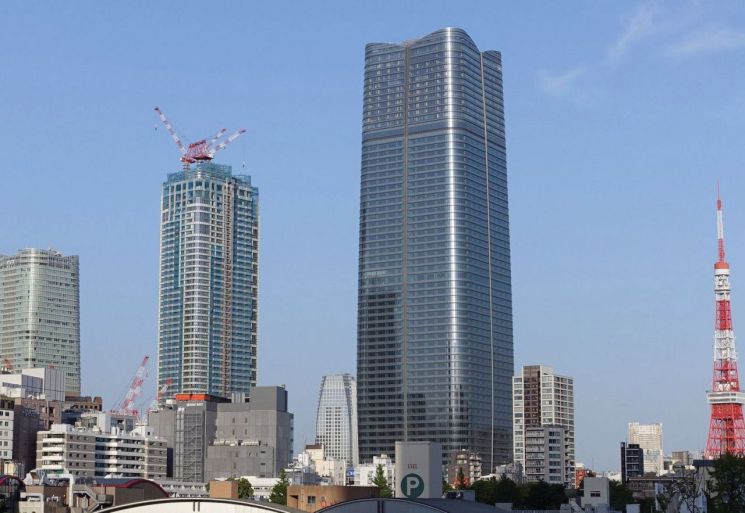 The tallest building in Japan, Tokyo's 'Azabudai Hills Mori JP Tower'. The height of this building is 330m.
 [Photo by Yonhap News]
On the 23rd, the Yomiuri Shimbun quoted real estate officials saying, "Among the luxury residences located on the upper floors of the central building of Azabudai Hills, 'Mori JP Tower,' the most expensive units are expected to exceed 10 billion yen." There are 91 luxury residences on floors 54 to 64 of Mori JP Tower. A real estate official stated, "Two-thirds of the units have already been contracted."
The project was designed by the Aman Group, which supplies luxury hotels and resorts in 20 countries worldwide. Each luxury residence in Mori JP Tower features six bedrooms, a private chef, exclusive facilities for residents to host parties, and a spa overlooking the city.
In addition to offices and residences, Azabudai Hills will include a 4,000㎡ (1,210 pyeong) specialty food store and a preventive medical center. The largest international school in the city and a permanent digital art exhibition hall will also be established.
The Yomiuri Shimbun analyzed, "It is an environment favored by foreigners," adding, "Japan is making efforts to attract ultra-wealthy individuals from overseas."
Tokyo apartment prices surged 60% in the first half of this year
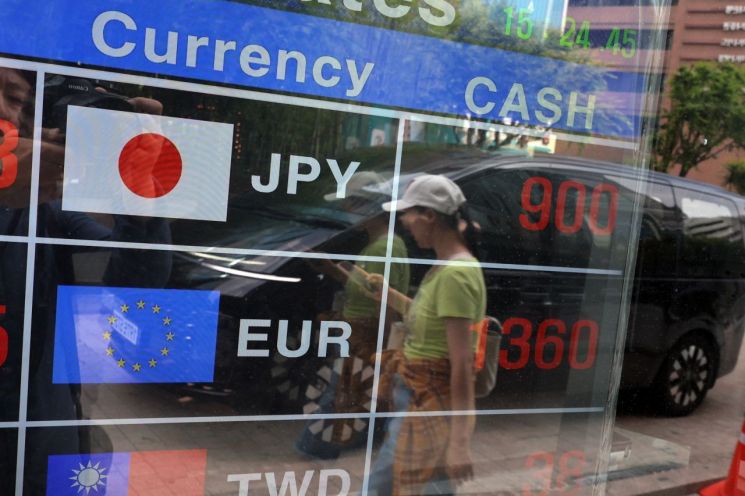 The number of newly supplied housing units in central Tokyo in the first half of this year decreased by 9% compared to the previous year, while demand is increasing mainly for luxury homes. In particular, as the yen weakens, foreign demand for ultra-high-end homes within Japan, such as Azabudai Hills, continues to grow.
 [Photo by Yonhap News]
After suffering a long-term recession known as the "Lost 30 Years" following the collapse of the real estate bubble, apartment prices in Japan have been rising again since the COVID-19 pandemic.
According to statistics from the Japan Real Estate Economic Institute, as of the end of June, the average price of newly built apartments (condominiums) in Tokyo was 129.6 million yen (approximately 118.05 million KRW), marking a 60% surge in the first half of this year. This is the highest level since the institute began related statistics in 1973. The average price of newly built apartments in the Tokyo metropolitan area, classified as part of the Greater Tokyo Area, also reached a record high of 88.7 million yen (81.22 million KRW).
Japan endured a prolonged period of deflation after overcoming the real estate bubble collapse. Even when central banks worldwide lowered benchmark interest rates to overcome COVID-19, causing global inflation to surge, Japan experienced no price increases. During the peak of the COVID-19 pandemic in 2020 and 2021, the average price of Tokyo apartments was in the 80 million yen range (approximately 73.22 million KRW), exceeding the pre-pandemic 2019 level of 76.4 million yen.
However, over the past year, Japan's inflation rate has exceeded the Bank of Japan's (BOJ) target of 2%, leading to rising apartment prices and a sharp increase in the first half of this year.
While the number of newly supplied housing units in central Tokyo decreased by 9% compared to the previous year in the first half of this year, demand, especially for luxury housing, has increased. In particular, with the yen weakening, foreign demand for ultra-high-end housing in Japan, such as Azabudai Hills, continues to grow.
© The Asia Business Daily(www.asiae.co.kr). All rights reserved.

















