Development of Steel Materials and Steel Structures Ensuring Takeoff and Landing Stability
POSCO is embarking on a joint development of takeoff and landing facilities (vertiports), essential infrastructure for the commercialization of Urban Air Mobility (UAM), which is considered a future transportation mode.
On the 23rd, POSCO signed a joint research agreement on "Strategic Technology Development for Responding to the Future UAM Construction Market" with Korea Airports Corporation and Hanwha Corporation's Construction Division at the Korea Airports Corporation headquarters in Gangseo-gu, Seoul.
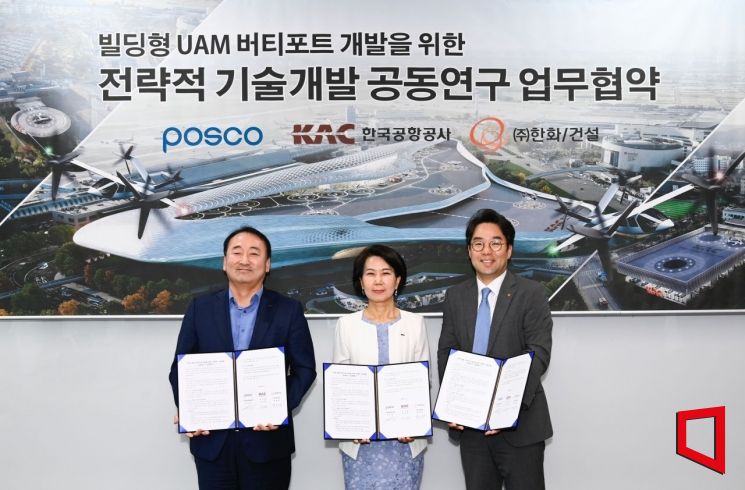 POSCO signed a strategic technology development agreement for the "Building-type UAM Vertiport Development" with Korea Airports Corporation and Hanwha Corporation's Construction Division at the Korea Airports Corporation headquarters in Gangseo-gu, Seoul on the 23rd. From the left: Odogil, Head of POSCO Structural Materials Marketing Office; Imae, Vice President of Korea Airports Corporation; Park Seyoung, Head of Architecture Business Division, Hanwha Corporation Construction Division.
Through this joint research, they plan to combine POSCO's steel structure utilization technology, Korea Airports Corporation's expertise in the aviation sector, and Hanwha Construction Division's design and construction capabilities to create a standard model for UAM vertiports. They will consider applying this model to vertiports at Jamsil MICE and Suseo Station, where UAM operations are planned in the future.
POSCO will develop optimal steel materials and steel structure technologies that ensure safety for vertiport construction. Considering the characteristics of building-type vertiports installed on rooftops where aircraft take off and land repeatedly, they plan to specify steel structure designs and utilization technologies using lightweight steel materials.
Additionally, to prepare for an increase in the number of aircraft operations due to growing passenger demand and terminal space expansion, they will explore applying modular steel structures and consider using building-integrated photovoltaic (BIPV) exterior materials to enhance the vertiport's eco-friendliness.
UAM, attracting attention as a future transportation mode, is a next-generation advanced transportation system that safely and conveniently transports people and cargo in urban environments based on electric-powered, low-noise aircraft and vertical takeoff and landing facilities. The government is also fostering UAM as a future core growth engine. The Ministry of Land, Infrastructure and Transport plans to commercialize UAM centered on metropolitan urban areas by 2025 and expand commercial services to major regional hubs nationwide from 2026.
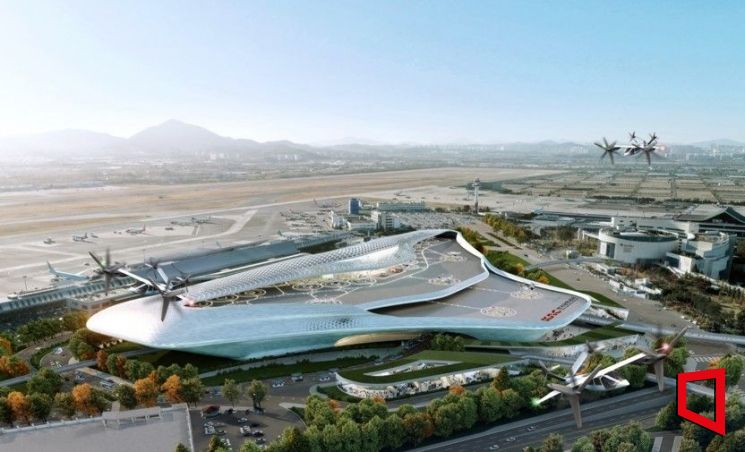
Among these, UAM vertiports are fundamental facilities where aircraft take off and land vertically and serve as key infrastructure for passenger boarding and disembarking, as well as UAM charging and maintenance. Building vertiports requires not only materials and utilization technologies but also the establishment of a super-collaborative system among related fields such as construction and aviation. The three companies signed a business agreement last December to pioneer overseas vertiport markets.
Oh Do-gil, Head of POSCO's Structural Materials Marketing Office, said, "POSCO has been leading the development of steel materials and technologies necessary for the future construction industry. Through joint development, we expect to contribute to accelerating and revitalizing the commercialization of UAM."
© The Asia Business Daily(www.asiae.co.kr). All rights reserved.
![User Who Sold Erroneously Deposited Bitcoins to Repay Debt and Fund Entertainment... What Did the Supreme Court Decide in 2021? [Legal Issue Check]](https://cwcontent.asiae.co.kr/asiaresize/183/2026020910431234020_1770601391.png)
















