Impact of Loan Interest Rate Decline and Reverse Jeonse Crisis Measures
Jeonse Prices Nationwide Rise for 4 Consecutive Weeks According to Korea Real Estate Board
Jeonse Supply Decrease Expected to Sustain Jeonse Price Increase
Recently, as jeonse prices have been on the rise, some areas have seen increases of hundreds of millions of won compared to the beginning of the year. This is attributed to the government's measures against reverse jeonse difficulties, which have eased loan regulations and lowered interest rates, leading to a resurgence in jeonse demand. Additionally, with jeonse listings disappearing, concerns are growing in some quarters about a 'jeonse shortage' in the second half of the year, instead of the reverse jeonse difficulties warned about by the Bank of Korea.
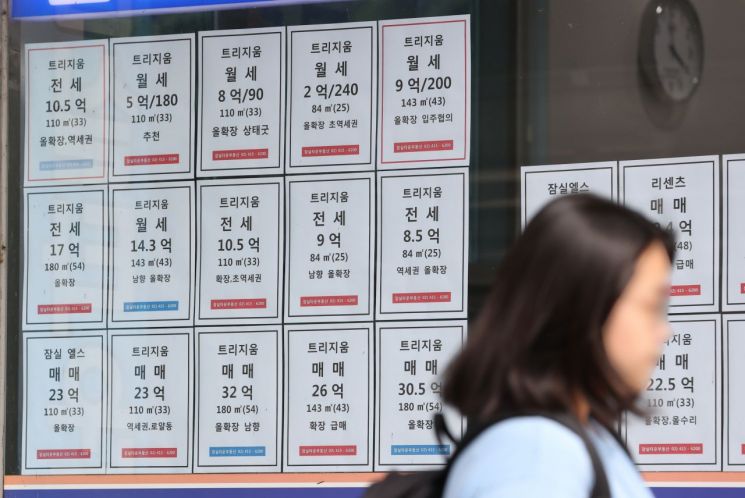
According to the Ministry of Land, Infrastructure and Transport's real transaction price disclosure system on the 22nd, an 84.83㎡ unit in Raemian Gangnam Forest, Gaepo-dong, Gangnam-gu, Seoul, was leased under a jeonse contract for 1 billion won in January this year, but in July, the contract was signed for 1.21 billion won. This means the jeonse price rose by more than 200 million won in just six months. Also, an 84㎡ unit in Godeok Gracium, Gangdong-gu, was leased for up to 600 million won in January this year, but this month it was traded for 830 million won. The jeonse price of an 84㎡ unit in Helio City, Garak-dong, Songpa-gu, fell to the high 600 million won range in January but is now being traded in the 1 billion won range this month.
In Gyeonggi Province, jeonse prices are also recovering, centered around school districts and large complexes. In Sujae-dong, Bundang-gu, Seongnam-si, an 84㎡ unit in Yangji Kumho Complex 1 was leased for 650 million won in March this year, but last month, a first-floor unit, which is a lower floor, was traded for 730 million won, 80 million won higher.
Jeonse prices are rising not only in the metropolitan area but nationwide as well. According to the Korea Real Estate Board, as of the 14th, nationwide jeonse prices rose by 0.04%, continuing an upward trend for four consecutive weeks. The metropolitan area and Seoul rose by 0.1% and 0.11%, respectively, maintaining a six-week consecutive increase. While there were strong warnings in the second quarter about the worsening reverse jeonse situation in the second half of this year, the third quarter shows a gradual recovery in jeonse prices.
Earlier, in May, the Bank of Korea issued a report titled 'Status and Implications of Empty Jeonse and Reverse Jeonse,' warning that a significant portion of empty jeonse contracts would mature in the second half of this year and the first half of next year, cautioning about the worsening reverse jeonse difficulties in the second half of this year. Empty jeonse refers to cases where the market price is lower than the existing jeonse deposit, and reverse jeonse means the jeonse market price is lower than the existing jeonse deposit. The increase in empty and reverse jeonse expands the risk of non-return of jeonse deposits and the burden of deposit repayment, which could lead to an increase in listings, thereby exerting downward pressure on the housing market.
The jeonse supply-demand index, which had fallen due to jeonse fraud and other factors, is also showing a clear recovery. According to the Real Estate Board, Seoul's jeonse supply-demand index recorded 91.6 as of the second week of this month (14th). It was 61.2 at the beginning of this year, rising by more than 30 points. The jeonse supply-demand index is based on 100, and the closer it is to 0, the more landlords are offering houses than tenants seeking them. Approaching 100 means that the number of tenants looking for jeonse houses exceeds the supply.
The market expects jeonse prices to continue rising for the time being due to the decrease in jeonse listings. According to Asil, a real estate big data company, as of the 22nd, jeonse listings in 25 districts of Seoul have decreased compared to six months ago, except for Eunpyeong-gu (1.1%). The largest decreases in jeonse listings were in Dongjak-gu (-65.2%), Gwangjin-gu (-63.1%), Jung-gu (-61.9%), Mapo-gu (-61.1%), and Seongbuk-gu (-59.6%).
Yeokyunghee, chief researcher at Real Estate R114, said, "Jeonse demand has recovered due to the fall in jeonse prices and the government's loan measures aimed at returning jeonse deposits," adding, "The risk level of reverse jeonse in the metropolitan apartment market in the second half of the year is expected to be lower than anticipated."
© The Asia Business Daily(www.asiae.co.kr). All rights reserved.
![From Hostess to Organ Seller to High Society... The Grotesque Scam of a "Human Counterfeit" Shaking the Korean Psyche [Slate]](https://cwcontent.asiae.co.kr/asiaresize/183/2026021902243444107_1771435474.jpg)
















