GC Green Cross announced on the 21st that it participated in the Bleeding Disorder Conference (BDC) in the United States and presented research results analyzing thrombotic adverse events of hemophilia A treatment Emicizumab and factor VIII products reported in the U.S. Food and Drug Administration (FDA) Adverse Event Reporting System (FAERS).
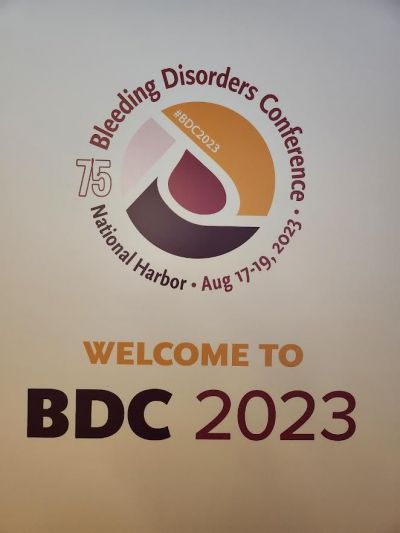
Hosted for the 75th time this year by the National Hemophilia Foundation (NHF), the BDC is an international conference where experts on bleeding disorders gather to share related knowledge and the latest research. It was held from the 17th to the 19th (local time) in Maryland, USA.
Hemophilia, largely classified into types A, B, and C, is a congenital disease caused by a deficiency of blood coagulation factors. Type A involves a deficiency of factor VIII, type B involves factor IX, and type C involves factor XI. About 80% of patients have type A, and about 20% have type B. Type C is very rare. In South Korea, as of 2020, there were reportedly a total of 2,509 patients, including 1,746 with type A and 434 with type B.
General factor VIII products are administered by continuously supplementing the deficient blood coagulation factor VIII. In contrast, Emicizumab supplements the deficiency of factor VIII by binding to factors IX and X, mimicking the blood coagulation mechanism of factor VIII.
According to the joint industry-academia-research study conducted by Bongkyu Choi, head of the Data Science Team at GC Green Cross, Professor Jooyoung Shin of Sungkyunkwan University College of Pharmacy, and Ki-young Yoo, director of the Korea Hemophilia Foundation-affiliated clinic, the reporting rate of thrombotic adverse events for Emicizumab was found to be 2.83 times higher than that of factor VIII products.
Analyzing the FAERS database over the past five years (2018?2022), the research team found that among a total of 2,383 adverse events reported after Emicizumab administration, 97 were thrombotic adverse events, accounting for 4.07% of all adverse events. In contrast, factor VIII products accounted for only 1.44%. In other words, when comparing thrombotic adverse events between the Emicizumab and factor VIII product groups, the reporting rate for Emicizumab was 2.83 times higher, the researchers analyzed.
It was also explained that a similar research result was published in Europe in March. A study using the European Medicines Agency’s pharmacovigilance database (Eudravigilance database) confirmed that the reporting rate of thrombotic adverse events after Emicizumab administration was about 2.77 times higher than that of EHL factor VIII products (extended half-life products).
In particular, the research team analyzed that even in the Emicizumab monotherapy group excluding concomitant use of bypassing agents (BPAs), thrombotic adverse events were about 1.84 times higher compared to factor VIII products. Although recent clinical results have shown that severe thrombotic diseases occurred when Emicizumab was combined with bypassing agents such as activated prothrombin complex concentrate (aPCC), this study confirmed that among the total 97 thrombotic adverse events related to Hemlibra, 62 cases occurred without concomitant use of bypassing agents (BPAs), which is more than the 35 cases with BPA co-administration.
Ki-young Yoo, director of the Korea Hemophilia Foundation-affiliated clinic, said, “This is the first time that adverse event cases of Emicizumab and factor VIII products have been analyzed using real-world data (RWD) reported to the U.S. FAERS.” He added, “While welcoming the release of various new hemophilia drugs, it is necessary to establish the safety of new hemophilia drugs in actual medical practice, including thrombotic adverse events, through continuous research.”
© The Asia Business Daily(www.asiae.co.kr). All rights reserved.












