Ramen Industry Launches Spicy Ramen One After Another
Growing Demand for Stress Relief and Spicy Flavor Challenge
The formula "It has to be spicy to survive" is gaining traction in the ramen industry. As spicy ramen has established itself as a steady seller for stress relief, the number of consumers who view spicy ramen as a challenge is also increasing, especially among younger generations. Spiciness drives purchases, creating an environment where manufacturers can also pursue growth.
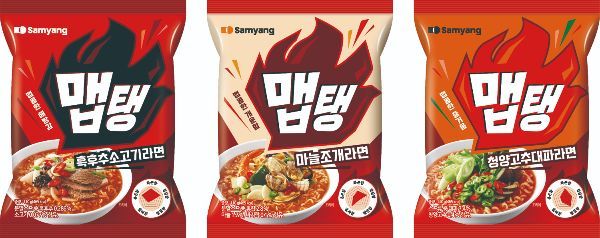
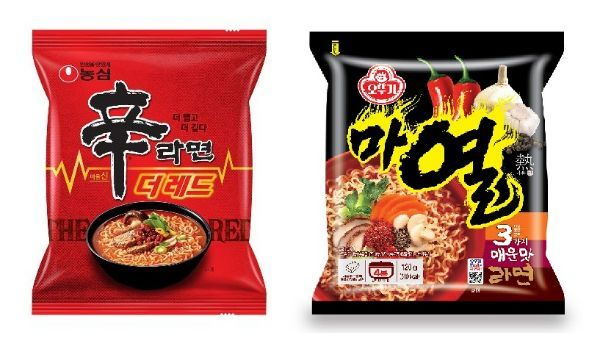
According to the food industry on the 18th, Samyang Foods is launching a new spicy soup ramen brand called "Maptang." Following the release of 'Ganjjambbong X' on the 10th, which is about four times spicier than the original Ganjjambbong, this is the second spicy new product introduced this month. Not only Samyang Foods, but all of the ramen industry's "Big 3" have launched spicy new products this month, heating up the spicy ramen market once again. Nongshim introduced the limited edition 'Shin Ramyun The Red,' twice as spicy as Shin Ramyun, on the 14th, and Ottogi launched 'Ma Yeol Ramyun,' which adds garlic and pepper to Yeol Ramyun, on the 16th.
The reason ramen companies are competing to release new products is that spicy ramen is a product category with high consumer demand and market potential. According to the polling agency Data & Research, as of the second quarter of this year, the top five most favored domestic bagged ramen brands were Shin Ramyun, Tteumsae Ramen, Buldak Bokkeum Myun, Yeol Ramyun, and Anseongtangmyun. Except for Anseongtangmyun, all these ramens emphasize spiciness, reflecting Korean consumers' preference for spicy flavors.
At the heart of the spicy ramen craze is the strong stimulation that spiciness provides. Professor Kim Si-wol of Konkuk University's Department of Consumer Studies analyzed, "During economic downturns, many consumers use spicy food that provides strong stimulation as a means of stress relief, so related products continue to gain popularity." Eating spicy food that stimulates the tongue promotes the secretion of endorphins, which have pain-relieving effects and can help improve mood.
The demand for spicy flavors as a challenge is also increasing. As sharing challenge videos on social media has become a culture, the demand for spicy ramen is rapidly spreading beyond Korea to overseas markets, driving market growth. In particular, Samyang Foods, which saw significant brand growth through the 'Buldak Mukbang Challenge,' is directly creating opportunities for consumers to participate in challenges and encouraging participation to induce a continuous virtuous cycle.
The high consumer demand for spiciness is reflected in actual performance. Samyang Foods' Buldak brand, which has played a leading role in forming the spicy ramen market, surpassed 5 billion cumulative sales units last month, with cumulative sales exceeding 3 trillion won. Riding on Buldak's success, Samyang Foods announced plans on the 11th to build a second factory to expand Buldak product production at its Miryang plant.
Meanwhile, industry insiders believe that the overlapping launches of spicy ramen in August should be understood not as targeting consumers who seek to "fight heat with heat" in summer, but rather as preparations for the winter ramen market. Although the ramen industry is relatively unaffected by seasonal factors, demand for hot soup dishes tends to increase in winter. By introducing new products early for the upcoming fall and winter and securing stable positions in distribution channels, the industry is proactively preparing for competition in the winter market.
© The Asia Business Daily(www.asiae.co.kr). All rights reserved.


















