International credit rating agency Fitch has warned that the credit ratings of dozens of U.S. banks, including JP Morgan Chase, could be downgraded en masse. Bank stocks are showing a broad decline on the New York Stock Exchange.
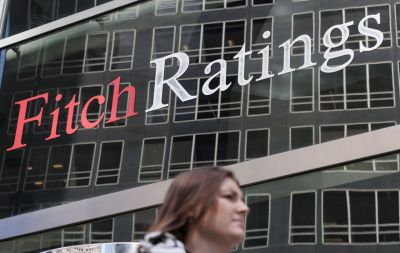
Chris Wolfe, an analyst at Fitch, stated in a CNBC interview released on the morning of the 15th (local time) that the Operating Environment (OE) rating for the U.S. banking industry is deteriorating. He said, "If the banking industry's OE rating is lowered one notch from the current 'AA-' to 'A+', all financial criteria will be recalibrated," adding, "This will lead to negative rating actions." He explained that a comprehensive rating reassessment could be conducted for more than 70 U.S. banks.
For banks currently rated AA-, such as JP Morgan and Bank of America (BoA), the largest U.S. banks by assets, individual bank ratings cannot exceed the industry OE rating, so they will be automatically downgraded. Consequently, a chain reaction of downgrades among other U.S. banks is inevitable. This could be a direct blow to some banks with lower ratings that are close to being non-investment grade even with a one-notch downgrade.
In the interview, Wolfe refrained from speculating on the specific timing of the OE adjustment or the impact on lower-rated banks. However, he noted, "Decisions must be made based on both absolute and relative criteria," and predicted, "Some banks currently rated BBB-, which have already fallen significantly by absolute standards, may maintain their ratings."
Concerns surrounding the banking system have already increased following the collapse of Silicon Valley Bank (SVB) earlier this year and the subsequent chain collapse of regional banks. Fitch had previously lowered banks' OE ratings from 'AA' to 'AA-' in June. However, at that time, no credit rating downgrades accompanied the change, so it did not attract much market attention. Wolfe, who authored the report, said, "Downgrades are not inevitable," but emphasized, "The purpose is to alert the market to real risks." Another credit rating agency, Moody's, also downgraded the credit ratings of 10 regional banks last week and warned that further downgrades could follow for 17 banks, including large banks.
The main factor behind Fitch's downgrade warning is the Federal Reserve's (Fed) interest rate path. CNBC pointed out that while the market already expects the Fed's rate hikes to be concluding and anticipates possible cuts next year, this is not a foregone conclusion. If high interest rates persist longer than expected, banks' profit margins will inevitably come under pressure.
Wolfe said, "We do not know where the Fed will stop," adding, "This will be very important input regarding what the banking system means." He also emphasized that defaults tend to increase in the banking sector during tightening cycles. Currently, Fitch is also expressing concern about the impact of commercial real estate loan risks on small banks in a high-interest-rate environment. Due to high rates and remote work reducing office demand, commercial real estate loans have recently been considered a weak link for small and medium-sized banks.
Experts point out that the impact of widespread credit downgrades is difficult to predict. Morgan Stanley previously forecasted that downgraded banks would have to pay investors more when issuing bonds, worsening their margins. Wolfe warned, "Ratings will not necessarily be lowered," but "if they are, there will be consequences."
Separately, earlier this month, Fitch downgraded the U.S. sovereign credit rating due to political conflicts over raising the federal government's debt ceiling, fiscal deterioration, and national debt burdens. At that time, financial leaders such as Jamie Dimon, chairman of JP Morgan Chase, and economists criticized Fitch's decision as "ridiculous."
Bank-related stocks are declining on the New York Stock Exchange today. JP Morgan is trading down about 2.55% from the previous close. BoA has also fallen 2.47%. Citigroup, Wells Fargo, Morgan Stanley, and Goldman Sachs are also experiencing declines in the 1-2% range.
© The Asia Business Daily(www.asiae.co.kr). All rights reserved.

















