Malaria Patients Expected to Number Around 700 by Year-End
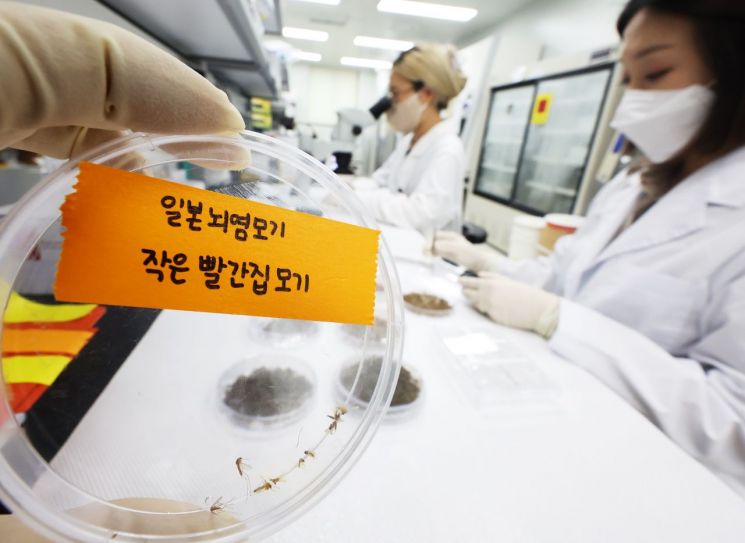
Small Red House Mosquito Found in Daegu and Incheon
It is truly a 'mosquito warning.' The number of malaria patients in South Korea, the world's leading cause of death from infectious diseases and a representative mosquito-borne infectious disease, has exceeded 500 so far this year. To make matters worse, the 'small red house mosquito,' which transmits Japanese encephalitis, has also been discovered.
According to the Disease Control and Prevention Agency's infectious disease portal on the 15th, the total number of malaria patients in South Korea since January 1st is 509. This figure far surpasses the 420 cases reported throughout last year. At this rate, the number is expected to reach around 700 by the end of the year.
The number of malaria patients in South Korea has not exceeded 700 annually since 2011, when there were 826 cases.
After the spread of COVID-19 in 2020, the numbers decreased to 385 in 2020, 294 in 2021, and 420 in 2022.
However, with most social distancing measures lifted this year and outdoor activities increasing, malaria cases are surging rapidly.
On the 3rd, the Disease Control and Prevention Agency issued a nationwide malaria alert after detecting malaria parasite genes in vector mosquitoes collected in the Paju area.
Moreover, the small red house mosquito, which transmits Japanese encephalitis, has recently been found mainly in Daegu and Incheon.
When bitten by a mosquito infected with the Japanese encephalitis virus, most people show no symptoms or mild symptoms accompanied by fever, but in rare cases, encephalitis can occur, leading to fatal outcomes, and even after recovery, neurological complications may appear.
The Disease Control and Prevention Agency issued a Japanese encephalitis advisory on March 23rd, when the small red house mosquito was first discovered in Jeju and Busan, and on the 27th of last month, after a large number of these mosquitoes were collected in Busan, a nationwide Japanese encephalitis alert was issued.
In South Korea, Japanese encephalitis infections occur mainly between September and October, with about 20 cases annually. 87% of the infected are aged 50 or older.
A research institute official said, "Please be especially careful to avoid mosquito bites by familiarizing yourself with Japanese encephalitis prevention guidelines, using mosquito repellents, and properly managing your surroundings."
© The Asia Business Daily(www.asiae.co.kr). All rights reserved.
![User Who Sold Erroneously Deposited Bitcoins to Repay Debt and Fund Entertainment... What Did the Supreme Court Decide in 2021? [Legal Issue Check]](https://cwcontent.asiae.co.kr/asiaresize/183/2026020910431234020_1770601391.png)