A study has found that emerging markets can raise external capital in their own currencies if inflation and monetary policy are stable and liquidity is supported. This directly contradicts the famous 1999 hypothesis known as the 'Original Sin Hypothesis.'
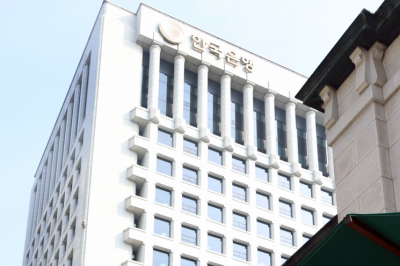
On the 14th, Hanbada, head of the International Economics Research Division at the Bank of Korea Economic Research Institute, announced this research in a BOK Economic Research report titled "An Empirical Study on the Causes of the Disappearance of Original Sin in Emerging Markets."
The Original Sin Hypothesis, proposed in 1999 by world-renowned scholars Professor Barry Eichengreen and Professor Ricardo Hausmann, states that emerging markets cannot raise external capital in their own currencies. This hypothesis served as a theory explaining the structural vulnerability of emerging markets in raising external capital, causing significant impact in academia and policy circles.
However, since the 2000s, as the proportion of external debt denominated in local currencies in emerging markets has increased, various doubts about the validity of the Original Sin Hypothesis have grown. In particular, since the mid-2000s, it has become known that advanced country investors are investing in emerging market government bond markets, prompting various studies on the "disappearance of original sin."
The report released by Han also contains these findings. According to the report, as the emerging market bond market, centered on government bonds, has developed, advanced countries have increased their investments in bonds denominated in emerging market currencies.
Empirical analysis conducted by the Bank of Korea found a strong positive relationship between the size of the public sector bond market and the outstanding amount of emerging market currency-denominated bonds held by foreigners. This means that as the emerging market bond market grows, liquidity improves, and the attractiveness of investing in emerging market bonds increases.
Han explained, "Expanding the size of the (local) bond market is something emerging markets can do on their own, and if so, it contradicts the Original Sin Hypothesis that emerging markets cannot independently raise external capital."
The report also evaluated that the adoption of inflation targeting by several emerging markets since 2000 has contributed to the expansion of foreign capital inflows into emerging market bond markets.
In fact, the closer actual inflation is to the inflation target, the more emerging market currency-denominated bonds are held by foreign investors. Since foreign investors holding emerging market bonds are sensitive to fluctuations in the currency value of the respective countries, they emphasize central bank credibility. This empirical result can be interpreted as evidence that foreign investors use price stability as a criterion for evaluating the credibility of monetary authorities.
Han stated, "By fostering capital markets to increase liquidity and securing central bank credibility through price stability, emerging markets can sufficiently raise external capital in their own currencies and thus escape the constraints of the Original Sin Hypothesis."
From the perspective of South Korea, Han emphasized that ultimately stable monetary policy and price management can act as factors that enhance the attractiveness of the domestic bond market.
He said, "To maintain the attractiveness of Korean bonds and capital markets, the size of the stock and bond markets and overall market liquidity are important, and operating monetary policy stably can also be meaningful from the perspective of external soundness."
© The Asia Business Daily(www.asiae.co.kr). All rights reserved.
!["The Woman Who Threw Herself into the Water Clutching a Stolen Dior Bag"...A Grotesque Success Story That Shakes the Korean Psyche [Slate]](https://cwcontent.asiae.co.kr/asiaresize/183/2026021902243444107_1771435474.jpg)
















