Gasoline and Oil Prices Likely to Rise Further
Russia's Black Sea Grain Deal Suspension and Abnormal Temperatures Also Drive Grain Prices Up
Warnings are mounting that rising international oil prices and food costs could hinder the U.S. Federal Reserve (Fed), which has been relieved by the slowdown in inflation.
On the 13th (local time), The Wall Street Journal (WSJ) reported that although the U.S. Consumer Price Index (CPI) inflation rate fell in July, rising energy and food prices are obstructing inflation control, meaning the Fed must prepare for turbulence in the coming months.
The U.S. July Consumer Price Index (CPI) rose 3.2% year-on-year. Although the increase expanded compared to the previous month (3.0%), it fell short of expert expectations (3.3%). Month-on-month, it rose 0.2%, which is significantly lower than June 2022 (1.2%) and the 2022 annual average (0.5%). However, the problem is that gasoline and food prices could reverse the downward trend in inflation. According to OPIS, an energy data and analytics provider, the price of regular unleaded gasoline was $3.84 per gallon as of the 11th, up 30 cents from a month earlier. It rose 0.2% in July, but a larger increase is expected this month.
Stephan Stanley, Chief Economist at Santander US Capital Markets, analyzed, "This will raise the gasoline component in the August CPI by more than 10%, pushing the monthly CPI up by about 0.6%. The annual CPI inflation rate could be pushed up to 3.6%."
There is particular concern that gasoline prices, which lag behind crude oil prices, could rise further. West Texas Intermediate (WTI) crude oil hit $82.82 last week, the highest since November last year, due to production cuts by Saudi Arabia and Russia and improved U.S. economic outlook.
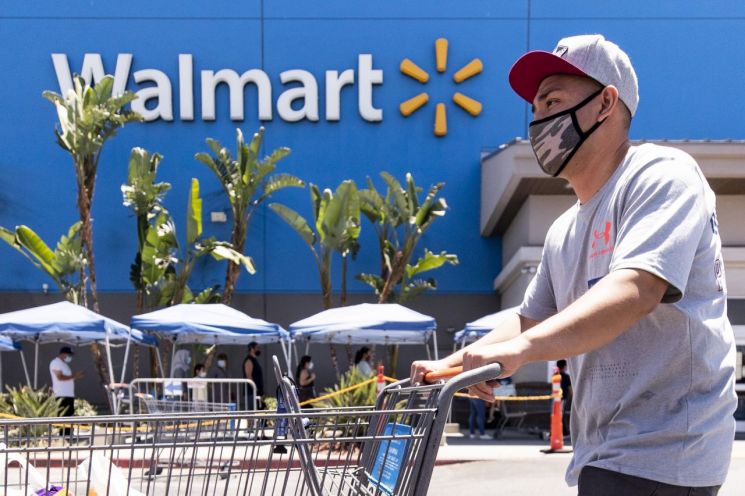
Food prices are also soaring, raising concerns about a rebound in inflation. Russia's unilateral suspension of the Black Sea grain agreement has disrupted Ukraine's grain exports via the Black Sea, compounded by abnormal weather damaging grain production.
U.S. food prices rose by an average of 1% monthly until September last year, then stabilized with a 0.1% increase from March to June this year. However, in July, the increase expanded again to 0.3%. Notably, the food Producer Price Index rose 0.5% month-on-month in July, marking the highest level since November last year. The United Nations Food Price Index surged 1.3% during the same period. The International Monetary Fund (IMF) forecasts that global grain prices will rise 10-15% due to Russia's suspension of the Black Sea grain agreement.
Michael Gapen, Chief U.S. Economist at Bank of America (BoAf), analyzed, "Rising transportation costs, abnormal weather phenomena such as El Ni?o (warming of sea surface temperatures near the equator), and fall/winter weather that can cause drought may contribute to rising food prices."
Particularly, rising gasoline and food prices are problematic because they push up consumers' inflation expectations and can lead to wage increase pressures. This could reignite inflation that the Fed has been struggling to control.
WSJ stated, "Although inflation has slowed, gasoline and food prices risk pushing it back up. If the CPI rises and is reflected in wages and prices, the Fed's concerns will grow."
However, the slowdown in rent and other housing cost increases is a positive sign. Over 12 months, U.S. housing costs fell to 7.7% in July from a peak of 8.2% in March. Since the Fed monitors core inflation excluding energy and food prices, there is also a view that rising gasoline and food prices do not necessarily lead to interest rate hikes.
© The Asia Business Daily(www.asiae.co.kr). All rights reserved.

















