Consumers Tighten Wallets, Companies Compete to Lower Prices
July CPI Falls for First Time in Two and a Half Years
"Risk of Entering a Japanese-Style Long-Term Recession"
#Nanchengxiang, a fast-food chain with 160 stores in Beijing, China, offers a breakfast buffet every morning consisting of three menu items: porridge, a sour and spicy soup, and milk, all for just 3 yuan per person (approximately 550 KRW). Gao Yi, 71, who visited Nanchengxiang for breakfast with his grandson, said, "During the COVID-19 pandemic, many affordable and good options appeared." He added, "Not everything lasts, but there are always new and good deals; you just have to look for them."
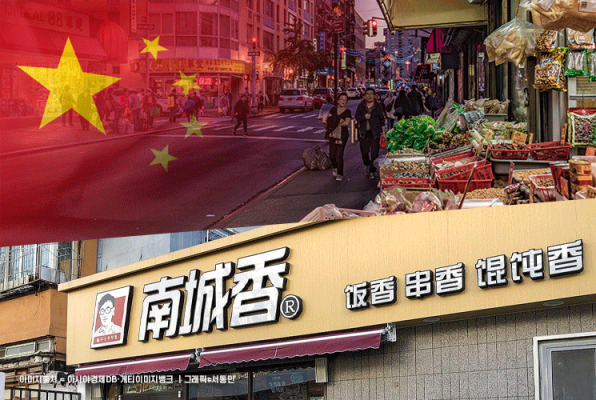
As fears of deflation spread in China, major foreign media reported on the 10th (local time) that dining establishments are fiercely competing by lowering prices, with some restaurants even offering breakfasts for around 500 won. With consumers tightening their wallets, companies are reluctantly reducing prices to attract customers.
Chinese sandwich franchise Xixiaoye recently lowered menu prices, introducing items priced at 10 yuan (about 1,800 KRW). Yum China, the operator of the American fast-food chain KFC in China, also decided to reduce prices on some hamburger, snack, and beverage sets to 19.9 yuan (about 3,600 KRW). Compared to the domestic price of KFC’s signature Zinger Burger set (7,800 KRW), this is about half the price.
This price-cutting competition among Chinese dining companies is a clear example of China’s deflationary situation. Joy Watt, CEO of Yum China, reported, "Sales volume has returned, but per capita spending has decreased." Zhu Danfeng, vice president of the Guangdong Food Safety Promotion Association, diagnosed, "The recent discount strategies, which offer consumers more cost-effective choices, reflect the current economic situation."
While countries including South Korea, the United States, and Europe worry about a resurgence of inflation that seems to be calming down, China is instead concerned about falling prices. Last month, China’s Consumer Price Index (CPI) fell by 0.3% year-on-year. This is the first monthly CPI decline in two years and five months, resulting from a combination of a real estate market slump, domestic demand contraction, and export decreases. Retail sales, which indicate consumer trends in China, rose by only 3.1% year-on-year in June, dropping to single digits for the first time in four months. Despite the reopening of economic activities at the end of last year, consumer sentiment has not revived, leading to an assessment that China has effectively entered a deflationary phase.
Dong, 33, who works as a restaurant employee in Beijing, said, "I have a mortgage and children to raise, so I don’t have many options for spending. I have to be more cautious with my expenses."
One foreign media outlet diagnosed, "Contrary to economists’ predictions, there was no immediate increase in consumer spending after the lifting of lockdowns. Wages and pensions remain unchanged, and uncertainty in the job market is high. Spending desires are limited, and the economy is barely growing." It added, "If deflation persists long-term like in Japan during the 1990s, China’s economic growth could be pressured."
© The Asia Business Daily(www.asiae.co.kr). All rights reserved.

















