Concerns Over Deflation in China Push International Oil Prices Up
South Korea's Economic Recovery in H2 Faces Challenges
Bank of Korea May Lower Growth Forecast to '1.4%'
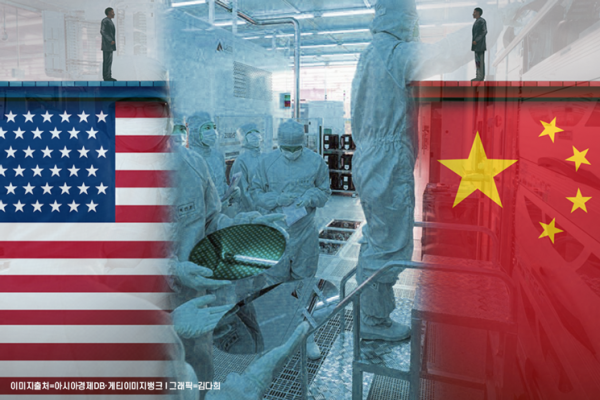
As fears of deflation (price decline) grow in China, international oil prices, which have a significant impact on both domestic and global economies, have recently shown a sharp upward trend, increasing uncertainty surrounding the South Korean economy. The Chinese economic downturn is likely to act as a negative factor for South Korean exports, which were expected to recover in the second half of the year, while rising international oil prices and concerns over U.S. monetary tightening are expected to heighten worries about the won-dollar exchange rate and growth rate in the second half.
According to the Bank of Korea and major foreign news agencies on the 10th, the U.S. and Chinese economies have recently shown contrasting trends. First, China’s July consumer price index, released the day before, fell by 0.3% year-on-year, signaling the onset of a deflationary phase. After reducing the rate of increase every month since February, it finally turned negative last month for the first time in two and a half years. The Bank of Korea and the government, which had hoped for a reopening effect in China’s economy in the second half, appear to be unsettled by the worse-than-expected Chinese economic situation.
China’s exports and imports also fell short of market expectations. Exports dropped 14.5% compared to a year ago, marking the lowest level in three years and five months, while imports plunged 12.4%. Ryu Jin-yi, a researcher at Hi Investment & Securities, explained, "Since 2000, there have been four instances, including this one, where both export and import growth rates declined simultaneously, but this export-import cliff phase seems the most severe." If China’s exports and domestic demand remain sluggish, it will be difficult for South Korea, which heavily depends on China, to see an economic rebound.
On the other hand, unlike China, inflation concerns remain significant in the U.S. The market expects the U.S. July consumer price index, released tonight Korea time, to rise 3.3% year-on-year, exceeding last month’s increase of 3.0%. This level is insufficient for the U.S. Federal Reserve (Fed) to declare an end to monetary tightening. Although the Federal Open Market Committee (FOMC) meeting next month overwhelmingly forecasts an 86% chance of maintaining the current benchmark interest rate, if U.S. inflation continues and employment and consumption remain overheated as they are now, the possibility of prolonged tightening cannot be ruled out.
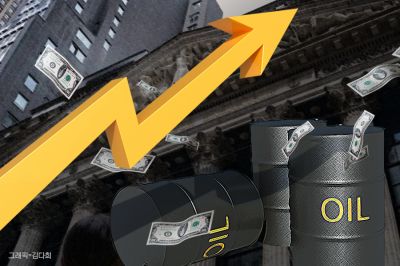
Meanwhile, the recent sharp rise in international oil prices is adding further burden to the South Korean economy. On the 9th (local time), Brent crude oil futures for North Sea crude rose 1.6% from the previous trading day to $87.54 per barrel, and West Texas Intermediate (WTI) crude futures increased 1.7% to $84.36 per barrel. These are the highest levels in seven and nine months, respectively. Despite concerns about deflation in China, production cuts by oil-producing countries such as Saudi Arabia and Russia, along with expectations of increased demand in the U.S., are driving up international oil prices.
Amid significant domestic and international uncertainties, the won-dollar exchange rate rose to 1,321.8 won during trading the previous day, marking the highest level in about a month since June 30 (1,323.7 won). This is interpreted as a combined effect of China’s economic slowdown and concerns over U.S. monetary tightening. On the day, the won-dollar exchange rate opened at 1,315.7 won, the same as the previous day’s closing price, as investors awaited the U.S. inflation data, but soon turned upward and was trading at 1,317.3 won as of 9:50 a.m. It is expected that exchange rate volatility will remain high until the U.S. FOMC meeting next month.
As domestic and international economic conditions worsen, there is analysis that it will be difficult for the South Korean economy to achieve a "low in the first half, rebound in the second half" pattern. The Bank of Korea is scheduled to announce a revised economic outlook on the 24th, and some voices suggest that the current forecast of 1.4% annual growth may be lowered. Kim Young-ik, a professor at Sogang University Graduate School of Economics, said, "Overall consumption and investment are quite sluggish, so I expect growth of about 1.2% this year," adding, "The Bank of Korea may also lower its forecast." A Bank of Korea official stated, "Although the Chinese economy is worse than initially expected, the U.S. economy seems better than expected, so if these factors offset each other, the existing forecast of 1.4% may be maintained."
© The Asia Business Daily(www.asiae.co.kr). All rights reserved.


















