Novo Nordisk's 'Wegovy'
Proven to Reduce Cardiovascular Disease by 20%
Eli Lilly's 'Mounjaro' Posts 1.3 Trillion KRW in 2Q Sales
With Added Chronic Disease Benefits
Insurance Coverage Momentum Builds
Originally developed as a diabetes treatment, glucagon-like peptide-1 (GLP-1) drugs, which are rapidly expanding in the obesity treatment market, are now raising the possibility of reducing cardiovascular disease risks, further increasing expectations for future growth.
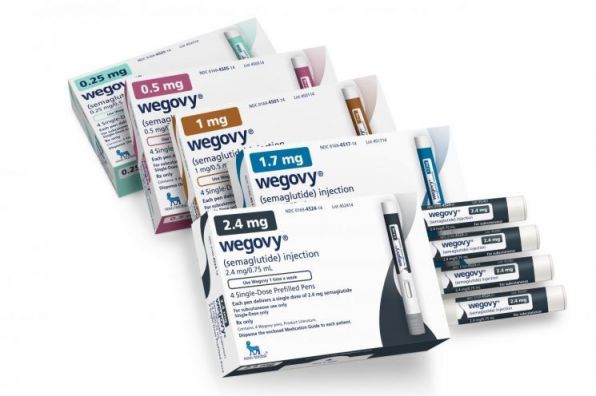
On the 8th (local time), Novo Nordisk, the developer of the GLP-1 class obesity treatment drug Wegovy (active ingredient semaglutide), announced that the 'SELECT' clinical trial, designed to verify the effectiveness of semaglutide as an adjunct to standard treatment for the prevention of major adverse cardiovascular events (MACE), demonstrated a 20% reduction in MACE.
The SELECT trial involved 17,604 overweight or obese patients without a history of diabetes but with cardiovascular disease (CVD). Among them, the semaglutide treatment group showed a 20% reduction in MACE?including cardiovascular death, non-fatal myocardial infarction, or non-fatal stroke?compared to the placebo group. This confirmed the potential expansion of semaglutide’s indications beyond diabetes and obesity to cardiovascular disease prevention. Novo Nordisk plans to present detailed research results at conferences within the year and will soon initiate approval procedures for indication expansion in the United States and Europe.
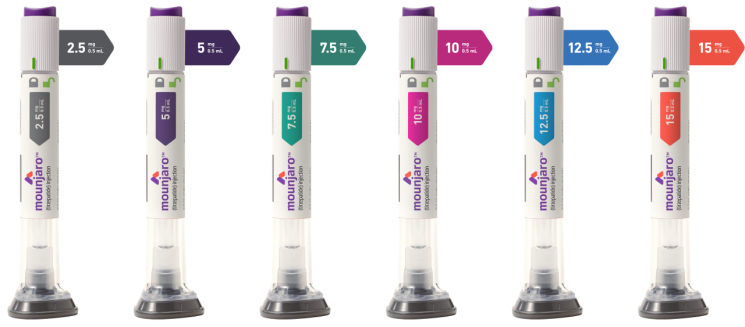
Following the announcement, Novo Nordisk’s American Depositary Receipts (ADR) closed at $189.17 (approximately 250,000 KRW), up 17.2% from the previous day’s closing price. Another GLP-1 class drug, ‘Mounjaro’ (tirzepatide), co-leading the market, saw Eli Lilly report a 28% increase in sales and an 85% rise in operating profit for the second quarter, with its stock price rising 14.9% to $521.6 (approximately 690,000 KRW). Mounjaro’s sales of $979.7 million (about 1.29 trillion KRW) in Q2 alone were cited as the main driver of improved performance. Eli Lilly also began the cardiovascular-related clinical trial ‘SURMOUNT-MM0’ for Mounjaro in October last year.
GLP-1 is a hormone that promotes insulin secretion and lowers blood sugar levels. Initially, related drugs were developed as diabetes treatments, but they were found to have additional effects such as appetite suppression in the brain and delayed gastric emptying, leading to an expansion of indications to obesity treatment. With the confirmation of cardiovascular disease-related efficacy, expectations are rising that the GLP-1 market will grow even faster. Huh Hye-min, a researcher at Kiwoom Securities, stated, “GLP-1 drugs are increasingly likely to establish themselves not only as treatments for diabetes and obesity but also as therapies for preventing heart disease. The data suggest that obesity treatments could reduce risks associated with many diseases derived from obesity, beyond mere cosmetic purposes. Demand for GLP-1 obesity treatments is expected to increase further.”
In particular, the confirmation of cardiovascular disease prevention efficacy is expected to be a key point for market expansion through insurance coverage. Currently, Medicare, one of the public insurance programs in the U.S., prohibits insurance payments for obesity treatments, and most private insurers in the U.S. have restricted coverage due to concerns over excessive financial burdens. Researchers Lee Ji-hyun and Kim Seung-min from Mirae Asset Securities explained, “Since clinical data have proven efficacy for cardiovascular disease, claims for insurance coverage of new obesity drugs are considered sufficiently persuasive. If broad insurance coverage is applied, explosive growth in the obesity treatment market is expected.” However, some patients have reportedly attempted self-harm and suicide after taking GLP-1 drugs, prompting investigations by the European Medicines Agency (EMA) and the UK Medicines and Healthcare products Regulatory Agency (MHRA). The unclear identification of related side effects remains a risk factor.
 Hanmi Pharmaceutical Research Center, Dongtan, Hwaseong-si, Gyeonggi-do
 [Photo by Hanmi Pharmaceutical]
Meanwhile, in South Korea, the development of GLP-1 class treatments, which have so far focused mainly on diabetes, is gaining momentum for obesity treatment. Hanmi Pharmaceutical submitted a clinical trial plan (IND) for phase 3 development of ‘Epeglenatide’ (development code HM11260C) as an obesity treatment to the Ministry of Food and Drug Safety on the 28th of last month. The trial will assess the weight loss effect of epeglenatide in 420 obese adults without diabetes.
Epeglenatide was originally developed as a treatment for type 2 diabetes. It was licensed out to the global big pharma Sanofi in 2015, with various global phase 3 trials conducted, but the rights were returned to Hanmi Pharmaceutical in 2020. However, during the type 2 diabetes clinical trials, significant weight loss effects were observed, leading Hanmi Pharmaceutical to plan to develop epeglenatide as a ‘Syntoburi obesity drug’ tailored to Korean obesity standards. A Hanmi Pharmaceutical representative explained, “As the first GLP-1 obesity drug developed independently by a Korean pharmaceutical company, it is significant that it is being developed as a ‘Korean-customized obesity drug’ reflecting Korean body types and weights.” Although drugs like Mounjaro have announced weight loss effects exceeding 20%, considering the relatively small number of severely obese patients in Korea, such strong weight loss effects might be excessive. Therefore, Hanmi aims to develop an optimized obesity drug for Koreans that balances weight loss efficacy and side effects.
In addition to epeglenatide, Hanmi Pharmaceutical is continuing to develop various new drugs based on GLP-1 analogs. Hanmi’s ‘dual agonist,’ which combines GLP-1 with glucagon, was licensed out to MSD (Merck & Co., USA) and is currently undergoing a global phase 2b trial for non-alcoholic steatohepatitis (NASH). The triple agonist ‘triple agonist,’ which also acts on glucose-dependent insulinotropic polypeptide (GIP), is also in a global phase 2b trial targeting NASH.
© The Asia Business Daily(www.asiae.co.kr). All rights reserved.



















