Naju City, Jeollanam-do (Mayor Yoon Byung-tae) announced on the 4th that it has completed the remodeling of vacant houses in Masan Village (Hwajeong-ri), Wanggok-myeon through the ‘Rural Vitality Vacant House Regeneration’ project.
This project was discovered as a new policy in the 8th municipal administration, focusing on preventing landscape damage caused by neglected vacant houses and providing temporary housing facilities (Farmers' Houses) for the stable settlement and stay of those wishing to return to farming or rural areas.
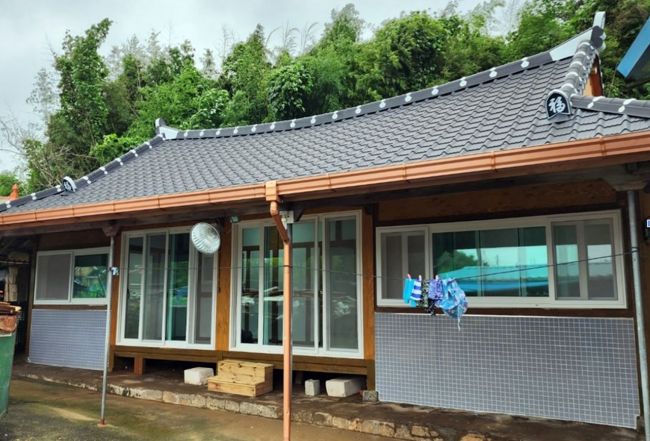 Naju City has completed the first project of the 'Rural Vitality Vacant House Regeneration' initiative.
 [Photo by Naju City]
The project reflects Mayor Yoon Byung-tae’s determination to overcome the rural village population extinction issue by revitalizing existing villages rather than creating new ones.
The Farmers' House is expected to greatly contribute to attracting young people who wish to return to farming or rural living, alongside the so-called ‘Zero Deposit Rental Housing’ project, which fully supports the rental deposit for young people (aged 18-45) who are homeless and move to Naju City after securing jobs there.
The first achievement of the project, the first vacant house regeneration in Masan Village, Wanggok-myeon, involved an investment of 40 million KRW from the city’s own budget.
This vacant house has a housing area of 53.2㎡ and a land area of 460㎡, with remodeling carried out on three rooms, one kitchen, one bathroom, and both interior and exterior walls of the house.
The city is recruiting prospective farmers and rural returnees to move into the first Farmers' House until the 10th of this month.
The target residents are prospective farmers and rural returnees who wish to move to and actually reside and settle in Naju City from outside the city.
Applicants can fill out the application form attached to the notice titled ‘Recruitment of Residents for Farmers' House (Masan Village)’ on the city hall website and submit it by mail, visit, or email to the Naju City Agriculture and Fisheries Chamber.
Residents must pay a deposit of 1 million KRW and a monthly rent of 200,000 KRW (excluding utility bills) to the bank account of the respective village council. These funds will be used for village integration projects.
The residence period is within two years from the date of the usage agreement.
The city aims to create seven Farmers' Houses this year and is receiving applications from village councils wishing to regenerate vacant houses.
So far, 11 vacant houses have been recruited through applications, but most are unregistered houses or severely deteriorated vacant houses on the verge of demolition, resulting in three houses being selected in the first round.
Following the first site in Masan Village, Wanggok-myeon, remodeling work is underway in Bangsan Village, Dado-myeon, and Seongsan Village, Seji-myeon.
Additional applications for the vacant house regeneration project can be submitted by filling out the application forms posted on the city hall website and submitting them by the 25th to the Naju Agricultural Technology Center’s Agricultural Policy Division (Rural Vitality Team) or the relevant eup, myeon, or dong administrative welfare centers.
Applicants must be village councils or non-profit social organizations that have secured vacant houses within the village and signed a five-year free housing use agreement with the owners.
The vacant houses must be located in eup, myeon areas or dong areas (excluding residential, commercial, and industrial zones) and be suitable for occupancy after remodeling; multi-family or villa-type houses are excluded.
Selected applicants will receive up to 40 million KRW per site for housing remodeling costs.
Mayor Yoon Byung-tae said, “We will create temporary housing facilities for farmers and rural returnees from the increasing number of vacant houses in rural villages every year to improve village landscapes and realize vibrant rural communities. Along with vacant house regeneration, we will promote step-by-step projects for the stable settlement of farmers and rural returnees, such as pilot villages for returning farmers, rural spatial maintenance projects, and ‘Living in the Countryside’ programs.”
Naju = Lee Han-hyuk, Honam Reporting Headquarters, Asia Economy baekok@asiae.co.kr
© The Asia Business Daily(www.asiae.co.kr). All rights reserved.
!["The Woman Who Threw Herself into the Water Clutching a Stolen Dior Bag"...A Grotesque Success Story That Shakes the Korean Psyche [Slate]](https://cwcontent.asiae.co.kr/asiaresize/183/2026021902243444107_1771435474.jpg)
















