Prediction of a Canadian Nuclear Fusion Scientist
Three Prospects Based on Verification Results
Domestic researchers have announced research results claiming to have realized the world's first 'room-temperature superconductor,' causing a stir in the academic community. Amid this, Andrew Cote, a Canadian nuclear fusion researcher and science influencer, has attracted attention by predicting that the global economy could undergo significant changes depending on the verification results of the material.
Previously, a research team led by Lee Seok-bae, CEO of Quantum Energy Research Institute, and Oh Geun-ho, Professor Emeritus at Hanyang University, claimed on the 22nd of last month to have invented a lead-based material exhibiting room-temperature and ambient-pressure superconductivity at 30 degrees Celsius. The research team named this material 'LK-99.'
Currently, international research teams are verifying the properties of LK-99, and researchers at the U.S. Lawrence Berkeley National Laboratory announced that their computer simulations of the LK-99 manufacturing method confirmed the theoretical possibility of room-temperature and ambient-pressure superconductivity.
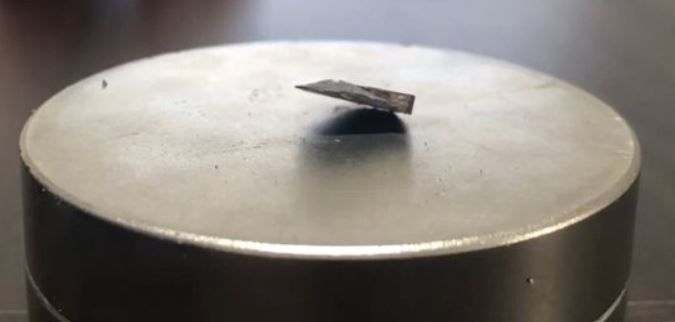 Domestic researchers announced the possibility of possessing the physical properties of a room-temperature, ambient-pressure superconductor LK-99 [Image source=Twitter]
Regarding this, Cote stated on Twitter on the 2nd (local time), "If it is revealed that LK-99 is indeed a room-temperature and ambient-pressure superconductor, humanity's economy could split into three paths depending on its engineering characteristics."
As a nuclear fusion reactor researcher, he explained, "Superconductors' performance can vary based on two limiting factors: how much magnetic field the material can withstand and how much current it can carry. If either limit is exceeded, the superconductor stops functioning."
In other words, LK-99's performance depends on the electromagnetic field and current limits of the material. However, since a high electromagnetic field cannot exist without a high current flow, the possible scenarios reduce to three.
Cote predicted the industrial impact of LK-99 under three conditions: △ withstanding low magnetic field and low current flow, △ withstanding low magnetic field and high current, and △ finally, withstanding high magnetic field and high current.
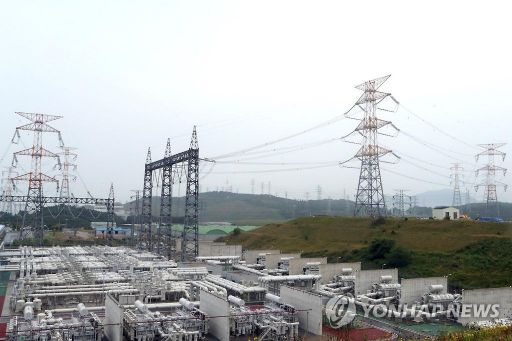 Domestic transmission lines. If a room-temperature and ambient-pressure superconductor capable of handling high electromagnetic fields and current flow is invented, the efficiency of all electric-based industrial products can be doubled.
 [Image source=Yonhap News]
In the first scenario, low magnetic field and low current, LK-99's usefulness would be mainly limited to fields such as computer hardware, mobile phones, and electronic sensors. Considering the scale of the global electronics industry, the expected economic value is approximately $1.5 trillion (about 1,943 trillion KRW).
In the second scenario, low magnetic field and high current, the efficiency of power supply infrastructure, such as the power transmission industry, could be elevated to a new level. In this case, Cote estimated the economic effect to be up to $2 trillion (about 2,591 trillion KRW).
In the final scenario, high magnetic field and high current, LK-99 has the potential to completely transform all industries powered by electricity. Cote anticipated this possibility would "generate an economic effect of up to $4.5 trillion (about 5,830 trillion KRW)," adding that it would "revolutionize basic industries and realize new energy sources like nuclear fusion."
However, whether LK-99 is truly a superconductor has not yet been confirmed. Although the internationally prestigious Lawrence Berkeley National Laboratory verified the theoretical possibility through simulations, these simulations do not prove that LK-99 is a superconductor.
Cote also emphasized, "(LK-99) suggests possibilities through various experiments and simulations," but added, "We should withhold judgment until experimental results from more verified institutions are confirmed."
© The Asia Business Daily(www.asiae.co.kr). All rights reserved.


















