Power Outage for 8 Hours 30 Minutes at Seoul Apartment Complex
Residents Suffer in Tropical Night... Evacuate by Car
In the midst of tropical nights where the perceived temperature easily exceeds 25 degrees Celsius even at midnight, some apartment complexes have experienced power outages. During the summer, the surge in air conditioning use often causes apartment transformers to overload, leading to frequent power supply interruptions.
At around 10:30 PM on the 1st, a sudden power outage occurred at an apartment complex in Hwagok-dong, Gangseo-gu, Seoul. As a result, electricity supply was cut off to a total of 280 households.
The apartment management reported that there was a problem with the power supply wires, and after about 7 hours and 30 minutes of restoration work, electricity supply was resumed around 6 AM the next day (the 2nd).
The night of the 1st was a tropical night where the heat did not subside even after sunset. The temperature in Seoul reached 29.5 degrees Celsius that night. Residents of the apartment, whose air conditioners suddenly stopped working, had to endure the heat and forcibly try to sleep for over 8 hours. Some residents reportedly fled to the parking lot and spent the night running their car air conditioners.
Not only the heat... Frequent power outages due to generator overload
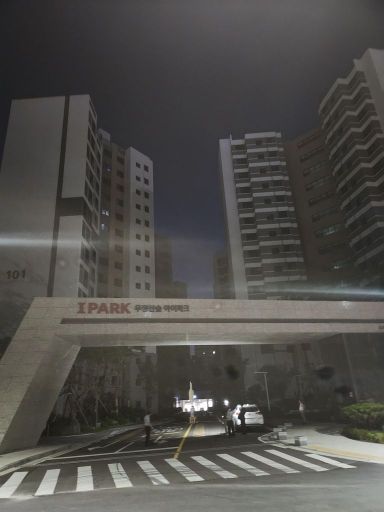 Electricity supply was cut off in an apartment complex in Hwagok-dong, Gangseo-gu, Seoul. [Image source=Yonhap News]
The unwelcome guest of summer is not only tropical nights. Power outages frequently occur in multi-family housing such as apartments. This is because the surge in the use of cooling equipment like air conditioners causes the power supply devices to overload.
In fact, an analysis of power outage incident reports received by the Korea Electrical Safety Corporation from 2018 to 2021 showed that 47% of all incidents occurred between July and September, the peak of the heat wave.
The main causes of these incidents are often overheating of power supply devices. The breakdowns were in the order of low-voltage circuit breaker failure (20%), transformer failure (18%), and high-voltage equipment failure (13%).
Therefore, during summer, multi-family housing requires frequent inspections and thorough monitoring of transformer conditions from 6 PM to 10 PM, when power outages are more likely to occur. It is also necessary to sufficiently check emergency generators in advance so they can be immediately operated in case of a power outage.
Heatwave also halts public transportation
The heatwave affects not only apartments but also public transportation operations. For example, on the 21st of last month at around 5:25 PM, vibrations were detected on the tracks near Noryangjin Station in Dongjak-gu, Seoul, causing Line 1 subway operations to be suspended for 20 minutes.
At that time, the daytime temperature in Seoul was 34.3 degrees Celsius as of 4:28 PM. When the temperature rises rapidly, the heated tracks can expand and deform.
Although these changes are generally minor, the electric trains running at high speeds can sway from side to side, which could potentially lead to a serious accident. Therefore, when vibrations are felt on the tracks, operations must be temporarily halted to inspect the tracks.
© The Asia Business Daily(www.asiae.co.kr). All rights reserved.
![Clutching a Stolen Dior Bag, Saying "I Hate Being Poor but Real"... The Grotesque Con of a "Human Knockoff" [Slate]](https://cwcontent.asiae.co.kr/asiaresize/183/2026021902243444107_1771435474.jpg)
















