Joint Korea-China Ventures Emerging... IRA Regulation Evasion
Excluding China from Battery Supply Chain Not Easy
As Chinese battery-related companies announced large-scale investment plans exceeding 5 trillion won in South Korea, there are claims that these investments serve as a loophole to circumvent the Biden administration's regulations on China.
According to Bloomberg on the 31st, Chinese companies and their Korean partners have announced investment plans worth 5.1 trillion won over the past four months to establish five new battery factories domestically. Bloomberg cited officials from the Saemangeum Development Authority, reporting that at least one local government is discussing another project.
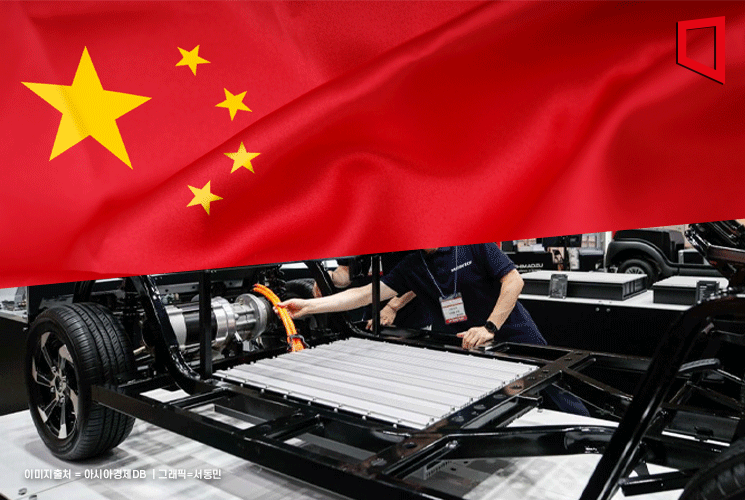
This cooperation between Korean and Chinese companies appears to be carried out with the Korea-US Free Trade Agreement (FTA) in mind, enabling batteries produced domestically and installed in US-made electric vehicles to receive tax benefits under the US Inflation Reduction Act (IRA).
For example, the Chinese company Ningbo Ronbay New Energy Technology recently announced that it received approval to establish a factory in South Korea. The company plans to produce approximately 80,000 tons of ternary precursors for batteries annually at this facility. The company stated, "Products manufactured in Korea meet the IRA's requirements related to critical minerals and can enjoy tariff benefits when exported to European and US markets."
Additionally, SK On announced in March the establishment of a joint venture with a Chinese company to build a precursor factory, and China's Zhejiang Huayou Cobalt agreed earlier this year on a joint investment with LG Group's chemical subsidiary, POSCO Future M. The contracts signed by SK On and LG are still in the early stages, and the companies explained that the contract terms have not been finalized due to the IRA's detailed provisions not yet being determined.
Chinese companies dominate the supply chain for batteries and battery raw materials, producing large quantities of precursors and other materials. They supply Korean electric vehicle cell manufacturers such as LG Energy Solution, Samsung SDI, and SK On, and Bloomberg reported that domestic companies then produce products based on these materials and supply them to electric vehicle manufacturers like General Motors (GM), Tesla, and Volkswagen.
If this situation continues, experts believe that the US government may exclude joint investments from IRA tax benefits as it strengthens regulations on China, but it may not be able to impose sanctions.
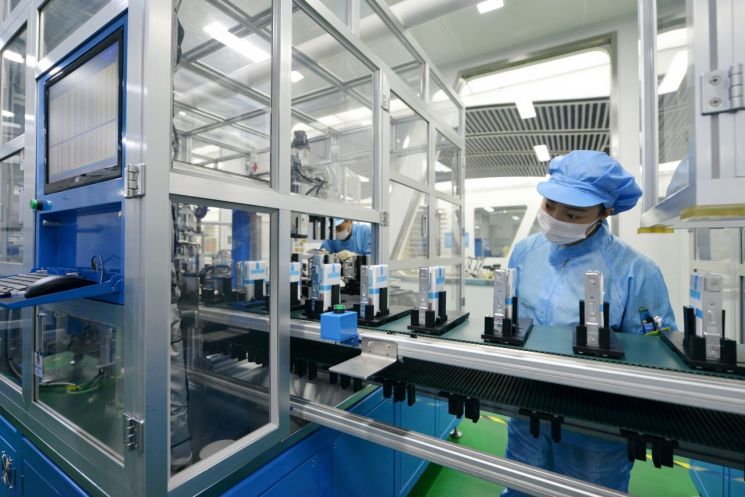
However, while the Biden administration is striving to reduce dependence on China in the battery supply chain, evaluations suggest that this is realistically impossible given China's influence within the industry. For Korean battery companies, this kind of joint venture could serve as an opportunity to secure technological capabilities in the battery market dominated by China. Bloomberg reported that among analysts in Korea, there is a prevailing view that without Korea-China cooperation, US automakers would face disruptions in electric vehicle production itself, so for the time being, Korea is likely to maintain its partnership with China.
© The Asia Business Daily(www.asiae.co.kr). All rights reserved.


















