Direct Impact on Low-Wage Jobs Such as Office Assistance, Serving, and Customer Service
Concerns Raised Over Worsening and Entrenchment of Social Inequality
As the introduction of artificial intelligence (AI) expands in industrial sites, various optimistic and pessimistic views about AI coexist. Among them, an analysis has emerged suggesting that AI could threaten human workers' jobs.
On the 27th (local time), Bloomberg News, The Washington Post (WP), and others reported on the contents of a report released by consulting firm McKinsey Global Institute (hereafter McKinsey).
In the 76-page report, McKinsey diagnosed that "the common concern that AI adoption will inevitably lead to mass unemployment is not necessarily true."
However, it added, "Workers are likely to seek jobs with higher incomes in other sectors," and "this trend is already underway in some areas."
McKinsey first projected that by 2030, one-third of domestic workers' tasks could be automated. The development of generative AI could accelerate this trend. McKinsey forecasted that "as a result, at least 12 million workers will need to change jobs by the end of 2030."
Among these, McKinsey analyzed that low-wage jobs such as office assistance, food serving, customer service, machine operation, and product transportation will be hit the hardest. In particular, workers earning an annual salary of $38,200 (approximately 49 million KRW) or less were found to be up to 14 times more likely to change jobs than the highest-earning group.
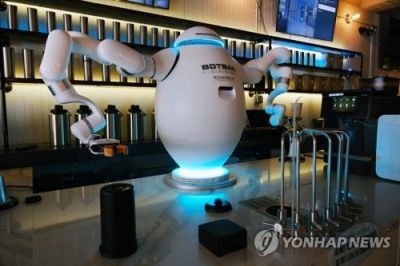
Additionally, McKinsey predicted that by 2030, female workers will need to change jobs 1.5 times more than male workers. This is because fields such as office support and customer service are predominantly staffed by women rather than men.
McKinsey explained, "STEM (Science, Technology, Engineering, and Mathematics) fields and business and legal jobs, which have a higher proportion of male workers, will not be replaced or disappear due to AI," adding, "In these job categories, generative AI will rather assist in improving work processes."
Because women, people of color, and low-wage workers without higher education are more likely to change jobs, there is also a possibility that AI could deepen or entrench social inequality.
McKinsey estimated that by 2030, 118 million people will need to find new types of jobs. During this period, some of them are expected to move to high-income positions within the same occupation, such as managerial roles, while 9 million are estimated to switch to entirely different industries.
Quailin Ellingrud, the director of the research institute that authored the report, said, "The fact that AI changes workers' jobs does not necessarily mean they will find new jobs." She added, "Changes such as automation, which began due to quarantine regulations during the COVID-19 pandemic, will gain momentum with the adoption of AI."
According to McKinsey, approximately 8.6 million job transitions were reported during the COVID-19 pandemic from 2019 to 2022, most of which involved office support and customer-facing roles.
Director Ellingrud added, "When applying the model of upcoming changes, 21% of tasks disappeared due to automation, and adding generative AI on top of that raises the rate to 30%."
Meanwhile, McKinsey also analyzed that efforts to reduce carbon emissions, in addition to AI automation, will be factors shaking up the job market. McKinsey explained, "As eco-friendly energy is prioritized, existing sectors such as oil and gas production and internal combustion engine vehicle manufacturing may be hit, potentially resulting in the loss of about 3.5 million jobs."
© The Asia Business Daily(www.asiae.co.kr). All rights reserved.

















