Drinking Milk Price Up 88 KRW per Liter, Processed Milk Up 87 KRW
Largest Increase Since 106 KRW in First Year of Raw Milk Price Linkage System
Price Hikes Driven by Ice Cream, Snacks, Coffee, etc. in White Milk
After nearly 50 days of negotiations, the base price of raw milk is set to be raised by the second-largest margin in history, raising concerns that the prices of popular white milk and milk-based products will rise in a chain reaction, leading to a 'milkflation (milk + inflation)' scenario.
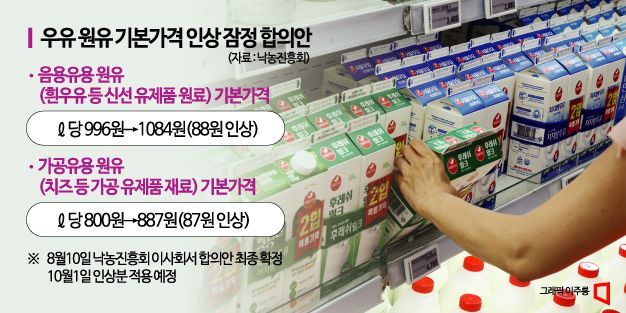
According to the related industry on the 28th, the Dairy Promotion Committee, composed of dairy farmers and dairy industry representatives, agreed at the 11th meeting of the Raw Milk Base Price Adjustment Negotiation Subcommittee held late the previous afternoon to raise the base price of raw milk used for fresh dairy products such as white milk and fermented milk by 88 KRW per liter starting in October. The base price of raw milk used for processed dairy products such as cheese, condensed milk, and powdered milk will increase by 87 KRW. This increase is the second-largest since the introduction of the raw milk price linkage system in 2013, when the price rose by 106 KRW.
Following this agreement, a price increase for white milk, which directly reflects the price of raw milk for drinking, is inevitable. Previously, major dairy companies raised the price of white milk by nearly 10% when the raw milk price increased by 49 KRW per liter last year. Based on large supermarket prices, Seoul Milk Cooperative's 1-liter white milk price rose by 6.6% to the 2,800 KRW range, Namyang Dairy Products' 900 ml product price increased by 8.67% to 2,880 KRW, and Maeil Dairies set the price of its 900 ml white milk product at 2,860 KRW, up 9.57%. This year, with the raw milk price for drinking rising nearly 40 KRW more than last year, the product price increase rate is likely to exceed 10%. In this case, the price of major white milk products sold in large supermarkets will surpass 3,000 KRW for the first time.
Due to the increase in raw milk prices, prices of products using milk such as ice cream, bread, and snacks may also rise. Last year, some ice cream products saw price increases of about 20%, and snack prices rose by more than 10%. Milk accounts for 40% of beverages like caf? lattes sold at coffee shops, making price increases unavoidable.
Previously, the government recommended the food industry, including ramen, snacks, and bread manufacturers, to refrain from raising prices and conveyed this policy to the dairy industry as well. However, this recommendation was based on the decline in international wheat prices, a raw material, while dairy companies argue that it is difficult to accept because the raw milk price, which forms the basis of product prices, is rising. An industry official said, "Now that the raw milk price negotiations have been settled, it is time for related companies to carefully consider their options," adding, "Since all costs related to production and logistics have increased, deciding on an appropriate price considering consumer burden is a significant internal challenge."
Meanwhile, the Dairy Promotion Committee plans to hold a board meeting on the 10th of next month to finalize the agreement reached by the negotiation subcommittee. If approved, the raw milk base price increase will be applied from October 1. The Dairy Promotion Committee explained that this postponement from the original August 1 date by two months was a decision to ease the inflation burden.
© The Asia Business Daily(www.asiae.co.kr). All rights reserved.
![User Who Sold Erroneously Deposited Bitcoins to Repay Debt and Fund Entertainment... What Did the Supreme Court Decide in 2021? [Legal Issue Check]](https://cwcontent.asiae.co.kr/asiaresize/183/2026020910431234020_1770601391.png)















