Legacy System Increases Alumni Children Admission Chances by 4x
US Department of Education Launches Investigation into Harvard Legacy Admissions
Statistics have confirmed the powerful influence of the 'legacy admission system,' which favors alumni children in admissions to prestigious private universities in the United States, and the controversy surrounding this system is gradually growing within the country.
While there are claims that donations from the 'legacy admission system' are used for scholarships for poor students, thereby increasing the admission of low-income children to prestigious universities, there is also strong criticism that the excessively high acceptance rates reinforce the inheritance of academic background and wealth, making it a harmful practice.
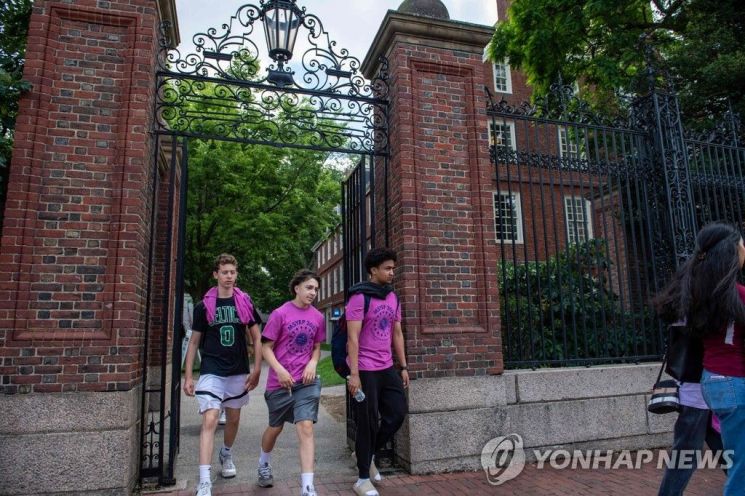
On the 27th (local time), The New York Times (NYT) reported that children of alumni from prestigious private universities in the U.S. have a four times higher chance of acceptance compared to general applicants with similar or slightly lower qualifications.
This result was included in a recent research paper published by a team led by Raj Chetty, an economics professor at Harvard University, who tracked admissions results at prestigious U.S. universities. Even when estimating acceptance rates assuming the absence of the legacy admission system, alumni children’s acceptance rates were about 33% higher than those of general applicants.
The research team analyzed that this is because families of prestigious university alumni generally have higher income levels and greater interest in education than other families. Applicants with parents who graduated from prestigious universities often met a variety of admission criteria beyond academic qualifications compared to general applicants.
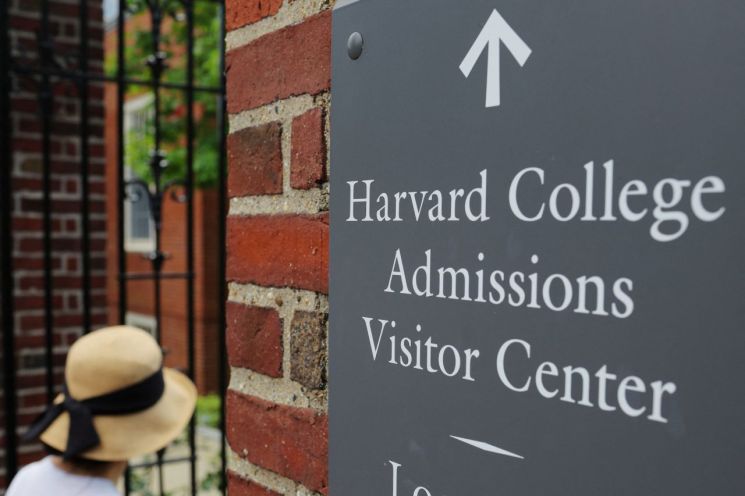 The research team revealed that the likelihood of admission increased fivefold for applicants from households with an annual income of $611,000 (approximately 780 million KRW), which can be considered the top 1% in the United States, when they also utilized the legacy admission system.
 [Photo by Reuters·Yonhap News]
The research team particularly noted that applicants from households with an annual income of $611,000 (approximately 780 million KRW), which can be considered the top 1% in the U.S., had their chances of acceptance increased fivefold when also utilizing the legacy admission system.
Moreover, it was interpreted that the economic power of the applicant’s family has a greater impact on admission to prestigious 'private universities.' This is because such an advantage for wealthy children was not observed at public universities like Texas State University or the University of Virginia.
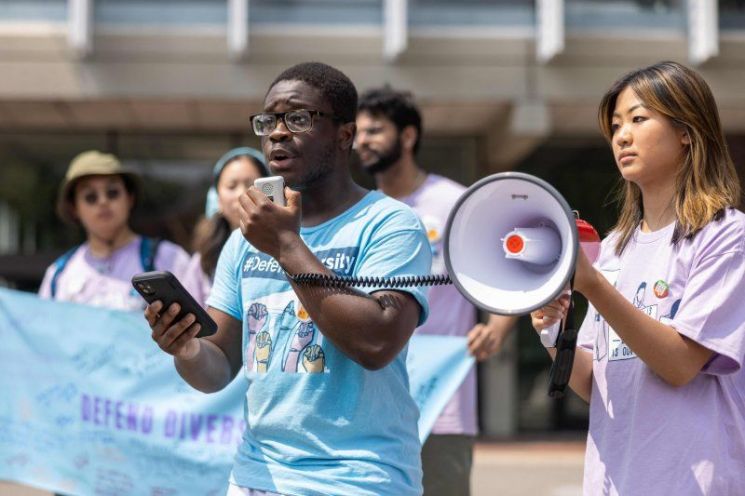 On the 1st, students are protesting on the Harvard University campus in Cambridge, Massachusetts, against the Supreme Court's ruling declaring affirmative action policies unconstitutional.
 [Photo by AFP·Yonhap]
The schools classified as 'prestigious universities' in this study included the eight Ivy League schools, Stanford, Duke, Massachusetts Institute of Technology (MIT), University of Chicago, and 12 other universities.
Susan Dynarski, an economics professor at Harvard University, pointed out, "Ivy League universities do not want low-income students, and as a result, there are actually no low-income students enrolled."
Meanwhile, as controversy over the legacy admission system grows in the U.S., the U.S. Department of Education has officially launched an investigation into Harvard University’s legacy and donation-based admissions.
© The Asia Business Daily(www.asiae.co.kr). All rights reserved.



















