Despite a total of 11 rounds of aggressive interest rate hikes since March last year, the US economic indicators still show a solid level. The anticipated recession has not yet arrived. The second-quarter economic growth rate recorded 2.4%, exceeding market expectations, and the unemployment rate remains historically low. The Federal Reserve's (Fed) decision to resume rate hikes at this month's Federal Open Market Committee (FOMC) meeting is also seen as stemming from confidence that a 'soft landing'?reducing inflation without a recession?is possible given these recent indicators.
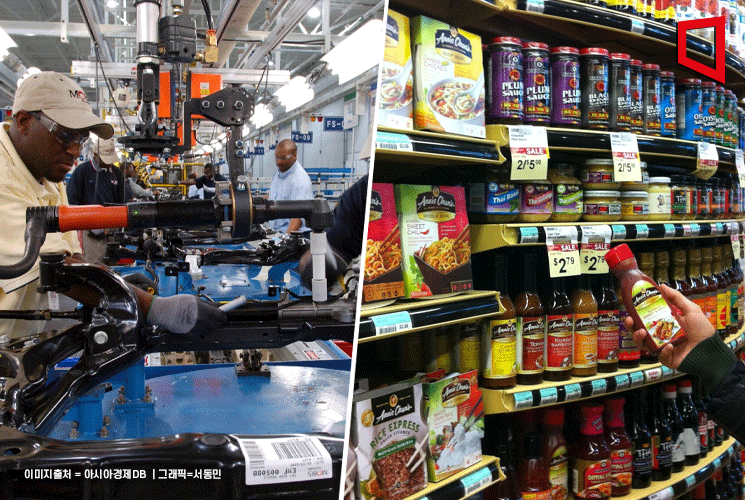
US Growth Rate Exceeds Expectations...Examining Economic Indicators
According to the US Department of Commerce on the 27th (local time), the preliminary estimate for second-quarter Gross Domestic Product (GDP) growth was an annualized 2.4%. This figure surpasses both the first quarter (2.0%) and market expectations (2.0%). The second-quarter growth was driven by increases in consumer spending and federal and state government expenditures. Despite inflation and high interest rates, American consumers continued to open their wallets, with consumer spending?accounting for more than two-thirds of economic activity?increasing by 1.6%. Nonresidential fixed investment also rose at the fastest pace in over a year. Lubila Faruqi, Chief US Economist at High Frequency Economics, also noted, "Growth exceeded expectations despite the restrictive monetary policy stance."
Signals that inflationary pressures are easing were also reaffirmed. The second-quarter Personal Consumption Expenditures (PCE) price index rose 2.6%, significantly below both the first quarter (4.1%) and market expectations (3.2%). This deceleration in inflation is interpreted positively as it can further support consumer spending. Michael Gapen, Chief US Economist at Bank of America (BoA), stated, "The things that scared us all at the beginning of this year have disappeared." The core PCE price index for June, to be released the following day, is also expected to have slowed to a 4.2% year-over-year increase from 4.6% the previous month.
When the Fed began its rate hike cycle early last year to curb inflation, the market widely expected the US economy to enter a recession this year. Typically, aggressive rate hikes by central banks are considered a major cause of recessions. However, despite the Fed raising rates by more than 5 percentage points in just over a year, recent indicators suggest strong resilience in the US economy.
The unemployment data released that day also confirmed a robust labor market. According to the US Department of Labor, initial jobless claims for the week of July 16?22 fell by 7,000 to 221,000, marking a third consecutive weekly decline and the lowest level in five months since February. Continued claims, which track those receiving unemployment benefits for at least two weeks, also dropped by 59,000 to 1.69 million, the lowest since January. Bloomberg News described this strong labor market as still a key support for the economy. Durable goods orders for June also increased for the fourth consecutive month, rising 4.7% from the previous month and far exceeding the expected 1.5% increase.
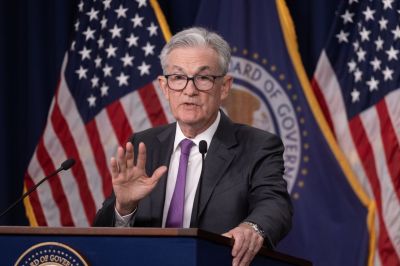
Growing Expectations for a Soft Landing...Powell Also Says "No Recession Expected"
Even markets that initially predicted a recession are increasingly optimistic about a soft landing. These economic indicators align with the Fed's confidence in the economy, expressed after its recent rate hike, that "economic activity is expanding at a moderate pace." Chair Powell stated at the FOMC press conference the day before, "I no longer expect a recession this year." Fed economists had previously forecasted a mild recession within the year, but this outlook was removed at this month's FOMC.
Changes are also evident among Wall Street economists. The Wall Street Journal (WSJ) reported, "Economists who expected a recession to begin in mid-year are now revising their forecasts." Goldman Sachs recently lowered the probability of a recession within the next 12 months from 25% to 20%, and Deutsche Bank has indicated increasing chances of a soft landing. Amy Kruet, Chief Economist at AC Kurt & Associates, said, "We have turned a dangerous corner," adding, "Instead of heavily weighting a recession, we are balancing between recession and no recession."
The Congressional Budget Office (CBO) also projected the day before that while rate hikes and rising unemployment could burden consumers, they would not lead to a recession. The CBO expects US GDP to grow 0.4% in the second half of this year and steadily improve through next year and the following year. Concerns such as the depletion of excess savings accumulated during the pandemic are not expected to reduce consumer spending enough to cause a recession. The International Monetary Fund (IMF) recently revised its global economic outlook, raising the US growth forecast for this year from 1.6% to 1.8%.
Some analysts suggest that the series of economic indicators exceeding expectations could lead to further Fed rate hikes. Anna Wong, an economist at Bloomberg Economics, said, "Second-quarter GDP growth reflects economic strength that counters the Fed's efforts to lower inflation," adding, "If the expected recession this year is delayed, the Fed will likely have to raise rates beyond the current level." Chair Powell also reaffirmed the need for below-trend growth and labor market easing to reduce inflation. Bloomberg News noted, "If the economy is too strong, the Fed will have to raise rates further," emphasizing that the Fed's goal is not a recession but to bring the economy down to below-trend growth. The stronger the growth, the more rate hikes may be necessary."
However, the prevailing market view is that the Fed will not raise rates further this year. According to the Chicago Mercantile Exchange (CME) FedWatch tool, the federal funds (FF) futures market currently prices in about an 80% chance that the Fed will hold rates steady at the next FOMC meeting in September. The probability that current rates will remain unchanged through December is over 60%.
"Does Not Certainly Mean Recession Has Been Avoided"?Concerns Remain
Voices cautioning about recession risks remain. Experts point out that there is a lag before the cumulative effects of tightening policies appear in the data, and that excess savings accumulated by consumers during the pandemic are being depleted, leading to expectations of slowing growth in the second half of the year. The inversion of the yield curve between short- and long-term government bonds?a traditional leading indicator of recession?has persisted for a year, which is also a negative signal.
The Wall Street Journal (WSJ) stated, "Recent indicators do not definitively mean that the US has avoided a recession," adding, "Considering the lag before rate hike effects appear, the economy will continue to face headwinds." The New York Times (NYT) described this as 'Soft Landing Optimism' and pointed to past instances where such optimism preceded recessions. Jennady Goldberg, strategist at TD Securities, noted, "In 2007, 2000, and 1990, soft landing forecasts dominated right up until the economy went downhill," highlighting the uncertainty. Subadra Rajappa, Head of Rates Strategy at Soci?t? G?n?rale, said, "We don't know what will happen next," adding, "It looks like we are heading for a soft landing, but we can't be sure."
© The Asia Business Daily(www.asiae.co.kr). All rights reserved.
![Clutching a Stolen Dior Bag, Saying "I Hate Being Poor but Real"... The Grotesque Con of a "Human Knockoff" [Slate]](https://cwcontent.asiae.co.kr/asiaresize/183/2026021902243444107_1771435474.jpg)

















