Mobile 3 Trillion Won Surplus Strength... Contributing to Escape from Deficit Crisis
Pyeongtaek & US Taylor Foundry Cleanroom 'Shell First'
Samsung Electronics' 'Super Gap' Strategy Increasing Investment Amid Recession
Samsung Electronics recorded a loss of 4.36 trillion KRW in its semiconductor (DS) division in the second quarter. Both memory semiconductors and system (non-memory) semiconductors, including foundry (semiconductor contract manufacturing), were affected by decreased demand and inventory adjustments by customers. The loss was reduced compared to the first quarter (-4.58 trillion KRW). Anticipating a recovery in the market in the second half of the year, the company invested a record-high 7.2 trillion KRW in research and development (R&D).
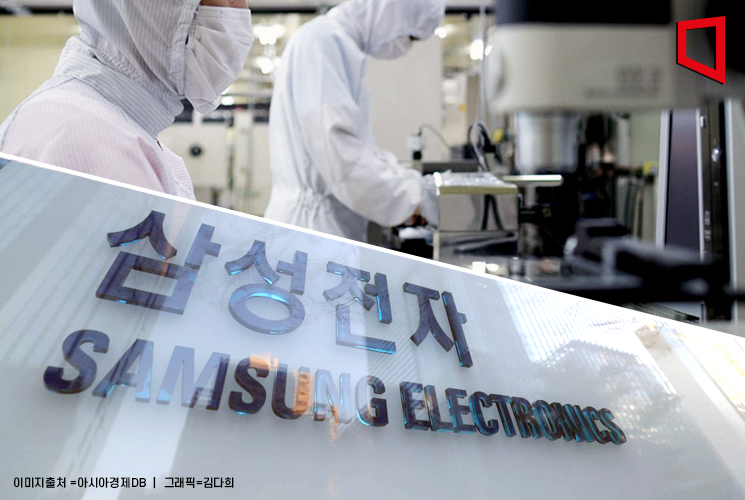 Samsung Electronics continued its tradition of 'super-gap' by maintaining record-high research and development (R&D) and facility investments despite the economic downturn.
On the 27th, Samsung Electronics announced that its consolidated sales for the second quarter were 60.0055 trillion KRW, with an operating profit of 668.5 billion KRW. Sales decreased by 22.3% and operating profit dropped by 95.3% compared to the same period last year. Although operating profit increased from 640 billion KRW in the first quarter, it remained below 1 trillion KRW for two consecutive quarters.
Besides semiconductors (-4.36 trillion KRW), the video display and home appliances division (740 billion KRW), mobile experience and network division (3.04 trillion KRW), display division (840 billion KRW), and automotive electronics subsidiary Harman (250 billion KRW) all recorded profits.

Specifically, the semiconductor division posted losses for two consecutive quarters. The loss was smaller than the record high in the first quarter. Memory semiconductors recorded losses due to continued price declines. Demand increased for high-capacity and high-spec products such as DDR5 and AI-use HBM semiconductors. In foundry, demand from major applications such as mobile set (finished product) manufacturers decreased, and wafer input was reduced due to increased uncertainty in the second half, leading to lower utilization rates and a significant drop in profits.
The DX (consumer electronics and mobile) division, which produces smartphones, recorded sales of 40.21 trillion KRW and an operating profit of 3.83 trillion KRW. In particular, the mobile experience (MX) and network business units generated profits exceeding 3 trillion KRW, contributing to the overall increase in Samsung Electronics' performance. Despite a decline in smartphone market demand compared to the previous quarter due to interest rate hikes and inflation, the division remained profitable, thanks to strong sales of the Galaxy S23 series in the first half of the year.
The video display (VD) division, which manufactures TVs, overcame the off-season by improving the sales mix of high-value products such as Neo QLED, OLED, and extra-large models. The home appliances division increased sales by improving the sales structure centered on air conditioners and Bespoke premium products during the peak season.
The display division recorded sales of 6.48 trillion KRW and an operating profit of 840 billion KRW. Although demand from smartphone set manufacturers decreased due to high inflation and economic recession, the division maintained a stable market share by providing differentiated OLED panels. For large panels, the product mix was advanced focusing on extra-large 77-inch TVs, strengthening the position in the QD-OLED market.
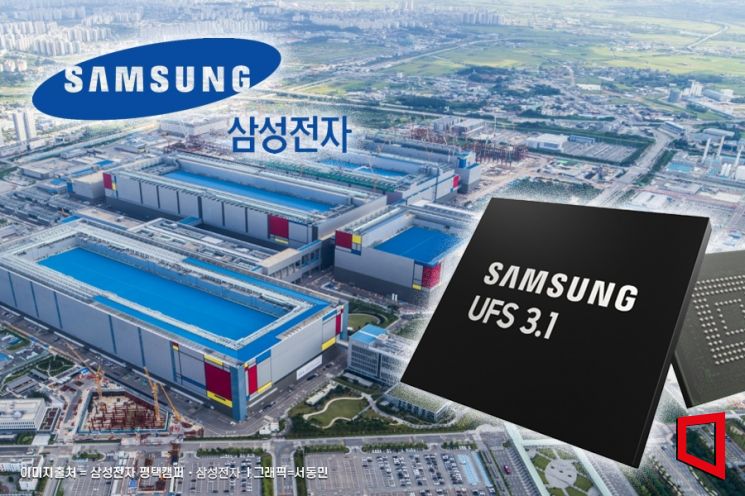
Notably, despite the challenging business environment, Samsung Electronics increased its R&D investment to the highest level. It invested 7.2 trillion KRW in R&D, breaking the record again in the second quarter following 6.58 trillion KRW in the first quarter. It also invested 14.5 trillion KRW in facility investments, the largest amount for a single quarter and the third largest for any quarter overall. Including the first quarter, total facility investment in the first half reached 25.3 trillion KRW, about 5 trillion KRW more than the 20.2 trillion KRW in the first half of last year. Foundry investments were significantly increased, while memory investments were maintained at last year's first half level.
Samsung Electronics employed a 'first' strategy by proactively building foundry cleanrooms in Pyeongtaek, Gyeonggi Province, and Taylor, Texas, USA. This strategy involves constructing cleanrooms first and attracting investments later to respond to customer demand. The size of cleanrooms is expected to increase 7.3 times by 2027 compared to 2021. This is part of Samsung Electronics' traditional 'super-gap' strategy of bold investment during downturns.
Samsung Electronics expects the market to gradually improve in the second half due to a recovery in global demand. The memory semiconductor business is reducing the rate of price decline by participating in production cuts with major companies. As memory semiconductor prices rise, Samsung's performance improves. The foundry business is also expected to recover demand due to easing inflation and the completion of customer inventory adjustments. Samsung Electronics stated, "We plan to increase orders from major customers by enhancing the development completeness of the 3nm (nanometer, one-billionth of a meter) fine process applying the GAA (Gate-All-Around) technology."
© The Asia Business Daily(www.asiae.co.kr). All rights reserved.



















