Google Data Centers See 20% Surge in Water Usage
Climate Change Drought Hits US West, Home to Big Tech
As the surge in generative artificial intelligence (AI) drives continuous expansion of data centers, big tech companies based in the western United States are facing severe water shortages. Due to climate change caused by global warming, the already drought-stricken western U.S. is experiencing worsened water scarcity as the demand for cooling water in data centers skyrockets, raising concerns that this could threaten the survival of local residents.

According to U.S. economic media Business Insider and others on the 25th (local time), Google revealed in its '2023 Environmental Report' released the previous day that the company's water usage last year surged by 20% compared to the previous year, reaching 5.6 billion gallons. This amount is equivalent to the annual water usage of 37 golf courses in the western U.S., or enough for one million people to use 2 liters (ℓ) per day for a month.
The main cause of the sharp increase in water usage is attributed to the explosive demand for cooling water in data centers. The amount of water used for data center cooling alone was 5.2 billion gallons, accounting for 93% of the total water usage.
Massive amounts of cooling water are essential to operate data centers, which are critical for AI development. Data center servers generate a lot of heat during operation, and without continuous cooling with water, servers can overheat, leading to malfunctions or fires. Large-scale data centers consume between 1 million and 5 million gallons of water daily.
The problem is that demand for data centers is expected to increase even more in the future. According to global real estate advisory firm CBRE, the planned scale of data center development in major markets for the second quarter of this year is 7,242 megawatts (MW), a 158% increase compared to the end of 2020. CBRE reports that the pandemic period, with the expansion of online shopping, Zoom meetings, and streaming entertainment businesses, has driven increased data center usage.
Especially with this year's AI boom, data center demand is growing even faster. Building new data centers inevitably increases the need for cooling water. Professor Xiaolei Ren of the University of California analyzed that Google's increase in data center water usage last year closely matches the growth in Google's computing capacity due to AI.
Given this situation, not only Google but several big tech companies are securing enormous amounts of water for cooling purposes. Meta Platforms, Facebook's parent company, used 1.33 billion gallons of water in its data centers in 2021. Other big tech companies like Microsoft (MS) are also expanding their data centers.
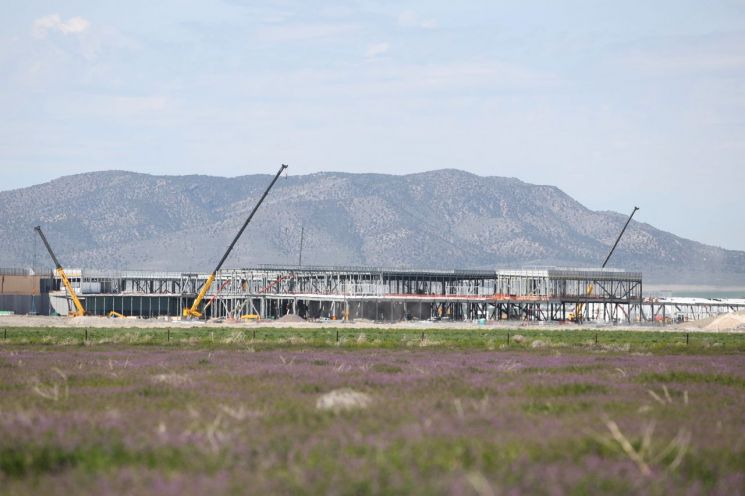
A bigger problem is that data centers are concentrated in the western U.S., where big tech companies are located, and this region has already been struggling with drought, worsening the water shortage issue. According to the U.S. International Trade Commission (USITC), as of 2021, there are 2,600 data centers in the U.S. alone (33% of the global total), with nearly 300 data centers in California alone, including 147 in the San Francisco Bay Area and 139 in Los Angeles. Google, MS, and Meta also have data centers in Arizona, adjacent to California.
Professor Landon Marston of Virginia Tech pointed out to the Washington Post (WP) in April, "We need to consider how much water stress the western U.S. is under."
Big tech companies are gradually releasing measures to address the water shortage crisis. Google stated in its environmental report that it understands the water scarcity issues in the region and is working to find solutions. Google has pledged to replenish 120% of the water used in its data centers by 2030. However, the current replenishment rate was only 6% as of last year.
As the water shortage crisis worsens, conflicts between big tech companies and local communities are expected to become inevitable. Economically, securing data centers for large corporations can have positive effects such as job creation and increased investment, but it is highly likely to negatively impact local residents' drinking water and agricultural water supplies. Consequently, related legal disputes are expected to increase in the future.
In fact, Google owns a data center in The Dalles, Oregon, and has faced legal disputes over the disclosure of water usage information there. A local media outlet requested that The Dalles city disclose Google's water usage data, but the city initially refused, leading to a 13-month lawsuit. Eventually, the city abandoned its stance and disclosed the information, resolving the issue.
© The Asia Business Daily(www.asiae.co.kr). All rights reserved.


















