Bank of Korea 'July Consumer Sentiment Survey' Results
Impact of Oil Price Drop and Base Effect Lower Inflation Expectations
Survey Conducted Before Heavy Rain, Unable to Reflect Agricultural and Marine Product Price Increases
Consumer Sentiment Index Optimistic for Second Consecutive Month
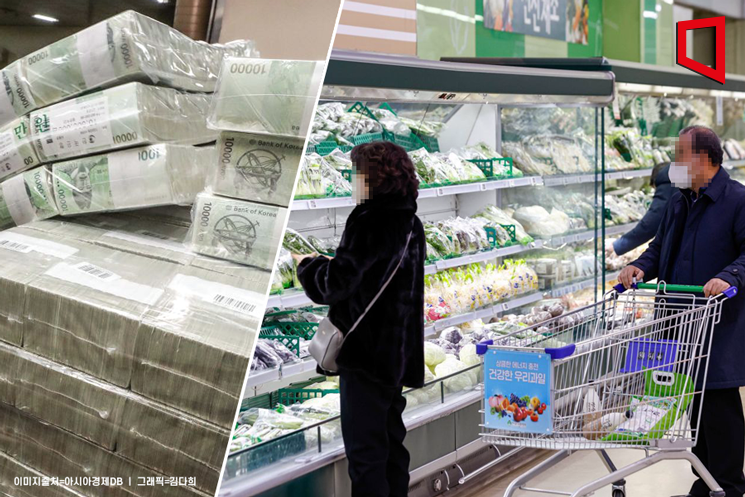
The expected inflation rate, which forecasts how much consumer prices will rise over the next year, was recorded at 3.3%. This is the lowest level in 1 year and 2 months. According to the 'July Consumer Sentiment Survey Results' announced by the Bank of Korea on the 26th, the expected inflation rate fell by 0.2 percentage points compared to the previous month.
Hwang Hee-jin, head of the Bank of Korea's Survey and Statistics Team, explained the decline by saying, "The biggest factor was the drop in the consumer price index to the 2% range due to the fall in oil prices and the base effect from last year." However, she added, "Since public utility fee hikes are expected in the second half of the year and heavy rains may cause agricultural product prices to rise, we need to observe whether this trend will continue."
This survey was conducted from the 11th to the 18th of the month. It does not reflect the recent price fluctuations in the shopping basket, especially for agricultural and livestock products following the heavy rains, implying that expected inflation may rise in the future.
The Consumer Sentiment Index, which comprehensively represents consumers' economic outlook, recorded 103.2, up 2.5 points from the previous month. It has remained above 100 for two consecutive months. A figure above 100 means that consumer sentiment is optimistic compared to the long-term average (2003?2021). Hwang explained, "The slowdown in price increases, a gradual recovery in consumption, and expectations of easing export sluggishness influenced this result."
With an increase in housing transactions, the outlook that house prices will rise has become dominant. This month's Housing Price Outlook Index recorded 102. After falling to a historic low of 61 in November last year, the index has shown an upward trend for eight consecutive months. If many people expect house prices to rise in a year, the index exceeds 100.
Hwang said, "The nationwide increase in housing transactions and the continued slowdown in price declines have reflected expectations of a housing market recovery, causing the index to rise by 2 points compared to the previous month." However, she added, "There are still regional differences, and with rising loan interest rates, we need to watch whether the overall upward trend will continue."
The Interest Rate Level Outlook Index rose by 7 points to 112. Although the Bank of Korea has kept rates unchanged for four consecutive times, people expect rates to rise due to the possibility of additional rate hikes in the U.S. and the upward trend in market interest rates. This index exceeds 100 when more people respond that "interest rates will be higher in six months" than those who expect a decrease.
© The Asia Business Daily(www.asiae.co.kr). All rights reserved.


















