In a criminal trial, the Supreme Court ruled that it is illegal for the court to deliver a verdict earlier than the originally scheduled sentencing date without prior notice, even if the defendant is present, as it infringes on the defendant's right to defense.
According to the legal community on the 26th, the Supreme Court's Second Division (Presiding Justice Min Yu-sook) overturned the original sentence of 2 years and 6 months imprisonment in the appeal trial of Kim Mo, who was indicted on charges of fraud and embezzlement, and remanded the case to the Chuncheon District Court.
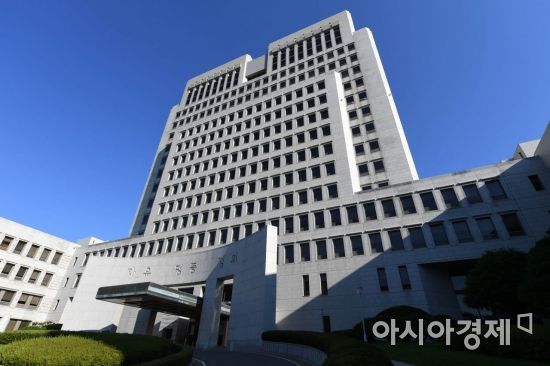
The court stated, "The lower court erred by hastily changing the sentencing date, which had been notified to the defendant and defense counsel at the conclusion of the trial, without prior notice, thereby infringing on the defendant's right to defense and the defense counsel's right to represent, which affected the judgment."
Kim was tried on charges of defrauding multiple victims of approximately 450 million KRW and two vehicles (a Bongo van worth about 19 million KRW and a cargo truck worth about 7 million KRW) from December 2019 to December 2021, and embezzling 14.5 million KRW from the proceeds of vehicle sales. Kim used various methods to deceive victims, such as demanding deposits under the pretense of selling cars or requesting fees by promising to lower loan interest rates.
In October last year, the first trial court sentenced Kim to 2 years and 6 months imprisonment. Kim had previously received a 6-month prison sentence with a 2-year probation in May 2020 for violating the National Sports Promotion Act (gambling, etc.), and a 2-month and 10-month prison sentence in September 2022 for fraud. The court separated the crimes committed before and after the finalized sentences when imposing the sentence.
The second trial court held the same view. However, the problem was that the second trial court advanced the sentencing date without prior notice to Kim or his defense counsel. The second trial court concluded the trial on March 8, the first hearing date, and set the sentencing date for April 7, but suddenly moved the sentencing date up and delivered a ruling dismissing the appeal on March 24. Kim, who was incarcerated at the time, was instructed by a prison officer to appear in court on the sentencing day and attended the sentencing hearing.
Kim appealed, arguing that the sentencing procedure of the appellate court was illegal. The Supreme Court agreed with Kim's claim that the second trial court's sudden advancement of the sentencing date infringed on Kim's right to defense and was illegal.
The Criminal Procedure Act stipulates that the verdict should be delivered on the date when the trial is concluded, but a separate sentencing date may be designated in special circumstances. It also requires the defendant to be summoned to the trial date and the prosecutor and defense counsel to be notified of the trial date. The Supreme Court has previously ruled that even if these procedures are not followed, if there are special circumstances indicating that the defendant's right to defense and the defense counsel's right to represent were not essentially infringed, it cannot be considered a legal violation affecting the judgment.
The court explained, "The lower court concluded the trial on March 8, the first hearing date, and designated the sentencing date as April 7, notifying the parties accordingly," adding, "It appears that the lower court set the sentencing date considering the period needed for submitting favorable sentencing materials such as settlement agreements with victims." The court continued, "However, contrary to the designated and notified date, the sentencing was conducted on March 24, and the defendant, who was incarcerated, appeared in court following the prison officer's instructions," pointing out, "This action violated the law regarding the designation of trial dates by conducting the sentencing procedure on a date not designated as the sentencing date, which affected the judgment."
The court further stated, "Even if it is assumed that the sentencing date was changed to March 24 by the presiding judge notifying that the sentencing would be conducted while the defendant was present in court, the opportunity to submit sentencing materials should be protected as part of the exercise of the right to defense," adding, "In cases where a sentence of less than 10 years is imposed under the Criminal Procedure Act, claims that the sentence is unfair cannot be valid grounds for appeal, so the sentencing date of the lower court holds significance as the last opportunity for the defendant to exercise the right to defense regarding sentencing."
Since Kim, who was sentenced to less than 10 years in the first trial, cannot appeal on the grounds that the sentence is too harsh, the second trial is effectively the last chance to argue unfair sentencing. The court ruled that depriving this opportunity by suddenly advancing the sentencing date was illegal. Meanwhile, the Supreme Court also found errors in the second trial court's judgment regarding the prisoner status between the crimes Kim was being tried for and the crimes for which sentences had already been finalized.
© The Asia Business Daily(www.asiae.co.kr). All rights reserved.
![Clutching a Stolen Dior Bag, Saying "I Hate Being Poor but Real"... The Grotesque Con of a "Human Knockoff" [Slate]](https://cwcontent.asiae.co.kr/asiaresize/183/2026021902243444107_1771435474.jpg)
















